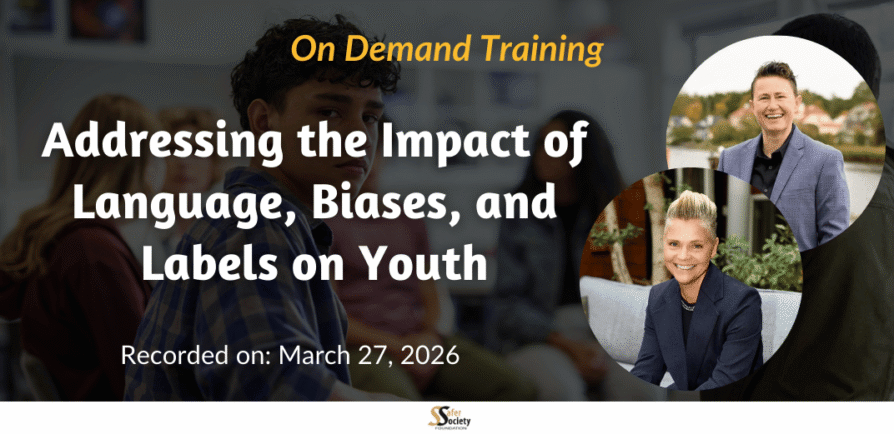
The language that professionals use to describe young people can have significant and lasting effects. Likewise, the biases that professionals have—whether they are aware of them or not—can also influence treatment in
ways that go beyond the awareness of practitioner and client alike. Research shows that labeling can create a self-fulfilling prophecy, where youth internalize negative perceptions that ultimately undermine their self-esteem and mental health. This includes language related to sexual orientation, which can further marginalize young people, increase their sense of isolation, and reduce self-efficacy. Considering the often-fragile mental health of youths entering treatment, the stakes are very high indeed.
These biases and the challenges posed by the language we use can be overcome. Anette Birgersson and Christin Santiago developed training to thoroughly examine the consequences of language, biases and labeling. They offer strategies for recognizing and reshaping these tendencies to improve treatment outcomes and to help young people build better futures for themselves.