Using Behavioral Techniques to Control Sexual Arousal (PDF Download)


Home / Shop / PDF Downloads

Using Behavioral Techniques to Control Sexual Arousal (PDF Download)

$8.00
Using Behavioral Techniques to Control Sexual Arousal (PDF Download)

Home / Shop / PDF Downloads

Using Behavioral Techniques to Control Sexual Arousal (PDF Download)

$8.00
Model Number: WP162-10
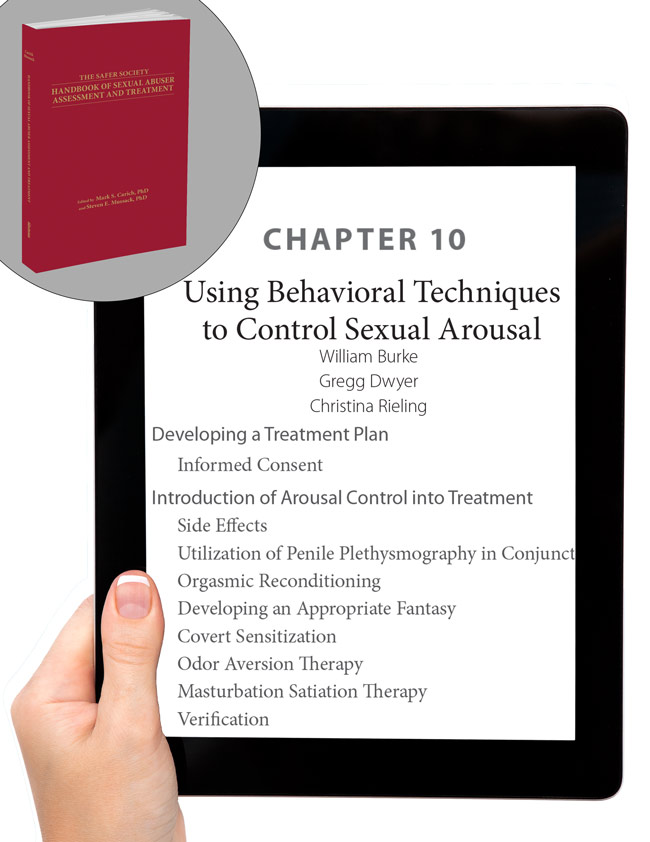
Chapter 10 PDF from The Safer Society Handbook of Sexual Abuser Assessment and Treatment.
Maximum quantity exceeded
Minimum purchase amount of 0 is required
Maximum purchase amount of 0 is allowed
Your Price: $8.00
8.000
A one-time price of $8.00 will be added to your order.
Manufacturer: Safer Society Press
Facebook
X
Email
LinkedIn
  • Description
  • Specifications
CHAPTER 10 Using Behavioral Techniques to Control Sexual Arousal
by William Burke, Gregg Dwyer & Christina Rieling

This is a PDF version of Chapter 10 of The Safer Society Handbook of Sexual Abuser Assessment and Treatment.

Behavior therapy has served as a primary modality for working with offense-related sexual arousal, with empirical support stretching back more than a century. Chapter 10 of the Safer Society Handbook of Sexual Abuser Assessment and Treatment offers clinicians a practical, step-by-step guide to applying behavioral techniques that help clients reduce or control offense-related arousal while building healthier patterns of sexual response. The chapter is grounded in the principles of classical and operant conditioning and reflects decades of clinical refinement.

Foundations in Classical and Operant Conditioning

Two printed pages from Chapter 10, "Using Behavioral Techniques to Control Sexual Arousal," shown at an angle, with the chapter opening page displaying the title and authors William Burke, Gregg Dwyer, and Christina Rieling, and a second page listing numbered antecedents related to treatment.Behavioral therapies for paraphilias work by modifying established sexual preferences using techniques rooted in operant and classical conditioning. The authors explain that much paraphilic sexual behavior has been established and maintained through repeated pairings of deviant stimuli with sexual arousal, masturbation, and orgasm. Research indicates that the most effective way to modify deviant sexual arousal is to treat it the same way it was acquired: through these same conditioning processes.

Chapter 10 emphasizes that any behavioral arousal control plan should meet the Standards of Care established by the Association for the Treatment of Sexual Abusers (ATSA) and should follow from a thorough assessment of arousal and interest patterns. The authors identify two coterminous treatment goals: (1) a reduction in, control of, or cessation of deviant arousal, and (2) an increase in the development, maintenance, and solidification of appropriate arousal responses.

Using Penile Plethysmography with Behavioral Therapy

The authors distinguish between sexual interest, which is a cognitive construct measured through viewing time instruments, and sexual arousal, which is a physiological response measured through penile plethysmography (PPG). They draw on Singer’s three-stage model of sexual attraction in males to explain why viewing time and PPG data sometimes do not match.

A baseline PPG exam early in treatment provides a reference point for tracking progress or regression. Subsequent feedback sessions can measure arousal levels to an appropriate fantasy and assess responses to ammonia aversion and covert sensitization in real time. Because most men are unaware of the onset of their own arousal cycle, real-time visual feedback during a PPG session can help clients learn to recognize the beginning of an arousal response before becoming fully aroused.

Behavioral Techniques for Modifying Offense-Related Arousal

Chapter 10 provides detailed protocols, scripts, and clinical guidance for the most widely used behavioral techniques in the literature, each supported by empirical research.

Orgasmic Reconditioning

This positive conditioning procedure involves pairing appropriate sexual fantasies with masturbation and orgasm. The chapter provides specific guidance on developing appropriate fantasies, including elements such as an adult partner, mutual care and concern, consent, foreplay, and afterplay. The authors also list what an appropriate fantasy should not include, such as non-consensual activity, infliction of pain, shame, or any illicit behavior. A sample fantasy and step-by-step client instructions are included.

Odor Aversion Therapy

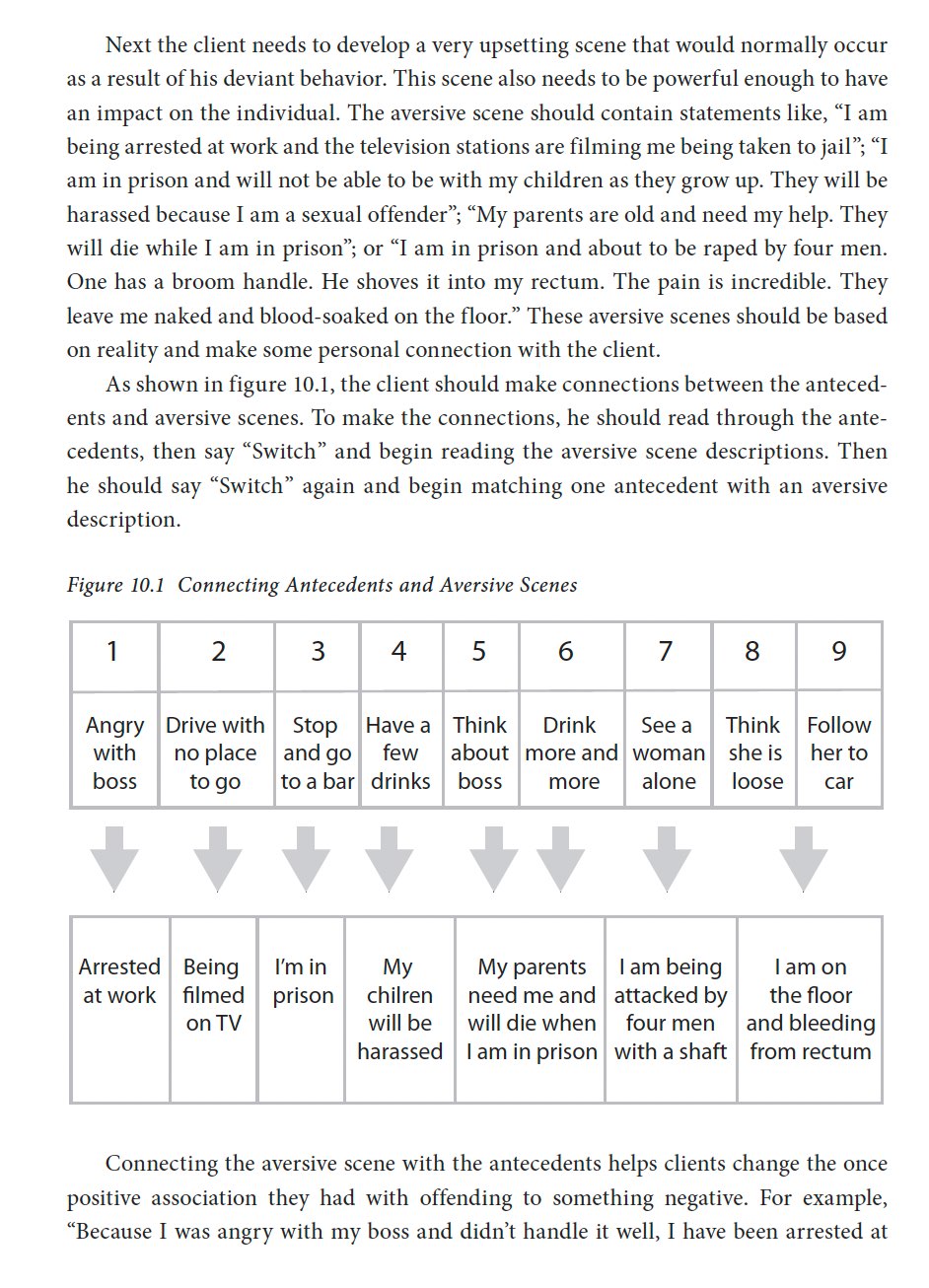
Odor aversion pairs deviant stimuli with an unpleasant smell, most commonly ammonia, to disrupt the chain of antecedents that lead to offense-related behavior. The chapter describes how to use the technique in three settings: as homework, within a plethysmograph laboratory, and as a carry-along intervention in the real world. The carry-along application allows clients to interrupt deviant arousal in the moment, with a clinical example illustrating how one client used ammonia capsules to prevent a reoffense.

Masturbation Satiation Therapy

Masturbation satiation pairs the most arousing components of the deviant fantasy with the boredom and discomfort of the refractory period after orgasm. The goal is to weaken the association between deviant content and sexual reward while preserving healthy fantasies. The chapter provides detailed instructions on session length, structure, and the importance of clinician oversight. For clients who cannot perform the masturbation component (including adolescent clients in many cases), verbal satiation is offered as an alternative.
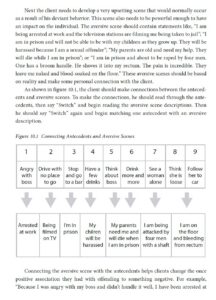
Printed page from Chapter 10 listing nine numbered antecedents describing a behavioral sequence leading to viewing pornography, interspersed with repeated "INHALE. Pull ammonia away." prompts and instructions to restart the reading, followed by a closing paragraph on the odor aversion treatment log available from Safer Society Press.Integration with Other Treatment Approaches
Behavioral arousal control procedures work best as part of a comprehensive program. The chapter outlines complementary approaches, including:

  • pharmacological interventions
  • environmental controls (such as court-ordered conditions and probationary requirements)
  • chaperone training
  • circles of support and accountability.

Indirect interventions address the wider range of needs a client may bring to treatment, from depression, anxiety, and anger to social and dating skills that support the development of healthy adult relationships.

A Practical Resource for Clinicians

Throughout the chapter, the authors provide concrete tools clinicians can put to immediate use:

  • sample client instructions
  • model fantasies and antecedent scenarios
  • session structures
  • treatment logs available for download from the Safer Society Press website.

The authors close by reframing these techniques as tools clients can return to whenever deviant sexual arousal resurfaces. The reemergence of such arousal is not, in their view, a sign of failure, but a signal to reapply what has been learned in treatment. The real failure would be neglecting to use the interventions when they are needed. Chapter 10 equips clinicians to deliver these methods with the structure, sensitivity, and clinical judgment they require, supporting the broader goals of prosocial change and community safety.

In this PDF the author covers the following topics:

    • Developing a Treatment Plan
        • Informed Consent
    • Introduction of Arousal Control into Treatment
        • Side Effects
        • Utilization of Penile Plethysmography in Conjunction with Behavioral Therapy
        • Orgasmic Reconditioning
        • Developing an Appropriate Fantasy
        • Covert Sensitization
        • Odor Aversion Therapy
        • Masturbation Satiation Therapy
        • Verification
    • Integration of Other Types of Treatment
    • Summary and Conclusions

After purchasing this product, you will have three days to download it. After that, you will need to contact Safer Society Press to receive your copy.

20 pages, plus bonus material PDF Format Order# WP16-10

Store Account Login

Please enter your Email Address
Please enter your Password

Product Search

Using Behavioral Techniques to Control Sexual Arousal


Home / Shop / PDF Downloads

Using Behavioral Techniques to Control Sexual Arousal (PDF Download)

$8.00
Using Behavioral Techniques to Control Sexual Arousal (PDF Download)

Home / Shop / PDF Downloads

Using Behavioral Techniques to Control Sexual Arousal (PDF Download)

$8.00
Model Number: WP162-10
Chapter 10 PDF from The Safer Society Handbook of Sexual Abuser Assessment and Treatment.
Maximum quantity exceeded
Minimum purchase amount of 0 is required
Maximum purchase amount of 0 is allowed
Your Price: $8.00
8.000
A one-time price of $8.00 will be added to your order.
Manufacturer: Safer Society Press
Facebook
X
Email
LinkedIn
  • Description
  • Specifications
CHAPTER 10 Using Behavioral Techniques to Control Sexual Arousal
by William Burke, Gregg Dwyer & Christina Rieling

This is a PDF version of Chapter 10 of The Safer Society Handbook of Sexual Abuser Assessment and Treatment.

Behavior therapy has served as a primary modality for working with offense-related sexual arousal, with empirical support stretching back more than a century. Chapter 10 of the Safer Society Handbook of Sexual Abuser Assessment and Treatment offers clinicians a practical, step-by-step guide to applying behavioral techniques that help clients reduce or control offense-related arousal while building healthier patterns of sexual response. The chapter is grounded in the principles of classical and operant conditioning and reflects decades of clinical refinement.

Foundations in Classical and Operant Conditioning

Two printed pages from Chapter 10, "Using Behavioral Techniques to Control Sexual Arousal," shown at an angle, with the chapter opening page displaying the title and authors William Burke, Gregg Dwyer, and Christina Rieling, and a second page listing numbered antecedents related to treatment.Behavioral therapies for paraphilias work by modifying established sexual preferences using techniques rooted in operant and classical conditioning. The authors explain that much paraphilic sexual behavior has been established and maintained through repeated pairings of deviant stimuli with sexual arousal, masturbation, and orgasm. Research indicates that the most effective way to modify deviant sexual arousal is to treat it the same way it was acquired: through these same conditioning processes.

Chapter 10 emphasizes that any behavioral arousal control plan should meet the Standards of Care established by the Association for the Treatment of Sexual Abusers (ATSA) and should follow from a thorough assessment of arousal and interest patterns. The authors identify two coterminous treatment goals: (1) a reduction in, control of, or cessation of deviant arousal, and (2) an increase in the development, maintenance, and solidification of appropriate arousal responses.

Using Penile Plethysmography with Behavioral Therapy

The authors distinguish between sexual interest, which is a cognitive construct measured through viewing time instruments, and sexual arousal, which is a physiological response measured through penile plethysmography (PPG). They draw on Singer’s three-stage model of sexual attraction in males to explain why viewing time and PPG data sometimes do not match.

A baseline PPG exam early in treatment provides a reference point for tracking progress or regression. Subsequent feedback sessions can measure arousal levels to an appropriate fantasy and assess responses to ammonia aversion and covert sensitization in real time. Because most men are unaware of the onset of their own arousal cycle, real-time visual feedback during a PPG session can help clients learn to recognize the beginning of an arousal response before becoming fully aroused.

Behavioral Techniques for Modifying Offense-Related Arousal

Chapter 10 provides detailed protocols, scripts, and clinical guidance for the most widely used behavioral techniques in the literature, each supported by empirical research.

Orgasmic Reconditioning

This positive conditioning procedure involves pairing appropriate sexual fantasies with masturbation and orgasm. The chapter provides specific guidance on developing appropriate fantasies, including elements such as an adult partner, mutual care and concern, consent, foreplay, and afterplay. The authors also list what an appropriate fantasy should not include, such as non-consensual activity, infliction of pain, shame, or any illicit behavior. A sample fantasy and step-by-step client instructions are included.

Odor Aversion Therapy

Odor aversion pairs deviant stimuli with an unpleasant smell, most commonly ammonia, to disrupt the chain of antecedents that lead to offense-related behavior. The chapter describes how to use the technique in three settings: as homework, within a plethysmograph laboratory, and as a carry-along intervention in the real world. The carry-along application allows clients to interrupt deviant arousal in the moment, with a clinical example illustrating how one client used ammonia capsules to prevent a reoffense.

Masturbation Satiation Therapy

Masturbation satiation pairs the most arousing components of the deviant fantasy with the boredom and discomfort of the refractory period after orgasm. The goal is to weaken the association between deviant content and sexual reward while preserving healthy fantasies. The chapter provides detailed instructions on session length, structure, and the importance of clinician oversight. For clients who cannot perform the masturbation component (including adolescent clients in many cases), verbal satiation is offered as an alternative.

Printed page from Chapter 10 listing nine numbered antecedents describing a behavioral sequence leading to viewing pornography, interspersed with repeated "INHALE. Pull ammonia away." prompts and instructions to restart the reading, followed by a closing paragraph on the odor aversion treatment log available from Safer Society Press.Integration with Other Treatment Approaches

Behavioral arousal control procedures work best as part of a comprehensive program. The chapter outlines complementary approaches, including:

  • pharmacological interventions
  • environmental controls (such as court-ordered conditions and probationary requirements)
  • chaperone training
  • circles of support and accountability.

Indirect interventions address the wider range of needs a client may bring to treatment, from depression, anxiety, and anger to social and dating skills that support the development of healthy adult relationships.

A Practical Resource for Clinicians

Throughout the chapter, the authors provide concrete tools clinicians can put to immediate use:

  • sample client instructions
  • model fantasies and antecedent scenarios
  • session structures
  • treatment logs available for download from the Safer Society Press website.

The authors close by reframing these techniques as tools clients can return to whenever deviant sexual arousal resurfaces. The reemergence of such arousal is not, in their view, a sign of failure, but a signal to reapply what has been learned in treatment. The real failure would be neglecting to use the interventions when they are needed. Chapter 10 equips clinicians to deliver these methods with the structure, sensitivity, and clinical judgment they require, supporting the broader goals of prosocial change and community safety.

In this PDF the author covers the following topics:

    • Developing a Treatment Plan
        • Informed Consent
    • Introduction of Arousal Control into Treatment
        • Side Effects
        • Utilization of Penile Plethysmography in Conjunction with Behavioral Therapy
        • Orgasmic Reconditioning
        • Developing an Appropriate Fantasy
        • Covert Sensitization
        • Odor Aversion Therapy
        • Masturbation Satiation Therapy
        • Verification
    • Integration of Other Types of Treatment
    • Summary and Conclusions

After purchasing this product, you will have three days to download it. After that, you will need to contact Safer Society Press to receive your copy.

20 pages, plus bonus material PDF Format Order# WP16-10

Store Account Login

Please enter your Email Address
Please enter your Password

Product Search