Non-Offending Relatives Coping After a Child Sexual Abuse Material Conviction

In this webinar, Dr. Kavanagh explores how these relatives experience intense shame, trauma, and stigma that permeate all areas of their lives. Her research offers practical recommendations for improving support systems for affected families—helping them to cope, rebuild their lives, and potentially play a role in the desistance of the person who offended from future CSAM use. This work also contributes to a deeper understanding of secondary trauma among relatives of individuals who commit sexual crimes.

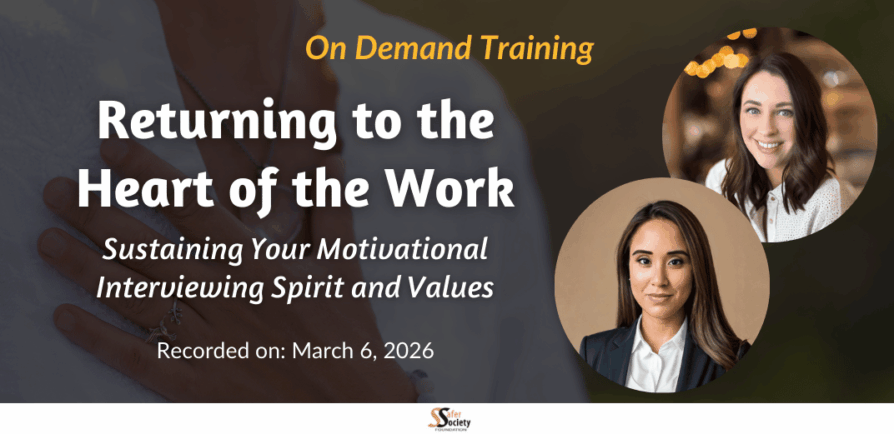
Returning to the Heart of the Work: Sustaining Your Motivational Interviewing Spirit and Values

The spirit of Motivational Interviewing (MI) refers to the relational stance or way of being with clients when helping them to find their own reasons to grow and make changes to their lives. 
Not just the practitioner’s mindset, the spirit is often said to involve a “heart set.” It involves approaching each client in the spirit of partnership, acceptance as a fellow human being, compassion, and empowerment. These qualities are at the center of best practices; yet as many professionals know, maintaining this spirit can be difficult.

If you’ve ever felt like your MI spirit was running on empty, you’re not alone. Even the most experienced practitioners hit those days when partnership feels impossible, acceptance seems out of reach, and compassion for others gets buried under their own struggles. As this training illustrates, the MI spirit isn’t a destination we arrive at once and then we’re home free. It’s a road you travel despite the potholes along the way..

Sarah Cameron and Annabys Jordan created this training to offer something many practitioners desperately need: a judgment-free way to reflect on their work and monitor their professional growth.
Providing Treatment to People Who Categorically Deny Their Sexual Offending Behavior

In this training, Dr. Liam Marshall presents the theoretical and practical foundations of the Rockwood program for treating individuals who deny offending. He outlines the key components of the model, discusses characteristics of professionals who are most effective in delivering it, and offers practical strategies for overcoming common barriers to engagement. Participants gain insight into the clinical and ethical complexities inherent in this challenging area of practice.

Stress and Motivation in Sexual Abuse Treatment: Insights from the 2025 Survey

The “Stressors and Motivators Among Professionals Treating Clients Who Have Sexually Abused” survey, conducted by Safer Society Foundation, examines how stressors and motivators shape the professional experiences of those working with individuals with histories of sexual abuse towards others. The survey responded to growing concerns about workforce sustainability and the need to highlight not only the challenges of this work, but also the powerful sources of meaning and satisfaction that sustain professionals in the field. Among its key findings, the survey revealed that while burnout and professional strain remain widespread, respondents emphasized that profound personal rewards play a critical role in fostering resilience and job satisfaction.​

In this webinar, the survey’s authors—David S. Prescott, Stacey Zolondek Ginesin, & Sarah Snow Haskell—guide a discussion into the findings, exploring how stress and motivation intersect in professional practice.