• Our Safe Haven: Rural Providers Working Across the Sexual Harm Continuum

    Living and working in rural areas pose unique challenges for providers working with individuals across the sexual harm continuum. For survivors and those who have caused harm, rural communities have fewer services, resources, and supports available. Both clients and providers alike can experience feelings of isolation. Clinicians, case managers, educators, and doctors also have to navigate unique challenges related to ethical boundaries, including dual relationships and confidentiality in small towns where everyone seems to know each other. Studies have shown that rural healthcare workers experience higher rates of burnout, in part due to the higher number of ethical dilemmas.

    Join us for a series of professional dialogues designed for rural providers who work with individuals across the sexual harm continuum. Moderated by Angelique Caley and David Prescott, these discussions provide a supportive space for rural providers to come together, share insights, offer creative ideas, and develop strategies to address the unique needs of their rural communities, their clients, and to maintain their own self-care.

    $8.00
  • Our Safe Haven: Helping Clients with Paraphilias and Paraphilic Disorders

    Join us for a series of professional dialogues designed to address these pressing issues. Moderated by Nikole Nassen and David Prescott, these discussions provide a supportive space for professionals to share insights, develop strategies, and strengthen their ability to navigate the complexities of working with clients with paraphilias and paraphilic disorders. Each session will begin with a focused exploration of a specific topic, evolving naturally into an engaging, attendee-driven conversation shaped by shared experiences and professional insights.

    $8.00
  • Our Safe Haven: Helping Clients with Paraphilias and Paraphilic Disorders

    Join us for a series of professional dialogues designed to address these pressing issues. Moderated by Nikole Nassen and David Prescott, these discussions provide a supportive space for professionals to share insights, develop strategies, and strengthen their ability to navigate the complexities of working with clients with paraphilias and paraphilic disorders. Each session will begin with a focused exploration of a specific topic, evolving naturally into an engaging, attendee-driven conversation shaped by shared experiences and professional insights.

    $8.00
  • Our Safe Haven: Rural Providers Working Across the Sexual Harm Continuum

    Living and working in rural areas pose unique challenges for providers working with individuals across the sexual harm continuum. For survivors and those who have caused harm, rural communities have fewer services, resources, and supports available. Both clients and providers alike can experience feelings of isolation. Clinicians, case managers, educators, and doctors also have to navigate unique challenges related to ethical boundaries, including dual relationships and confidentiality in small towns where everyone seems to know each other. Studies have shown that rural healthcare workers experience higher rates of burnout, in part due to the higher number of ethical dilemmas.

    Join us for a series of professional dialogues designed for rural providers who work with individuals across the sexual harm continuum. Moderated by Angelique Caley and David Prescott, these discussions provide a supportive space for rural providers to come together, share insights, offer creative ideas, and develop strategies to address the unique needs of their rural communities, their clients, and to maintain their own self-care.

    $8.00
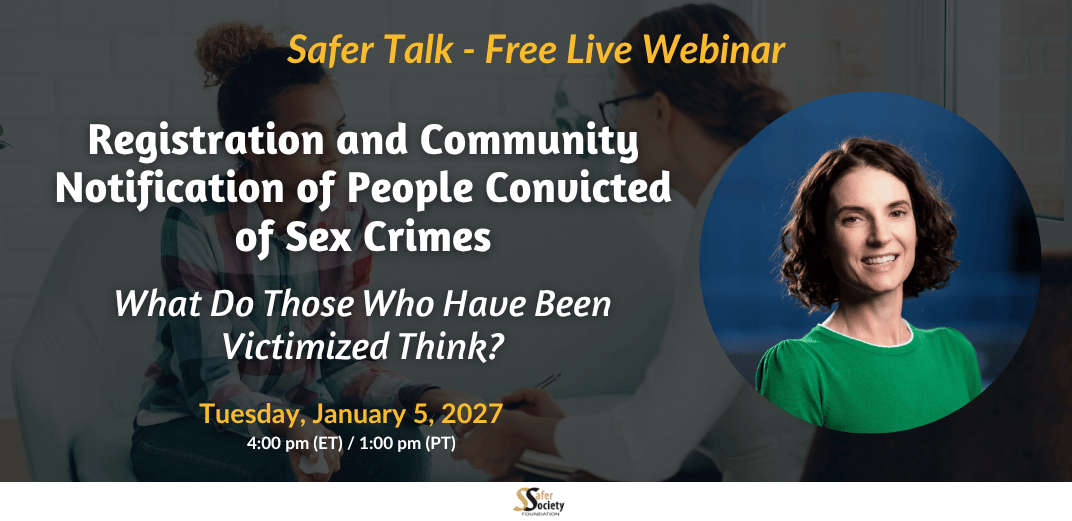
  • Registration and Community Notification of People Convicted of Sex Crimes: What Do Those Who Have Been Victimized Think?

    This webinar explores victim/survivor perspectives on Sex Offender Registration and Notification (SORN) policies. Drawing on recent Australian research, Dr. Kelly Richards examines the complex concerns and priorities raised by victim/survivors, including the risks of vigilantism, unnecessary fear, false reassurance, and the need for meaningful community safety. The webinar considers the implications of these findings for public policy and community responses to sexual abuse.

    Free
  • The Intersection of Brain Injury and Domestic Violence: Adapting Assessment and Treatment

    Russha Knauer—Director of Colorado’s lead state agency on traumatic brain injuries, MINDSOURCE Brain Injury Network—developed this training to address a critical gap in understanding, assessing, and working with adults who perpetrate domestic violence and have TBIs. During this training, Knauer highlights how brain injuries are often misinterpreted or overlooked, as their symptoms may appear similar to those of mental health conditions, substance use disorders, and other criminogenic needs.

    Knauer introduces practical, brain injury–informed strategies to enhance identification and adapt interventions, ultimately supporting healthier, less controlling interpersonal behaviors.

    $87.00