Available Sessions:
– Let’s Talk Ethical Challenges Faced by Rural Providers: October 14, 2026, from 11:00 am to 12:00 pm EDT
– Let’s Talk Sexual Harm Stigma in Rural Communities: November 19, 2026, from 1:00 pm to 2:00 pm EST
– Let’s Talk “Am I Really the Only Clinician in these Parts?” December 10, 2026, from 12:00 pm to 1:00 pm EST
– Let’s Talk Self-Care for Rural Providers: December 17, 2026, from 2:00 pm to 3:00 pm EST
Moderated by: Angelique Caley, LCSW, LSATP, CSOTP, CAADC, CASAC and David Prescott, LICSW, ATSA-F
Cost: $8.00
Please Note: This session is not eligible for CE credits due to its informal conversational format.
Living and working in rural areas pose unique challenges for providers working with individuals across the sexual harm continuum. For survivors and those who have caused harm, rural communities have fewer services, resources, and supports available. Both clients and providers alike can experience feelings of isolation. Clinicians, case managers, educators, and doctors also have to navigate unique challenges related to ethical boundaries, including dual relationships and confidentiality in small towns where everyone seems to know each other. Studies have shown that rural healthcare workers experience higher rates of burnout, in part due to the higher number of ethical dilemmas.
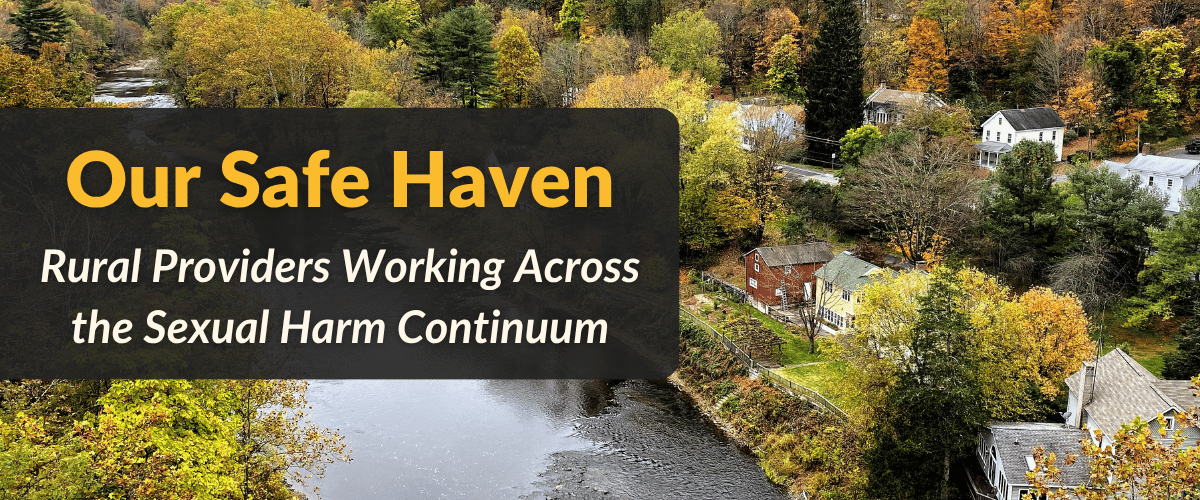
Join us for a series of professional dialogues designed for rural providers who work with individuals across the sexual harm continuum. Moderated by Angelique Caley and David Prescott, these discussions provide a supportive space for rural providers to come together, share insights, offer creative ideas, and develop strategies to address the unique needs of their rural communities, their clients, and to maintain their own self-care.

- Session 01: Let’s Talk Ethical Challenges Faced by Rural Providers
October 14, 2026, from 11:00 am to 12:00 pm EDT
Discuss unique ethical challenges faced by providers in rural areas and resources for support with ethical decision making.
- Session 2: Let’s Talk Sexual Harm Stigma in Rural Communities
November 19, 2026, from 1:00 pm to 2:00 pm EST
Reflect on the stigma related to sexual harm for survivors, individuals who have caused harm, and clinicians who work in this field within rural communities. Discuss strategies for healing from experiences of stigmatization.
- Session 3: Let’s Talk “Am I Really the Only Clinician in these Parts?”
December 10, 2026, from 12:00 pm to 1:00 pm EST
Discuss challenges faced by clinicians in rural areas who may be the only one with training or licensure to work with sexual abuse and/or domestic violence issues. Explore the impact of professional isolation and discuss opportunities for reducing isolation.
- Session 4: Let’s Talk Self-Care for Rural Providers
December 17, 2026, from 2:00 pm to 3:00 pm EST
Reflect on the challenges related to self-care and increased rates of burn-out for rural providers. Discuss strategies for self-care and opportunities for professional support.
These sessions are more than a discussion—they are opportunities to network, build skills, exchange ideas, and contribute to shaping best practices in this field. Join us to connect with like-minded professionals, gain actionable insights, and make a meaningful impact in addressing the challenges faced by rural providers.
To ensure that each session is workable, we will limit the number of attendees. Registration for each session will, therefore, be on a first-come-first-served basis. We are charging a non-refundable fee of $8.00 to reserve your spot.
Your personal privacy is our highest priority. These sessions will be recorded for liability purposes only. The recordings will not be shared with attendees or distributed outside of Safer Society Foundation.
Like any group discussion, everyone will have a responsibility to keep it a safe, professional, and confidential space. We will adhere to the codes of ethics of our professions, mandatory laws, and other professional standards. The Safe Haven series is intended to be supportive; not formal supervision, consultation, or legal advice.