Home / Shop / For Youthful Clients / Professional Resources for Working with Youthful Clients
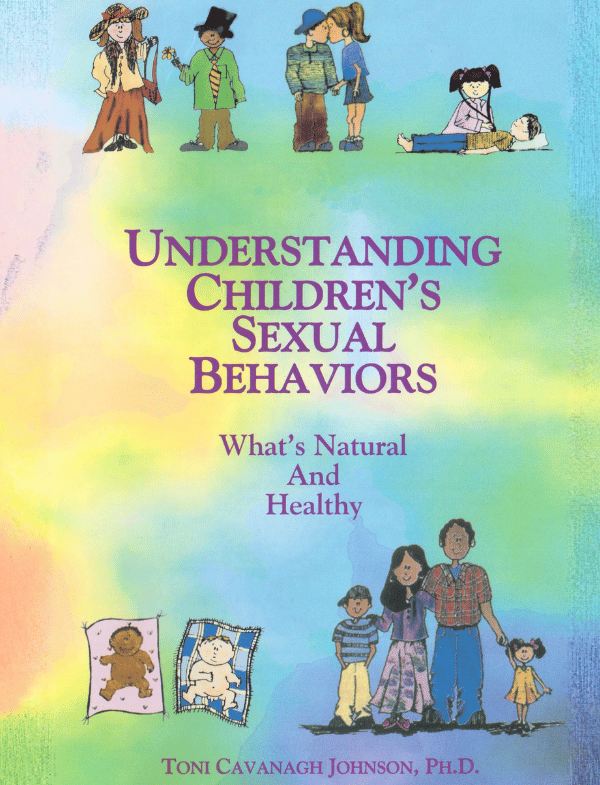
Understanding Children's Sexual Behaviors
$8.00


- Description
- Specifications
Understanding Children’s Sexual Behaviors
What’s Natural and Healthy
by Toni Cavanagh Johnson
Parents and caregivers often struggle to know whether a child's sexual behavior is a normal part of growing up, or a sign that something is wrong. This booklet by Toni Cavanagh Johnson, Ph.D., provides clear, research-based guidance to help adults understand the difference between natural childhood curiosity and behaviors that may need professional attention.
 Dr. Johnson explains that sexual exploration is a normal part of child development. Research shows that as many as 85% of children engage in at least some sexual behavior before age 13. Natural and healthy sexual exploration involves children of similar ages who participate voluntarily, often as part of play like "playing doctor" or "playing house." These behaviors are generally sporadic, limited in scope, and balanced by the child's interest in other aspects of life.
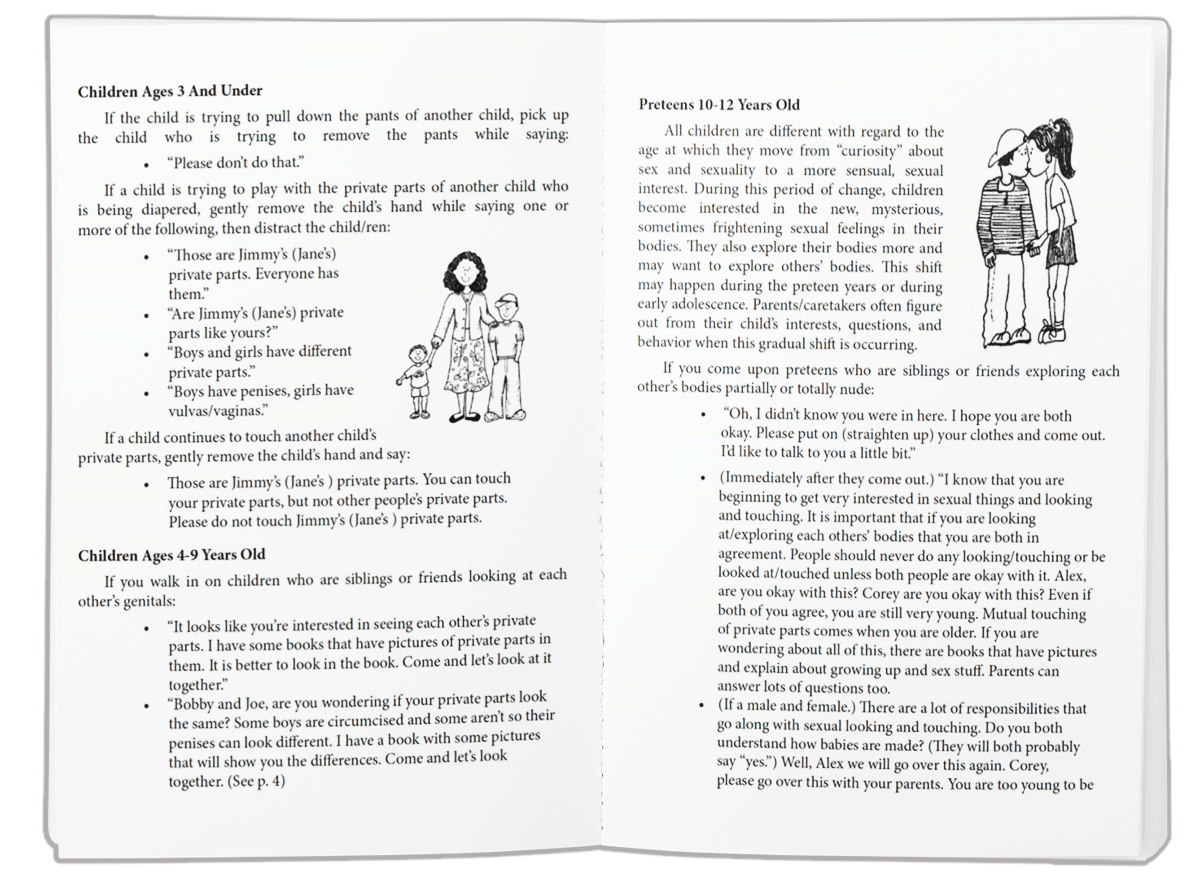
The booklet offers practical advice on how to respond when you discover a child engaged in sexual behavior. Dr. Johnson provides age-specific guidance for children under four, children ages 4-9, and preteens ages 10-12. Her approach emphasizes staying calm, speaking in a matter-of-fact tone, and using these moments as teaching opportunities rather than occasions for shame or punishment. Sample scripts help caregivers know what to say in various situations, from finding young children exploring each other's bodies to discovering a preteen looking at online pornography.
"Remember how your young child views the world at large. It is fairly simple and straightforward. While some children want to figure out how the sun, the moon, and the stars operate, others are content to just see them in the sky. Children know from around 3 or 4 years old that 'private parts' are different from other 'parts.' For some children, this creates a kind of mystery and secrecy that inspires them to discover what they are all about."
A set of detailed charts helps readers distinguish between behaviors that are "natural and healthy," behaviors that are "of concern," and behaviors that warrant professional evaluation. These charts cover three age groups: preschool children, kindergarten through fourth grade, and preteens. The charts allow caregivers and professionals to quickly assess where a specific behavior falls on the continuum.
Twenty characteristics of problematic sexual behavior are described in detail, helping readers identify warning signs. These include sexual behaviors between children who are not age-mates or regular playmates, sexual preoccupation that interferes with normal childhood activities, behaviors that continue despite consistent requests to stop, and the use of coercion or force. The booklet also explores environmental factors that can contribute to problematic sexual behaviors, including exposure to adult sexuality in the home, inadequate supervision, and various forms of abuse or neglect.
Dr. Johnson addresses common parental fears with research-based reassurance. The booklet explains that most children with problematic sexual behaviors have not been sexually abused, and that most children who have been sexually abused do not go on to become offenders. She describes three categories of children with sexual behavior problems: sexually-reactive children, children who engage in extensive mutual sexual behaviors, and children who molest. Each group has different characteristics and treatment needs, but all can be helped.
"Remember, children and teens will learn about sex and sexuality. From whom would you like them to learn? One of the greatest gifts parents can give children is a healthy attitude about sex and sexuality."
The booklet concludes with guidance on when and how to seek professional help, including information about calling Child Protective Services and accessing mental health resources. Dr. Johnson emphasizes that children's problematic sexual behaviors are learned responses that can be unlearned with proper support and intervention.
 Written in accessible language with helpful illustrations throughout, this booklet offers practical guidance for parents, foster parents, teachers, childcare providers, and mental health professionals who want to support healthy sexual development in children while remaining alert to behaviors that may require professional attention.
Pamphlet, 42 pages
$3.00
Order#: WP126
Related Publications
-
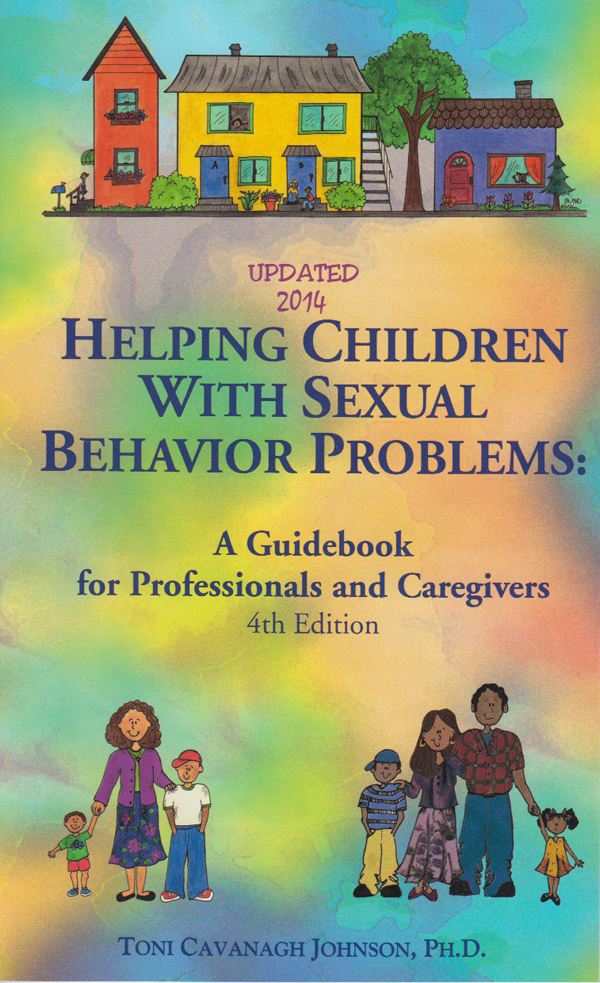
Helping Children with Sexual Behavior Problems
Bulk discount as low as $4.00Successfully Added to your Shopping CartAdding to Cart... -
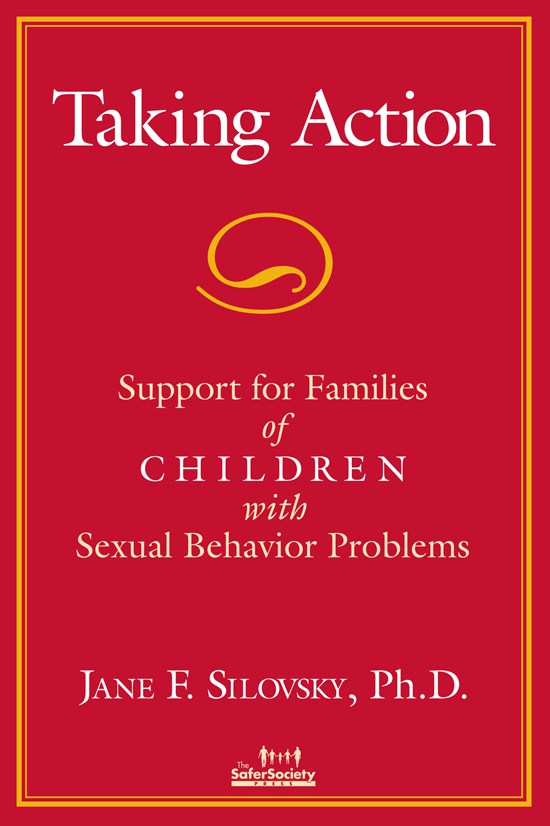
Taking Action (Children)
Bulk discount as low as $4.00OUT OF STOCK until July 2026Successfully Added to your Shopping CartAdding to Cart...