
Therapeutic Processes (PDF Download)


Home / Shop / PDF Downloads

Therapeutic Processes (PDF Download)

$8.00
Therapeutic Processes (PDF Download)

Home / Shop / PDF Downloads

Therapeutic Processes (PDF Download)

$8.00
Model Number: WP162-04
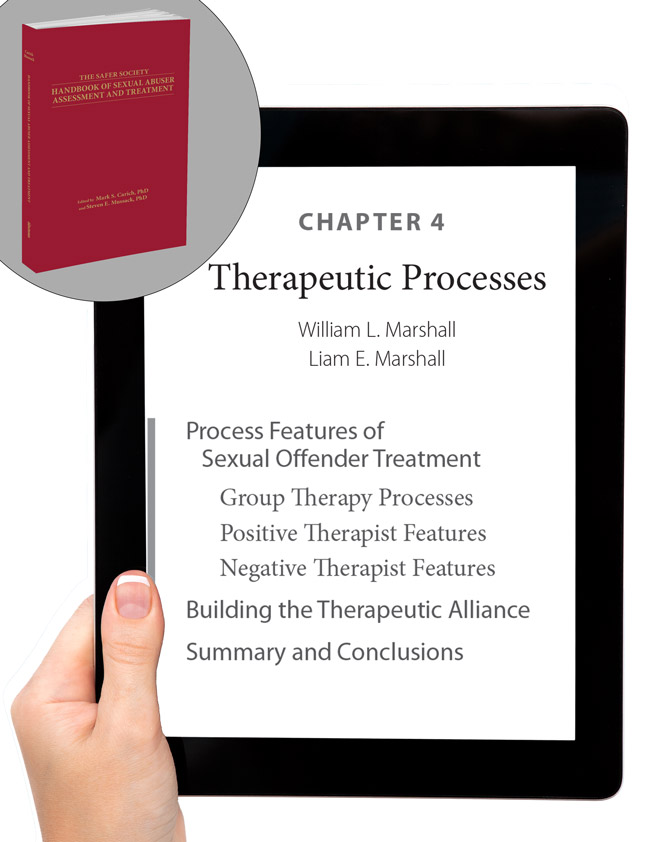
Chapter 4 PDF from The Safer Society Handbook of Sexual Abuser Assessment and Treatment.

Maximum quantity exceeded
Minimum purchase amount of 0 is required
Maximum purchase amount of 0 is allowed
Your Price: $8.00
8.000
A one-time price of $8.00 will be added to your order.
Manufacturer: Safer Society Press
Facebook
X
Email
LinkedIn
  • Description
  • Specifications
Therapeutic Processes
by William L. Marshall & Liam E. Marshall

This is a PDF version of chapter 4 of the Safer Society Handbook of Sexual Abuser Assessment and Treatment.

Two overlapping book pages from Chapter 4, "Therapeutic Processes," by William L. Marshall and Liam E. Marshall, displayed at angles, showing the chapter title page with a sidebar listing subsections and an adjacent page of body text discussing research on Axis 1 and Axis 2 disorders and group therapy effectiveness.For decades, treatment providers have focused primarily on which procedures to use with sexual offenders. Chapter 4 presents research demonstrating that how treatment is delivered matters as much as, or more than, the specific techniques employed. The evidence is clear: therapist characteristics and the therapeutic relationship account for 20 to 30 percent of treatment benefits, while specific procedures explain no more than 15 percent.

Core Findings

Drawing from research across correctional and clinical psychology, Marshall and Marshall identify three elements that account for treatment effectiveness:

  • addressing all criminogenic targets
  • employing evidence-based procedures
  • delivering treatment in ways that build strong therapeutic alliances.

The chapter focuses on this third element, which has received less attention in sexual offender treatment despite its documented importance.
Research examining both group climate and individual therapist behaviors reveals consistent patterns. In group settings, two factors predict success: cohesiveness (members bonding, supporting, and helping each other) and expressiveness (comfortable openness in discussing issues and expressing feelings). Studies of individual therapist behaviors identified four qualities that powerfully predict positive change: empathy, warmth, directiveness (offering guidance through questions rather than commands), and rewardingness (encouraging helpful behaviors through verbal and nonverbal support).

What Works and What Doesn't

The chapter presents evidence from multiple studies showing that when therapists consistently display empathy, warmth, directiveness, and rewardingness, clients make measurable gains across all treatment targets. Clients themselves, when asked to rate their treatment experience, consistently identify therapist qualities as the most important factor in their engagement and progress.
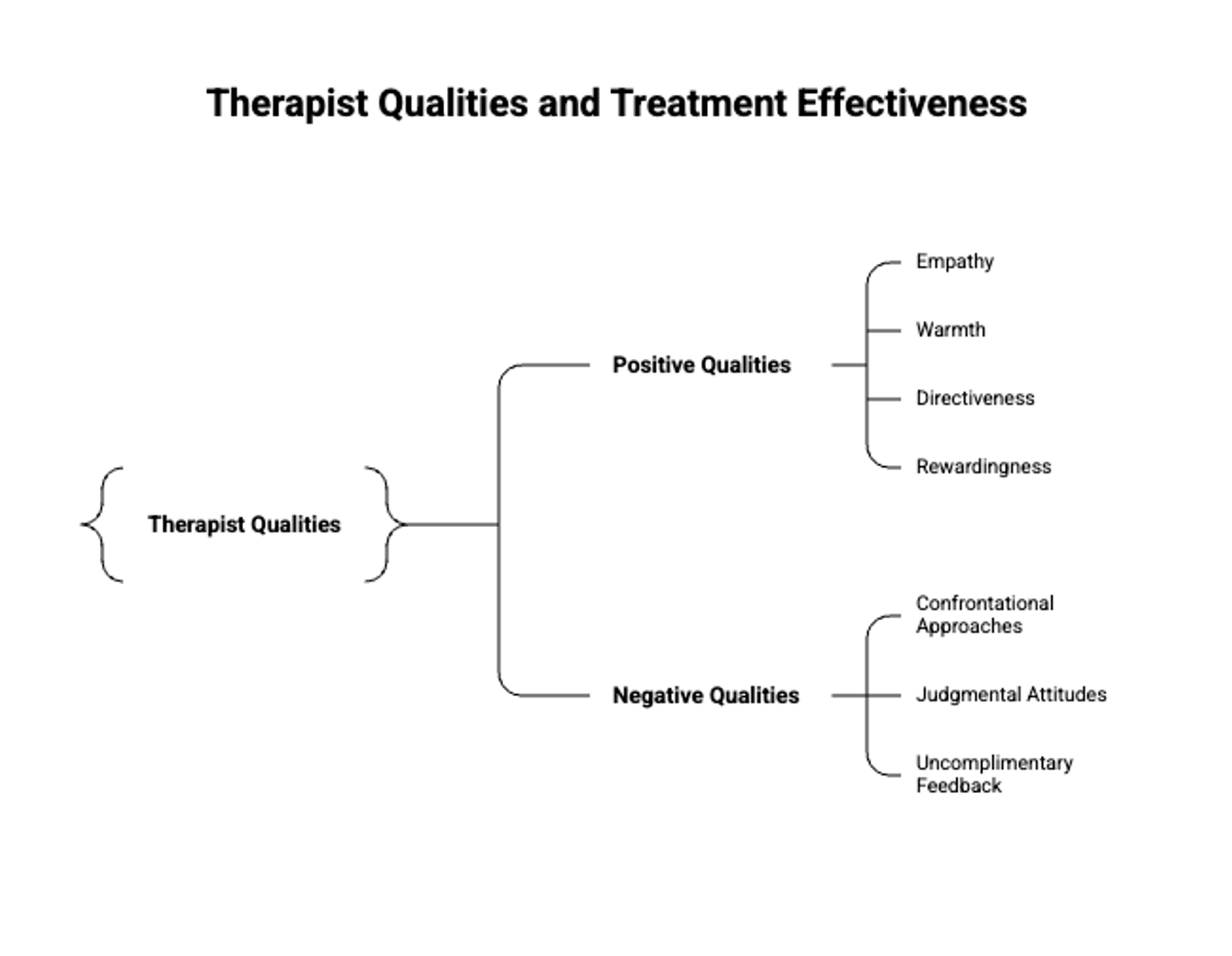
Bracket diagram titled "Therapist Qualities and Treatment Effectiveness" categorizing therapist qualities into two groups: Positive Qualities (Empathy, Warmth, Directiveness, Rewardingness) and Negative Qualities (Confrontational Approaches, Judgmental Attitudes, Uncomplimentary Feedback).In contrast, confrontational approaches (those perceived as demanding, uncomplimentary, and judgmental) significantly reduce effectiveness. These negative approaches are powerful enough to offset the benefits of positive therapist features. The research definitively refutes earlier claims that sexual offenders require harsh confrontation, showing instead that respectful challenging (delivered firmly when needed while maintaining dignity) enhances outcomes.

Practical Application

The chapter provides specific guidance for building therapeutic alliances from the first session. Therapists should emphasize that treatment aims to provide skills and resources for more fulfilling lives, address clients respectfully as people with problems rather than defining them solely by their offenses, and create hope through early successes. The authors recommend delaying detailed offense discussions until confidence in the program is established.

The evidence presented applies across settings (institutional and community), modalities (individual and group), and populations (including juveniles and adults). For professionals delivering treatment to individuals who have committed sexual offenses, this chapter offers research-based knowledge for aligning therapeutic style with evidence to achieve better outcomes.

The authors cover the following topics:

  • Process Features of Sexual Offender Treatment
    • Group Therapy Processes
    • Positive Therapist Features
    • Negative Therapist Features
  • Building the Therapeutic Alliance
  • Summary and Conclusions

After purchasing this product, you will have three days in which to download it. After that time, if you have not downloaded it yet, you will need to contact Safer Society Press.

13 pages, plus bonus material PDF Format Order#: WP162-04

Store Account Login

Please enter your Email Address
Please enter your Password

Product Search

Therapeutic Processes


Home / Shop / PDF Downloads

Therapeutic Processes (PDF Download)

$8.00
Therapeutic Processes (PDF Download)

Home / Shop / PDF Downloads

Therapeutic Processes (PDF Download)

$8.00
Model Number: WP162-04
Chapter 4 PDF from The Safer Society Handbook of Sexual Abuser Assessment and Treatment.
Maximum quantity exceeded
Minimum purchase amount of 0 is required
Maximum purchase amount of 0 is allowed
Your Price: $8.00
8.000
A one-time price of $8.00 will be added to your order.
Manufacturer: Safer Society Press
Facebook
X
Email
LinkedIn
  • Description
  • Specifications
Therapeutic Processes
by William L. Marshall & Liam E. Marshall

This is a PDF version of chapter 4 of the Safer Society Handbook of Sexual Abuser Assessment and Treatment.

Two overlapping book pages from Chapter 4, "Therapeutic Processes," by William L. Marshall and Liam E. Marshall, displayed at angles, showing the chapter title page with a sidebar listing subsections and an adjacent page of body text discussing research on Axis 1 and Axis 2 disorders and group therapy effectiveness.For decades, treatment providers have focused primarily on which procedures to use with sexual offenders. Chapter 4 presents research demonstrating that how treatment is delivered matters as much as, or more than, the specific techniques employed. The evidence is clear: therapist characteristics and the therapeutic relationship account for 20 to 30 percent of treatment benefits, while specific procedures explain no more than 15 percent.

Core Findings

Drawing from research across correctional and clinical psychology, Marshall and Marshall identify three elements that account for treatment effectiveness:

  • addressing all criminogenic targets
  • employing evidence-based procedures
  • delivering treatment in ways that build strong therapeutic alliances.

The chapter focuses on this third element, which has received less attention in sexual offender treatment despite its documented importance.
Research examining both group climate and individual therapist behaviors reveals consistent patterns. In group settings, two factors predict success: cohesiveness (members bonding, supporting, and helping each other) and expressiveness (comfortable openness in discussing issues and expressing feelings). Studies of individual therapist behaviors identified four qualities that powerfully predict positive change: empathy, warmth, directiveness (offering guidance through questions rather than commands), and rewardingness (encouraging helpful behaviors through verbal and nonverbal support).

What Works and What Doesn't

The chapter presents evidence from multiple studies showing that when therapists consistently display empathy, warmth, directiveness, and rewardingness, clients make measurable gains across all treatment targets. Clients themselves, when asked to rate their treatment experience, consistently identify therapist qualities as the most important factor in their engagement and progress.

Bracket diagram titled "Therapist Qualities and Treatment Effectiveness" categorizing therapist qualities into two groups: Positive Qualities (Empathy, Warmth, Directiveness, Rewardingness) and Negative Qualities (Confrontational Approaches, Judgmental Attitudes, Uncomplimentary Feedback).In contrast, confrontational approaches (those perceived as demanding, uncomplimentary, and judgmental) significantly reduce effectiveness. These negative approaches are powerful enough to offset the benefits of positive therapist features. The research definitively refutes earlier claims that sexual offenders require harsh confrontation, showing instead that respectful challenging (delivered firmly when needed while maintaining dignity) enhances outcomes.

Practical Application

The chapter provides specific guidance for building therapeutic alliances from the first session. Therapists should emphasize that treatment aims to provide skills and resources for more fulfilling lives, address clients respectfully as people with problems rather than defining them solely by their offenses, and create hope through early successes. The authors recommend delaying detailed offense discussions until confidence in the program is established.

The evidence presented applies across settings (institutional and community), modalities (individual and group), and populations (including juveniles and adults). For professionals delivering treatment to individuals who have committed sexual offenses, this chapter offers research-based knowledge for aligning therapeutic style with evidence to achieve better outcomes.

The authors cover the following topics:

  • Process Features of Sexual Offender Treatment
    • Group Therapy Processes
    • Positive Therapist Features
    • Negative Therapist Features
  • Building the Therapeutic Alliance
  • Summary and Conclusions

After purchasing this product, you will have three days in which to download it. After that time, if you have not downloaded it yet, you will need to contact Safer Society Press.

13 pages, plus bonus material PDF Format Order#: WP162-04

Store Account Login

Please enter your Email Address
Please enter your Password

Product Search