
Home / Shop / For Adult Clients / Professional Books for Working with Adult Clients
Group Therapy with Sexual Abusers
$43.00



- Description
- Specifications
Group Therapy with Sexual Abusers
Engaging the Full Potential of the Group Experience
by Steven Sawyer & Jerry L. Jennings
Earn CE Credits with GIFR! https://www.gifrinc.com/course/group-therapy-with-sexual-abusers/
Group Therapy with Sexual Abusers: Engaging the Full Potential of the Group Experience by Steven Sawyer and Jerry L. Jennings is the first book dedicated specifically to the practice of group therapy with this challenging population. While most treatment for those who sexually abuse occurs in group settings, the authors argue it is too often conducted like "individual therapy with an audience," failing to harness the unique therapeutic power of group relationships. This book provides clinicians with the practical skills needed to shift from individual-focused treatment to truly effective, group-centered therapy.
 For many men with histories of abuse, isolation, and fractured relationships, the therapy group may represent their first experience of safe, supportive, and meaningful connection with others. Sawyer and Jennings make a powerful case that group therapy offers something unique that cannot be obtained through individual therapy alone.
For some men, sitting in a long-term, open-ended therapy group for a year or more might be the most intense, meaningful, and intimate connection they have ever experienced with other people. It might be the most time they have spent with other adults, and for some it might be the longest relationship they have had in years.
By creating opportunities for genuine member-to-member interaction, the group becomes a place where members can practice new ways of relating, experience acceptance despite their prior offending behavior, and develop the social competencies they lack.
A Strong Theoretical Foundation
The book integrates established group therapy theory with sexual offender-specific research. Drawing from Yalom's landmark work, the authors explore how therapeutic factors such as cohesion, altruism, and universality manifest in group-centered therapy with sexual offenders. They incorporate Maslow's hierarchy of needs to understand how clients struggling with basic survival cannot realistically pursue higher-level therapeutic goals, and they apply Erikson's developmental stages theory when discussing the arrested development that is common in this population. In addition, Marshall's influential attachment theory is used to show how the insecure attachment styles prevalent among sexual offenders—whether dismissive-avoidant, preoccupied-anxious, or fearful-avoidant—directly impact their behavior in groups, and how these characteristics require tailored interventions. Understanding these theoretical frameworks enables therapists to recognize patterns, anticipate challenges, and adjust their approach to meet clients where they are developmentally and psychologically.
Evidence-Based Principles and Research
Moving beyond theory, the authors present research demonstrating that group cohesion, therapeutic climate, and member engagement are the strongest predictors of positive treatment outcomes. They cite studies showing that therapist qualities of warmth, empathy, reward, and directiveness account for 30 to 60 percent of successful treatment outcomes. Conversely, confrontational approaches are shown to be not just ineffective but actively harmful to treatment progress. The authors synthesize findings from multiple studies involving over 500 sexual offenders, revealing that "helping others in my group" and "feeling comfortable participating" are consistently rated as the most important aspects of treatment.
Practical Skills for Daily Practice
Each chapter translates research into actionable guidance enriched by dozens of real-world case examples. For example, the authors introduce the concept of "roving eye contact"—a continuous, purposeful facilitation technique that reminds each member they are connected to others and counteracts egocentric behavior.
Roving Eye Contact, which is frequently little more than a fleeting glance, continuously reminds each group member that they are not alone, that this is a group experience, and that they are connected to others in the group, like it or not. Through REC, every group member gets repeated, tangible attention, regardless of their level of verbal engagement in the group.
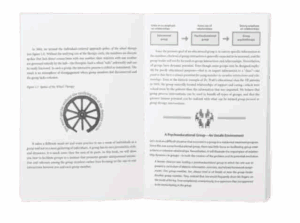 In contrast to the therapist-centered "spokes of the wheel" mode, they demonstrate how to transform passive, disengaged groups through active facilitation that continually prompts member-to-member interaction. Specific techniques are provided for managing the six common deficits sexual offenders bring to group: emotional expression, empathy, motivation to change, social reciprocity, awareness of interpersonal issues, and the ability to give and take feedback/criticism. The book shows how to establish and maintain the clear structure that provides safety for anxious members, how to facilitate different developmental stages from early distrust to mature cohesion, and how to use silence therapeutically rather than anxiously filling every pause.
Managing Real-World Challenges
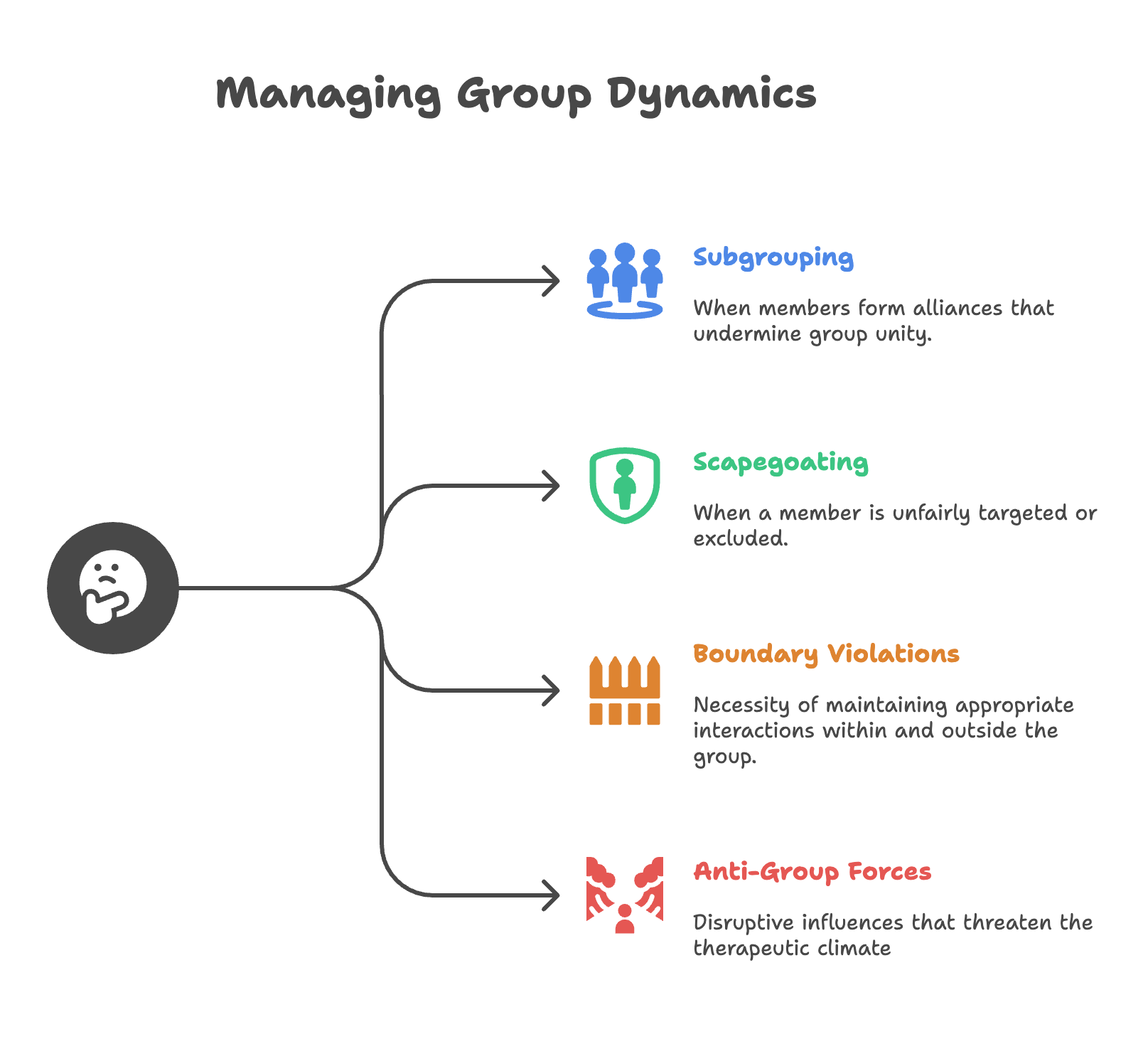
Recognizing the unique difficulties of working with court-mandated clients who often present with personality disorders, antisocial traits, and profound social deficits, Sawyer and Jennings provide extensive guidance for dealing with the common problems of this population. They reframe resistance not as opposition to be confronted but as a normal response to perceived threats to freedom that can be worked with therapeutically. Detailed strategies address subgrouping (when members form alliances against the group or leader), scapegoating (when one member is targeted or excluded), boundary violations (both in and outside group), and the management of "anti-group" forces that threaten therapeutic climate. The book candidly addresses therapist challenges, including countertransference reactions to repugnant crimes, burnout from working with this difficult population, and the ethical complexities of balancing therapeutic goals and public safety responsibilities.
Assessment Tools and Outcome Measurement
 The final chapter introduces validated instruments for objectively measuring group functioning, including tools specifically designed for sexual offender groups. These include the Group Environment Scale for assessing therapeutic climate, the Group Engagement Measure, which was created specifically for sexual offender treatment, the brief Therapeutic Factor Inventory-8 for frequent monitoring, and attachment measures to track improvement over time. By providing these practical assessment tools, the authors enable therapists to move beyond subjective impressions to evidence-based evaluation of their groups' effectiveness, supporting both quality improvement and program accountability.
The book is filled with sound, practical guidelines for facilitating groups in the powerful mode of "group-centered" group therapy, enriched by dozens of case examples based on the authors' many years of practice.
Click here to view the Table of Contents

Free Supplemental Materials
Three tables from the book are available as a free download. The authors believe that these tables will provide a quick and handy reference for clinicians implementing the concepts and techniques presented in the book.
The first book dedicated specifically to group therapy with adult sexual abusers:
- How to utilize the unique power of group relationships and group cohesion to achieve therapeutic growth for individual group members
- Sound, practical guidelines for facilitating groups in the powerful mode of “group-
centered” group therapy - With dozens of case examples based on the authors’ many years of practice
Click here to learn how you can earn CEU credit from reading Safer Society books!
ISBN: 978-1-940234-04-5
paperback | 208 pages
$42.00
Order#: WP174
Related Publications
-
Getting the Most from Group
Bulk discount as low as $9.10Successfully Added to your Shopping CartAdding to Cart... -
Your Personal History
Bulk discount as low as $13.30Successfully Added to your Shopping CartAdding to Cart...