Translating Risk, Need, and Responsivity (RNR) Principles into Supervisory and Clinical Practice

Sandy Jung—an accomplished researcher, clinician, and experienced trainer—developed this training to provide professionals with practical methods for using RNR principles in their work with adult individuals convicted of sexual offenses. Drawing on her extensive expertise, she offers strategies, tools, and case examples to support effective implementation.

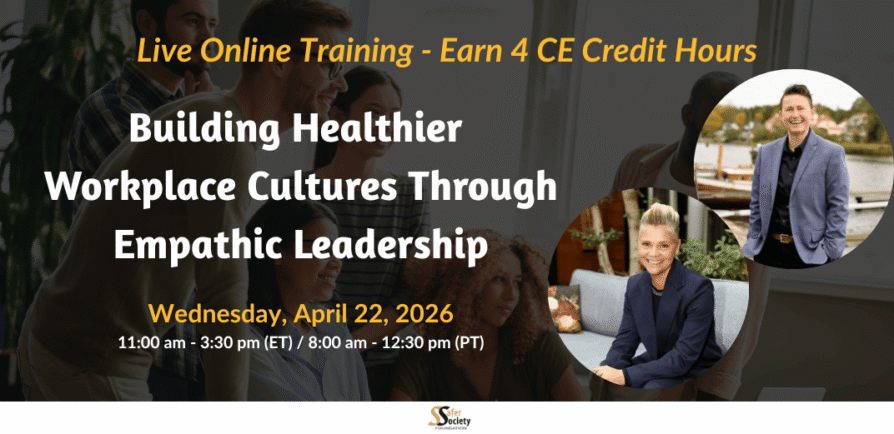
Building Healthier Workplace Cultures Through Empathic Leadership

Empathic workplace leadership is fundamental to effective treatment and supervision, especially when the work can cause trauma in the professionals doing that work. When staff work in high-pressure environments, a leadership approach grounded in empathy can inspire professionals to be their best. However, the results of a recent Safer Society survey on workplace stressors and motivators highlight a critical issue: professionals working to prevent abuse often view management as a greater source of stress than of support.

Presenters Anette Birgersson and Christin Santiago—professionals with extensive experience in all aspects of leadership—developed this training to address this challenge directly. Their work underscores that empathic, trauma-informed leadership is essential not only for supporting professionals but also for enhancing staff retention, building trust and resilience throughout an organization, and delivering consistent, effective services to clients.

Dan Knoepfler

Dan Knoepfler is a Licensed Mental Health Counselor and Certified Sex Offender Treatment Provider in Washington State. He has worked with children with sexual behavior problems for 40 years. He has worked with adults with sexual behavior problems for 25. As Washington State increases its focus on the unique issues relating to emerging adults, he has been involved in working with this population as well.

Using the Becoming Who I Want to Be Workbooks in Clinical Practice with Young Men and Young Women

This training shows participants how to effectively integrate the workbooks into their therapeutic practice. Presenter and author David Prescott begins the training by reviewing the core principles of the GLM. He then offers ideas for how clinicians and counselors can use each section. Central to this training is its focus on dovetailing the GLM and these workbooks with Motivational Interviewing skills and the principles of Trauma-Informed Care, ensuring that intervention is not only effective but also client-centered and deeply supportive.