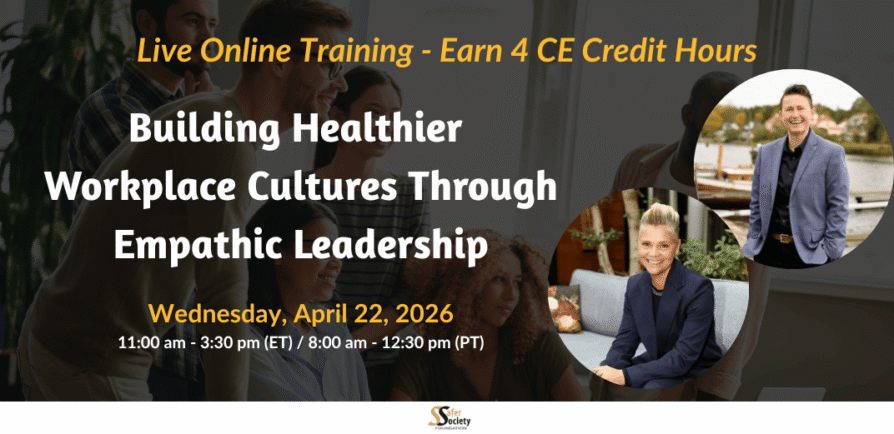
Building Healthier Workplace Cultures Through Empathic Leadership
Empathic workplace leadership is fundamental to effective treatment and supervision, especially when the work can cause trauma in the professionals doing that work. When staff work in high-pressure environments, a leadership approach grounded in empathy can inspire professionals to be their best. However, the results of a recent Safer Society survey on workplace stressors and motivators highlight a critical issue: professionals working to prevent abuse often view management as a greater source of stress than of support.
Presenters Anette Birgersson and Christin Santiago—professionals with extensive experience in all aspects of leadership—developed this training to address this challenge directly. Their work underscores that empathic, trauma-informed leadership is essential not only for supporting professionals but also for enhancing staff retention, building trust and resilience throughout an organization, and delivering consistent, effective services to clients.
Our Safe Haven: Navigating Connection and Isolation with Emerging Adults Shaped by the Online World
Professionals working in violence prevention have noted a growing number of challenges with emerging adult clients—people in the developmental stage roughly spanning from ages 18 through 25—who can appear primarily engaged with the online world. Often, these clients describe having limited avenues for meaningful offline lives. Factors such as lack of community resources, the effects of public registration and notification requirements, and strained relations with offline friends and family can all play a role in this pattern.

Dan Knoepfler
Dan Knoepfler is a Licensed Mental Health Counselor and Certified Sex Offender Treatment Provider in Washington State. He has worked with children with sexual behavior problems for 40 years. He has worked with adults with sexual behavior problems for 25. As Washington State increases its focus on the unique issues relating to emerging adults, he has been involved in working with this population as well.
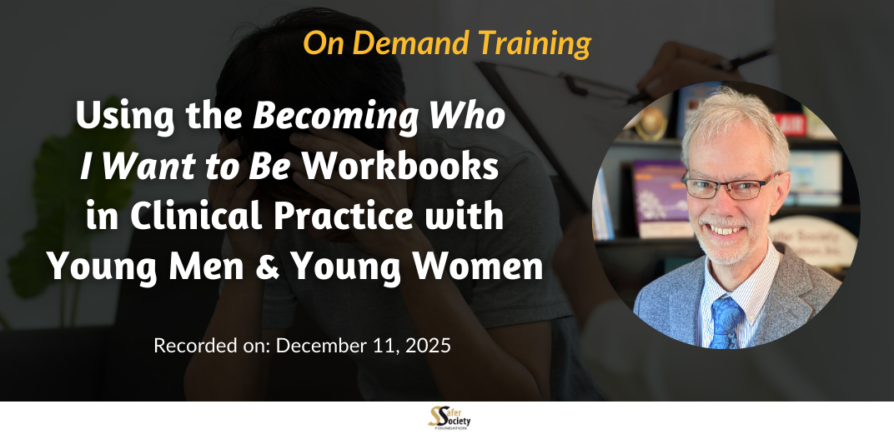
Using the Becoming Who I Want to Be Workbooks in Clinical Practice with Young Men and Young Women
This training shows participants how to effectively integrate the workbooks into their therapeutic practice. Presenter and author David Prescott begins the training by reviewing the core principles of the GLM. He then offers ideas for how clinicians and counselors can use each section. Central to this training is its focus on dovetailing the GLM and these workbooks with Motivational Interviewing skills and the principles of Trauma-Informed Care, ensuring that intervention is not only effective but also client-centered and deeply supportive.
Treating Harmful Sexual Behaviors from a Strengths-Based Approach: A Case Study Exploration
Strengths-based services for children, adolescents, families, and adults have become far more widely used in recent years. While much of this practice has been in response to trends in research, many professionals simply prefer to take a more positive, strengths-focused approach, particularly when working with adolescents who have caused sexual harm.
Dr. Kevin Powell has been a leading light in strengths-based work throughout his career, with an extensive record of publications and presentations on the subject. In this training, Dr. Powell describes a challenging case involving an adolescent mandated to receive sexual offense-specific treatment.

Our Safe Haven: Promoting Healthy Intimate Relationships in Clinical Practice
Developing and maintaining healthy relationships is a central aspect of treatment for sexual offending. Relationships shape how individuals see themselves, connect with others, and find meaning and accountability in their lives. Yet for many people who have caused harm, the path toward genuine intimacy, trust, and empathy can be filled with obstacles. Professionals working in this field face unique challenges in helping clients develop their capacity for closeness while addressing fears, misunderstandings, and past traumas that affect connection. This work invites both professionals and clients to rethink what healthy relationships can look like in all their diversity and complexity. Building on these ideas, we invite you to join us for this series of professional dialogues moderated by Jay Herman, LCSW, and David Prescott, LICSW.
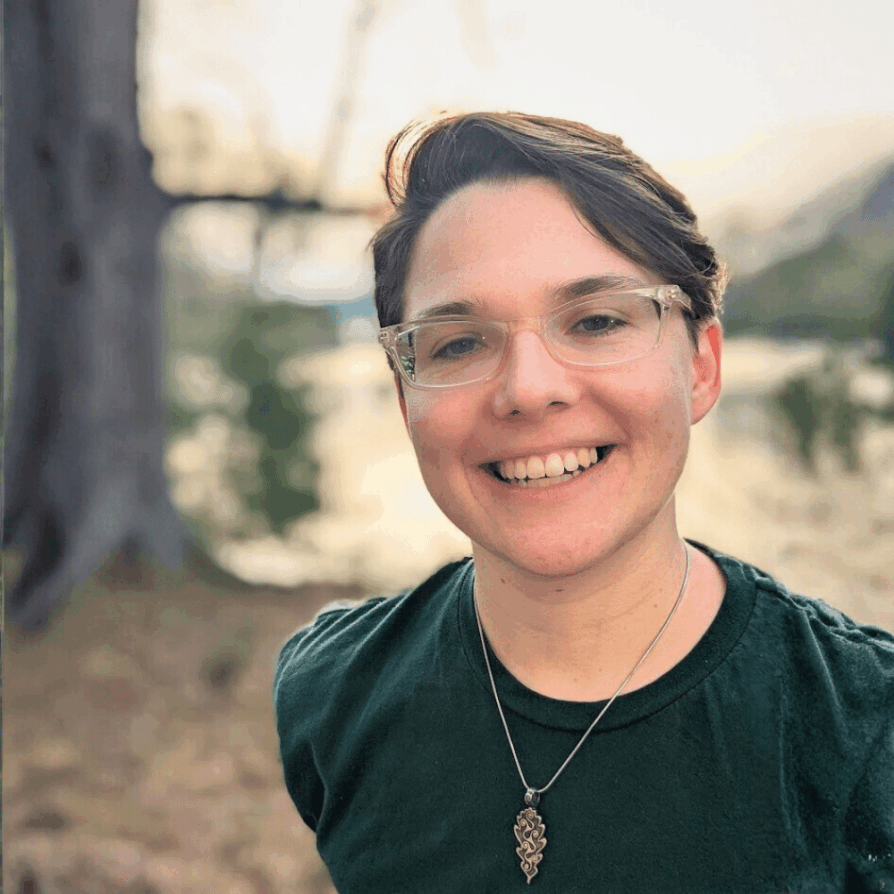
Jay Herman, LCSW
Jay Herman, LCSW, has worked in the field of sexual violence prevention and education since 2013. Jay has worked with teens and adults in various settings including residential, educational, occupational, policy, and clinical, serving people impacted by sexual violence, domestic violence, and systemic oppression.