
• How to Effectively Use Dynamic Risk Assessment Tools: STABLE-2007 & ACUTE-2007 Training (Day 02)

    During this eight-hour training, Katie Gotch, LPC, CCSOT, ATSA-F, provides an overview of the development and research of the STABLE-2007 and ACUTE-2007 instruments. She explains how to score each of the measures’ items, as well as their appropriate interpretation and use within varying settings. This includes recent guidance on the use of these tools with individuals convicted of child sexual abuse material-related offenses (CSAM). To enhance learning, case studies are incorporated to provide hands-on practice and to address common scoring and administration errors.

    $280.00

  • Helping Clients Prepare for Change:
Exploring Ambivalence in Abuse Prevention

    Ambivalence is a universal human experience—we have all felt torn between two directions at different points in our lives. In clinical settings, practitioners often encounter clients who express a desire for change while remaining unsure about engaging in treatment. In this webinar, Motivational Interviewing trainer and domestic violence expert Lauren Garder explores how ambivalence manifests in clients whose actions have caused harm to others and how what may appear as resistance can, in fact, present valuable opportunities for meaningful clinical exploration. Participants will gain practical examples and strategies for skillfully eliciting, exploring, and resolving ambivalence to help clients move toward meaningful conversations about change.

    Free
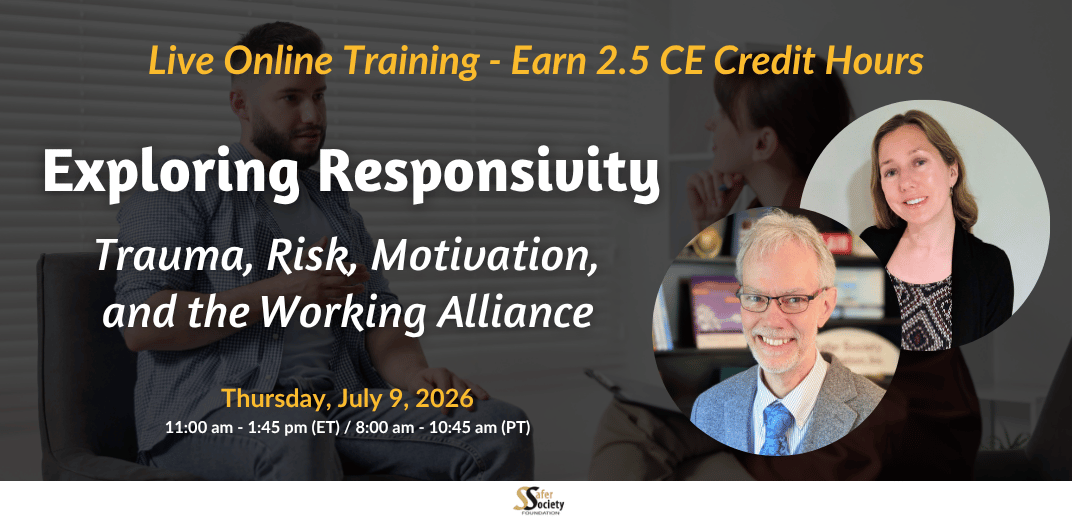
  • Exploring Responsivity: Trauma, Risk, Motivation, and the Working Alliance

    This training, presented by Mr. Prescott and Dr. Nassen, focuses on the responsivity principle—matching treatment services to each client’s unique characteristics. As one of the three key principles of effective correctional rehabilitation, responsivity is often the least clearly understood in practice. The presenters explore how this concept applies to treatment programs for adults and older adolescents who commit sexual offenses, within the broader Risk-Need-Responsivity (RNR) framework. They discuss how childhood adversity can shape dynamic risk and functioning, and review evidence-informed methods for improving responsivity and the therapeutic alliance, including Feedback Informed Treatment and Motivational Interviewing.

    $87