• Introduction to CE-CERT: Skills for Reducing Burnout and Secondary Traumatic Stress

    Ms. Lauren Garder is very familiar with the stressors inherent in abuse-prevention work. Drawing on her experience in domestic violence and fatality review, she offers this introduction to CE-CERT out of a continuing commitment to supporting the wellbeing of professionals in this field.

    CE-CERT (Components for Enhancing Career Experience and Reducing Trauma) was originally developed by Brian C. Miller, PhD. It provides a framework of concrete skills and practices designed to reduce job-related stress and enhance the satisfaction of helping work. The goal of CE-CERT is not merely to survive one’s vocation, but to find it deeply rewarding and sustainable.

    $70.00
  • Our Safe Haven: Supporting Youths Through the Complexities of Sexually Explicit Media

    Join us for a series of professional dialogues designed to address these pressing issues. Moderated by Seth Wescott and David Prescott, these discussions provide a supportive space for professionals to share insights, develop strategies, and enhance their ability to navigate the complexities of SEM’s impact on youths. Each session will begin with a focused exploration of a specific topic, evolving naturally into an engaging, attendee-driven conversation shaped by shared experiences and professional insights.

    $8.00
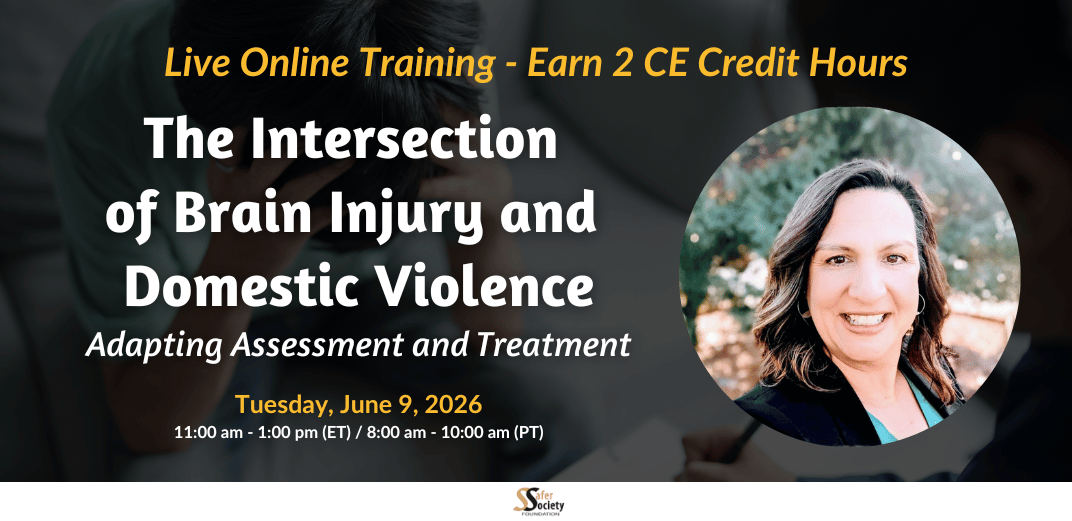
  • The Intersection of Brain Injury and Domestic Violence: Adapting Assessment and Treatment

    Russha Knauer—Director of Colorado’s lead state agency on traumatic brain injuries, MINDSOURCE Brain Injury Network—developed this training to address a critical gap in understanding, assessing, and working with adults who perpetrate domestic violence and have TBIs. During this training, Knauer highlights how brain injuries are often misinterpreted or overlooked, as their symptoms may appear similar to those of mental health conditions, substance use disorders, and other criminogenic needs.

    Knauer introduces practical, brain injury–informed strategies to enhance identification and adapt interventions, ultimately supporting healthier, less controlling interpersonal behaviors.

    $70.00
  • Static-99R Training: Best Practices for Accurate Risk Assessment (Day 01)

    In this training, Certified Trainer Katie Gotch provides a thorough overview of the Static-99R, including its development, scoring system, and application in various settings. Participants learn how to score each of the ten items, with scores ranging from -3 to 12, and understand how these scores categorize individuals into five distinct risk levels: very low, below average, average, above average, and well above average risk.

    The training also covers the predictive validity of the Static-99R and its appropriate use in forensic settings. Case studies are utilized to enhance understanding and facilitate skill development throughout the training.

    $280.00
  • Static-99R Training: Best Practices for Accurate Risk Assessment (Day 02)

    In this training, Certified Trainer Katie Gotch provides a thorough overview of the Static-99R, including its development, scoring system, and application in various settings. Participants learn how to score each of the ten items, with scores ranging from -3 to 12, and understand how these scores categorize individuals into five distinct risk levels: very low, below average, average, above average, and well above average risk.

    The training also covers the predictive validity of the Static-99R and its appropriate use in forensic settings. Case studies are utilized to enhance understanding and facilitate skill development throughout the training.

    $280.00
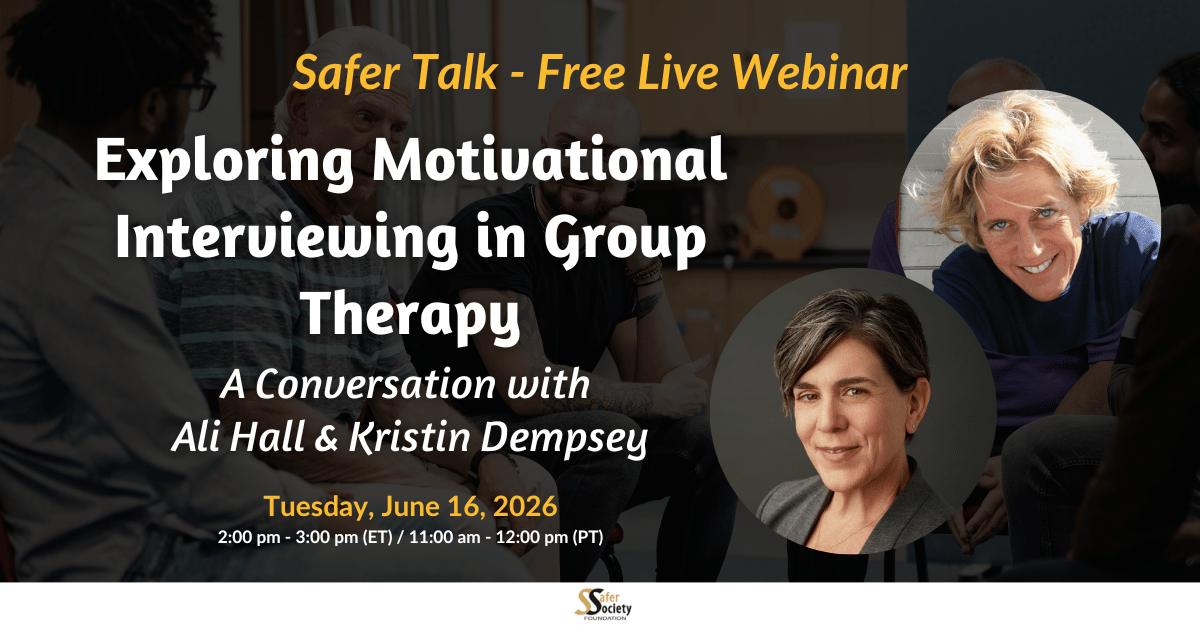
  • Exploring Motivational Interviewing in Group Therapy: A Conversation with Ali Hall & Kristin Dempsey

    Group therapy plays a central role in the treatment of justice-involved clients and related programs. Similarly, Motivational Interviewing (MI) is a treatment of choice for numerous conditions and is widely used in forensic settings. However, relatively little has been written about the most effective ways to integrate MI into group therapy.

    Building on their training on this topic, Ali Hall and Kristin Dempsey return for a conversational session introducing their work in this area. In this webinar, they explore how MI principles can enhance group therapy practice.

    Free
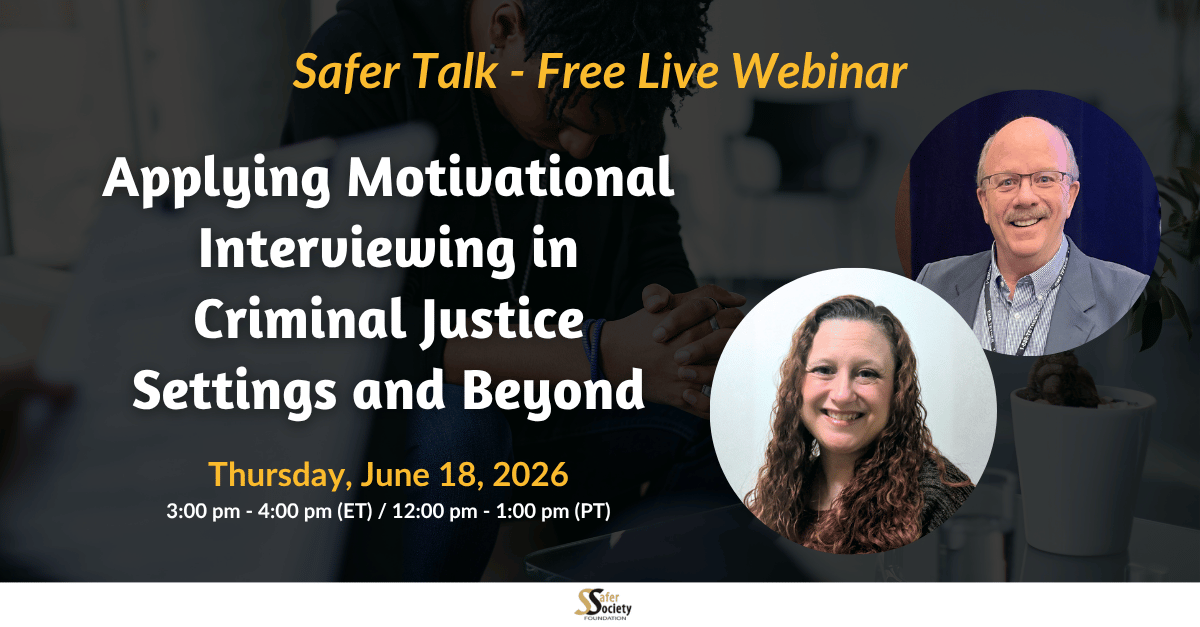
  • Applying Motivational Interviewing in Criminal Justice Settings and Beyond

    Motivational Interviewing (MI) has become a widely used, collaborative approach in criminal justice and related settings, helping clients safely explore their own motivations and build healthier, more self-directed lives. In this webinar, Dr. Stinson and Mr. Clark draw on their newly released second edition of Motivational Interviewing in Criminal Justice to highlight what practitioners need to know to apply MI effectively with mandated clients in traditional justice settings, child welfare, and both inpatient and outpatient programs. They will cover core elements of MI practice, ethical considerations in criminal justice treatment, effective ways to learn and master MI skills, and current research on MI outcomes, offering concrete strategies for engaging even the most resistant clients and providing a clear roadmap for initiating productive change conversations in nearly any setting.

    Free
  • Our Safe Haven: Supporting Youths Through the Complexities of Sexually Explicit Media

    Join us for a series of professional dialogues designed to address these pressing issues. Moderated by Seth Wescott and David Prescott, these discussions provide a supportive space for professionals to share insights, develop strategies, and enhance their ability to navigate the complexities of SEM’s impact on youths. Each session will begin with a focused exploration of a specific topic, evolving naturally into an engaging, attendee-driven conversation shaped by shared experiences and professional insights.

    $8.00
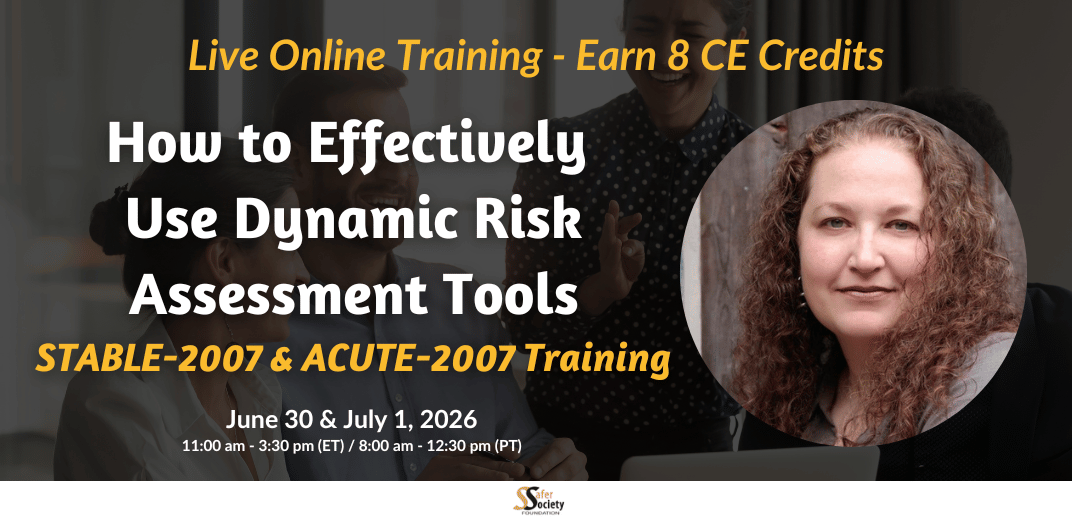
  • How to Effectively Use Dynamic Risk Assessment Tools: STABLE-2007 & ACUTE-2007 Training (Day 01)

    During this eight-hour training, Katie Gotch, LPC, CCSOT, ATSA-F, provides an overview of the development and research of the STABLE-2007 and ACUTE-2007 instruments. She explains how to score each of the measures’ items, as well as their appropriate interpretation and use within varying settings. This includes recent guidance on the use of these tools with individuals convicted of child sexual abuse material-related offenses (CSAM). To enhance learning, case studies are incorporated to provide hands-on practice and to address common scoring and administration errors.

    $280.00
  • How to Effectively Use Dynamic Risk Assessment Tools: STABLE-2007 & ACUTE-2007 Training (Day 02)

    During this eight-hour training, Katie Gotch, LPC, CCSOT, ATSA-F, provides an overview of the development and research of the STABLE-2007 and ACUTE-2007 instruments. She explains how to score each of the measures’ items, as well as their appropriate interpretation and use within varying settings. This includes recent guidance on the use of these tools with individuals convicted of child sexual abuse material-related offenses (CSAM). To enhance learning, case studies are incorporated to provide hands-on practice and to address common scoring and administration errors.

    $280.00
  • Helping Clients Prepare for Change:
Exploring Ambivalence in Abuse Prevention

    Ambivalence is a universal human experience—we have all felt torn between two directions at different points in our lives. In clinical settings, practitioners often encounter clients who express a desire for change while remaining unsure about engaging in treatment. In this webinar, Motivational Interviewing trainer and domestic violence expert Lauren Garder explores how ambivalence manifests in clients whose actions have caused harm to others and how what may appear as resistance can, in fact, present valuable opportunities for meaningful clinical exploration. Participants will gain practical examples and strategies for skillfully eliciting, exploring, and resolving ambivalence to help clients move toward meaningful conversations about change.

    Free