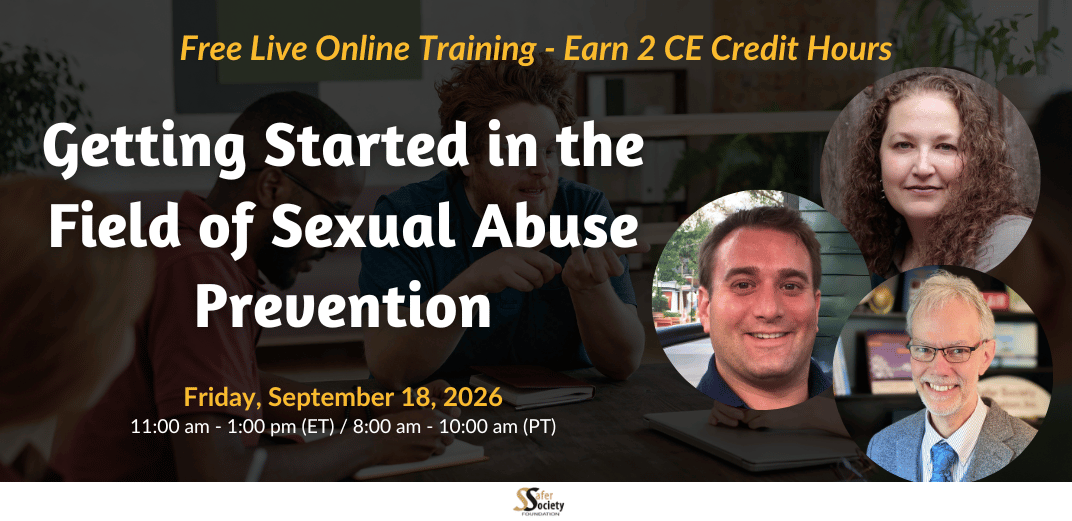
• Getting Started in the Field of Sexual Abuse Prevention

    Beginning a career in sexual abuse prevention can be both rewarding and challenging. While many are motivated by helping clients and contributing to community safety, the work can also involve significant stress. In response, David Prescott, Katie Gotch, and Seth Wescott created this free training for early-career professionals working with adults and adolescents, emphasizing that those who choose this work matter and can flourish with the right support.

    The training guides participants through key concepts for thriving in the field, including mentorship and teamwork, treatment models, self-care and burnout, workplace challenges, core principles such as risk, need, and responsivity, ethics and boundaries, and skills like empathy. The session concludes with a discussion featuring experienced practitioners who share early-career lessons and recommendations for continued learning.
    Free
  • Our Safe Haven: Getting Our Self-Care Right


    Many conversations about self-care suggest that if you are stressed, you should turn to activities such as meditation, yoga, or spa days. While these strategies can be helpful, they do not always address the full capacity of workplace stress. A recent Safer Society survey found that workplace stressors are often well outside the control of individuals. Additionally, another survey revealed that many professionals already maintain self-care routines, though their effectiveness can vary. Ultimately, understanding moral injury is a crucial component in moving forward with greater self-efficacy. Join us to help create a professional dialogue around the more nuance aspects of self-care. Co-moderators Seth Wescott and David Prescott offer ideas for approaching self-care as a team effort and as an area for professional development.

    $8.00
  • Our Safe Haven: Advancing Allyship and Support Services for People with Marginalized Sexual Orientation and/or Gender Identity (MOGI)

    Individuals with marginalized sexual orientations and/or sexual identities (MOGI) encounter numerous interrelated challenges, including stigma, discrimination, and violence in social, educational, and professional environments; heightened risk of mental health issues due to social isolation and abuse; barriers to accessing vital health and support services; and rejection from families or communities, often resulting in homelessness and further marginalization. These challenges are compounded by cultural misunderstandings, intersecting forms of exclusion, and gaps in societal and institutional support. Addressing them requires a collective effort to advance inclusion, equity, and community acceptance for people of all MOGI, ensuring their dignity and rights are respected and upheld. In response to these realities, we invite those supporting MOGI-diverse individuals and members of their communities to join us for this series of professional dialogues moderated by Jimmy Widdifield, Jr., and David Prescott. Created to foster meaningful and respectful conversations, these sessions provide a space for professionals to openly explore the challenges faced by individuals with diverse MOGIE. Through shared experiences, expert insights, and practical guidance, attendees will gain strategies to strengthen advocacy, promote inclusive practices, and build effective allyship—helping to foster environments where all people can live authentically and thrive.

    $8.00
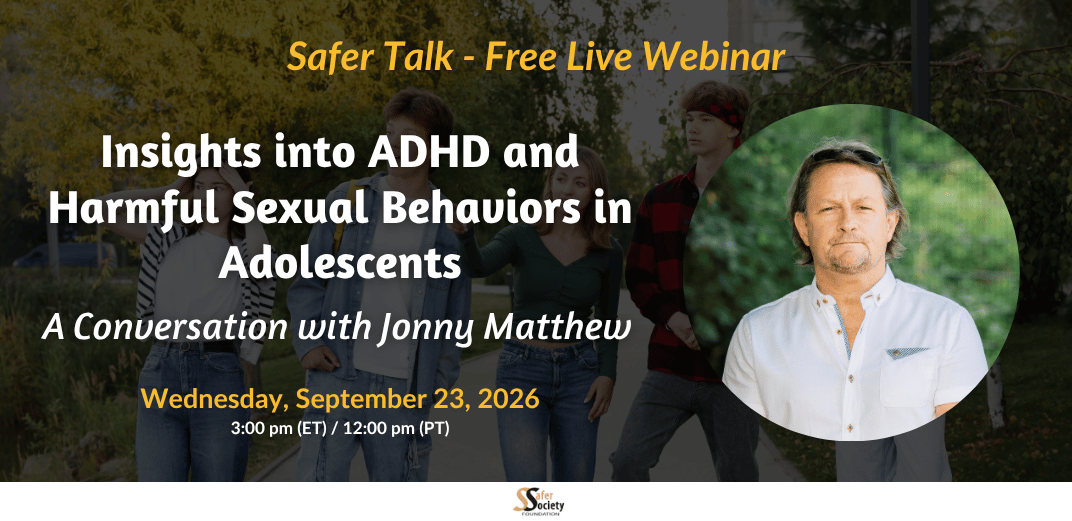
  • Insights into ADHD and Harmful Sexual Behaviors in Adolescents: A Conversation with Jonny Matthew

    Professionals working with youth who have sexually abused frequently observe high rates of ADHD, a condition associated with impulsivity and self-regulation challenges that can increase risk if unaddressed. In this free webinar, Jonny Matthew—a social worker and criminologist with more than 30 years of experience—shares practical strategies for recognizing and responding to these needs, helping practitioners support engagement, reduce risk, and promote long-term wellbeing. The session also explores how ADHD can present both challenges and strengths within the treatment process.

    Free
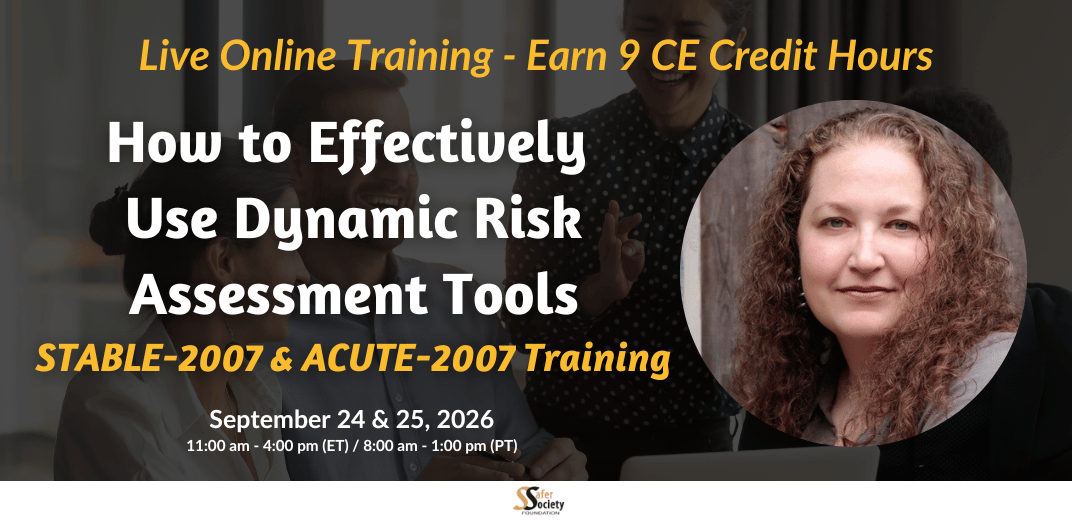
  • Day 01: How to Effectively Use Dynamic Risk Assessment Tools: STABLE-2007 & ACUTE-2007 Training

    During this nine-hour training, Katie Gotch, LPC, CCSOT, ATSA-F, provides an overview of the development and research of the STABLE-2007 and ACUTE-2007 instruments. She explains how to score each of the measures’ items, as well as their appropriate interpretation and use within varying settings. This includes recent guidance on the use of these tools with individuals convicted of child sexual abuse material-related offenses (CSAM). To enhance learning, case studies are incorporated to provide hands-on practice and to address common scoring and administration errors.

    $315.00
  • Day 02: How to Effectively Use Dynamic Risk Assessment Tools: STABLE-2007 & ACUTE-2007 Training

    During this nine-hour training, Katie Gotch, LPC, CCSOT, ATSA-F, provides an overview of the development and research of the STABLE-2007 and ACUTE-2007 instruments. She explains how to score each of the measures’ items, as well as their appropriate interpretation and use within varying settings. This includes recent guidance on the use of these tools with individuals convicted of child sexual abuse material-related offenses (CSAM). To enhance learning, case studies are incorporated to provide hands-on practice and to address common scoring and administration errors.

    $315.00
  • Our Safe Haven: Getting Our Self-Care Right


    Many conversations about self-care suggest that if you are stressed, you should turn to activities such as meditation, yoga, or spa days. While these strategies can be helpful, they do not always address the full capacity of workplace stress. A recent Safer Society survey found that workplace stressors are often well outside the control of individuals. Additionally, another survey revealed that many professionals already maintain self-care routines, though their effectiveness can vary. Ultimately, understanding moral injury is a crucial component in moving forward with greater self-efficacy. Join us to help create a professional dialogue around the more nuance aspects of self-care. Co-moderators Seth Wescott and David Prescott offer ideas for approaching self-care as a team effort and as an area for professional development.

    $8.00