
• Our Safe Haven: Getting Our Self-Care Right


    Many conversations about self-care suggest that if you are stressed, you should turn to activities such as meditation, yoga, or spa days. While these strategies can be helpful, they do not always address the full capacity of workplace stress. A recent Safer Society survey found that workplace stressors are often well outside the control of individuals. Additionally, another survey revealed that many professionals already maintain self-care routines, though their effectiveness can vary. Ultimately, understanding moral injury is a crucial component in moving forward with greater self-efficacy. Join us to help create a professional dialogue around the more nuance aspects of self-care. Co-moderators Seth Wescott and David Prescott offer ideas for approaching self-care as a team effort and as an area for professional development.
    $8.00
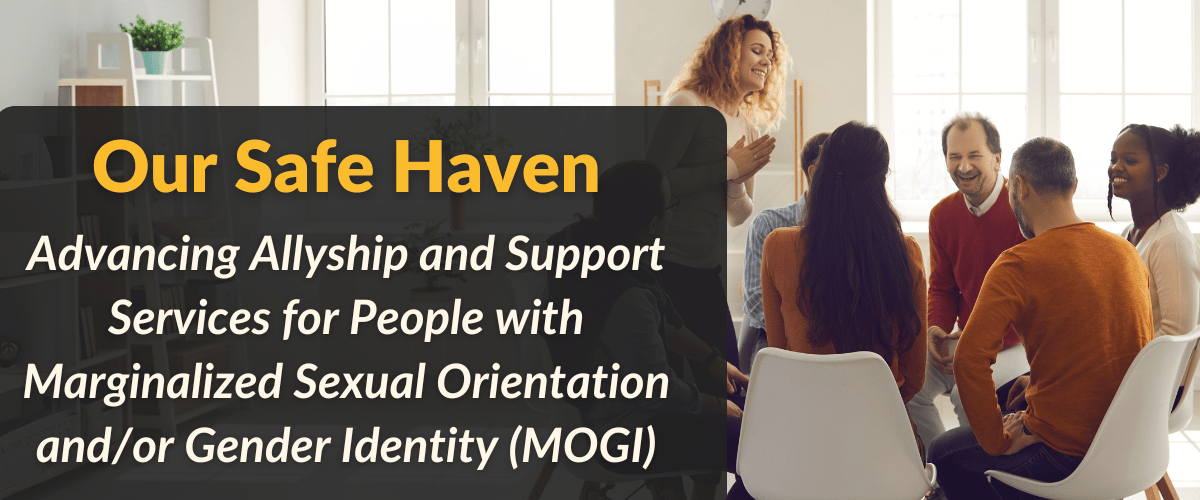
  • Our Safe Haven: Advancing Allyship and Support Services for People with Marginalized Sexual Orientation and/or Gender Identity (MOGI)

    Individuals with marginalized sexual orientations and/or sexual identities (MOGI) encounter numerous interrelated challenges, including stigma, discrimination, and violence in social, educational, and professional environments; heightened risk of mental health issues due to social isolation and abuse; barriers to accessing vital health and support services; and rejection from families or communities, often resulting in homelessness and further marginalization. These challenges are compounded by cultural misunderstandings, intersecting forms of exclusion, and gaps in societal and institutional support. Addressing them requires a collective effort to advance inclusion, equity, and community acceptance for people of all MOGI, ensuring their dignity and rights are respected and upheld. In response to these realities, we invite those supporting MOGI-diverse individuals and members of their communities to join us for this series of professional dialogues moderated by Jimmy Widdifield, Jr., and David Prescott. Created to foster meaningful and respectful conversations, these sessions provide a space for professionals to openly explore the challenges faced by individuals with diverse MOGIE. Through shared experiences, expert insights, and practical guidance, attendees will gain strategies to strengthen advocacy, promote inclusive practices, and build effective allyship—helping to foster environments where all people can live authentically and thrive.

    $8.00
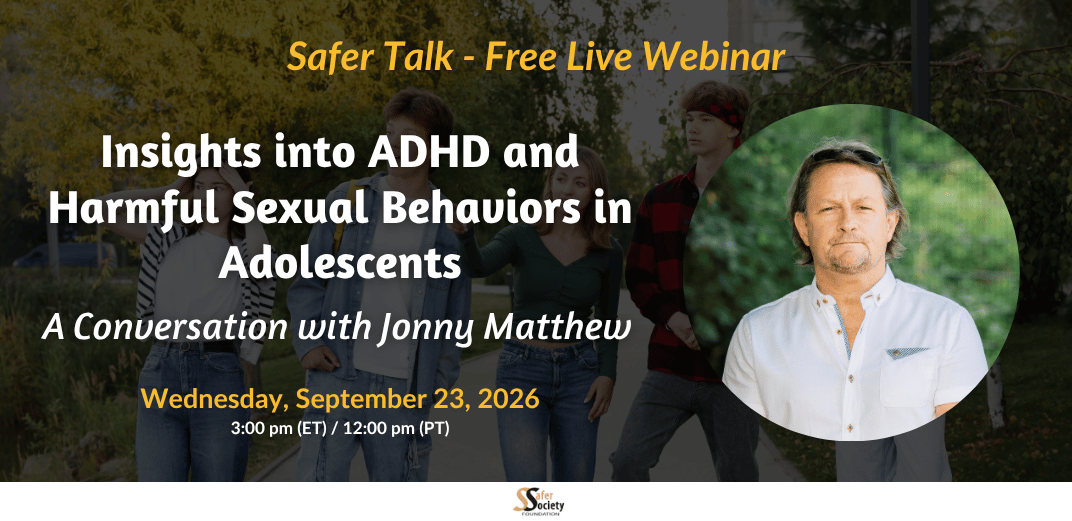
  • Insights into ADHD and Harmful Sexual Behaviors in Adolescents: A Conversation with Jonny Matthew

    Professionals working with youth who have sexually abused frequently observe high rates of ADHD, a condition associated with impulsivity and self-regulation challenges that can increase risk if unaddressed. In this free webinar, Jonny Matthew—a social worker and criminologist with more than 30 years of experience—shares practical strategies for recognizing and responding to these needs, helping practitioners support engagement, reduce risk, and promote long-term wellbeing. The session also explores how ADHD can present both challenges and strengths within the treatment process.

    Free
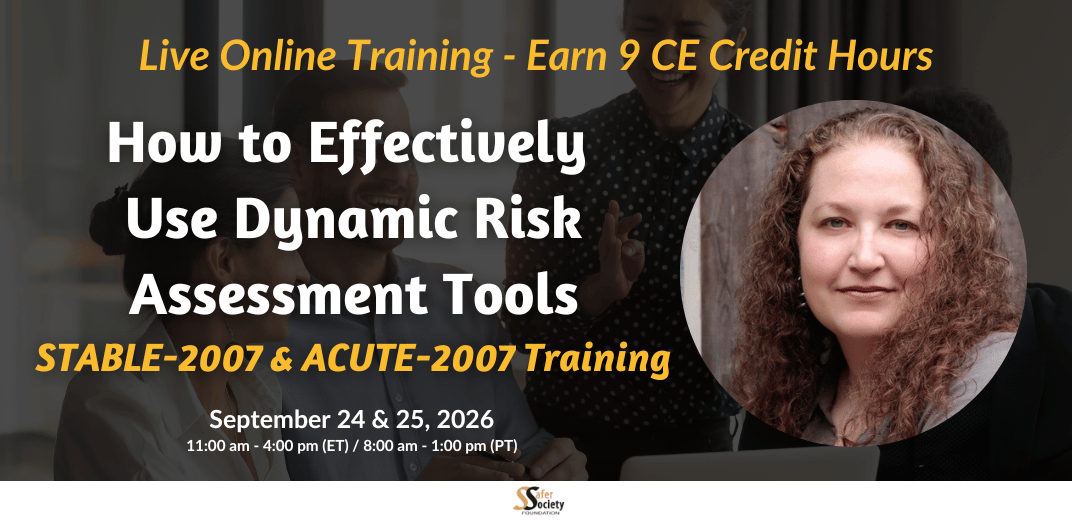
  • Day 01: How to Effectively Use Dynamic Risk Assessment Tools: STABLE-2007 & ACUTE-2007 Training

    During this nine-hour training, Katie Gotch, LPC, CCSOT, ATSA-F, provides an overview of the development and research of the STABLE-2007 and ACUTE-2007 instruments. She explains how to score each of the measures’ items, as well as their appropriate interpretation and use within varying settings. This includes recent guidance on the use of these tools with individuals convicted of child sexual abuse material-related offenses (CSAM). To enhance learning, case studies are incorporated to provide hands-on practice and to address common scoring and administration errors.

    $315.00
  • Day 02: How to Effectively Use Dynamic Risk Assessment Tools: STABLE-2007 & ACUTE-2007 Training

    During this nine-hour training, Katie Gotch, LPC, CCSOT, ATSA-F, provides an overview of the development and research of the STABLE-2007 and ACUTE-2007 instruments. She explains how to score each of the measures’ items, as well as their appropriate interpretation and use within varying settings. This includes recent guidance on the use of these tools with individuals convicted of child sexual abuse material-related offenses (CSAM). To enhance learning, case studies are incorporated to provide hands-on practice and to address common scoring and administration errors.

    $315.00
  • Our Safe Haven: Getting Our Self-Care Right


    Many conversations about self-care suggest that if you are stressed, you should turn to activities such as meditation, yoga, or spa days. While these strategies can be helpful, they do not always address the full capacity of workplace stress. A recent Safer Society survey found that workplace stressors are often well outside the control of individuals. Additionally, another survey revealed that many professionals already maintain self-care routines, though their effectiveness can vary. Ultimately, understanding moral injury is a crucial component in moving forward with greater self-efficacy. Join us to help create a professional dialogue around the more nuance aspects of self-care. Co-moderators Seth Wescott and David Prescott offer ideas for approaching self-care as a team effort and as an area for professional development.
    $8.00
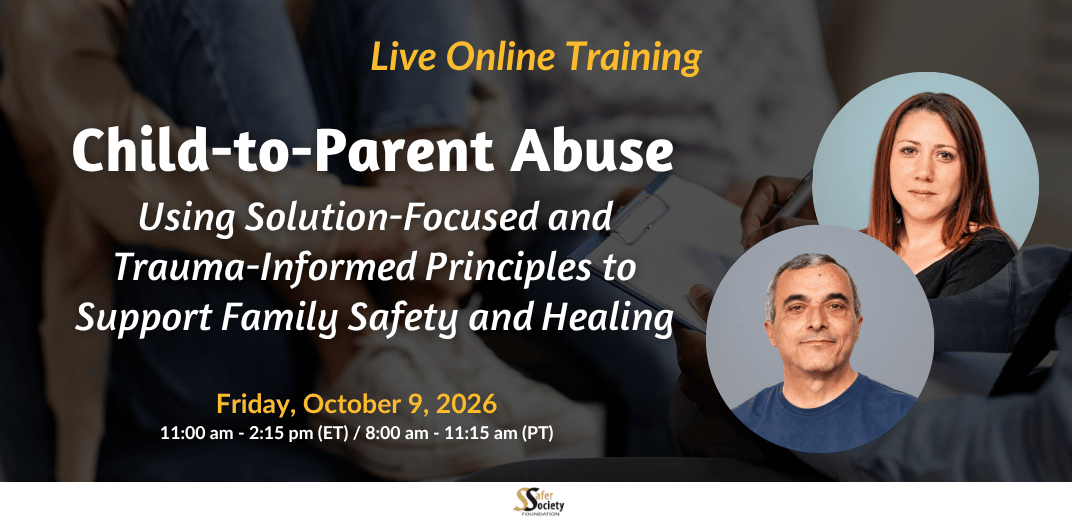
  • Child-to-Parent Abuse: Using Solution-Focused and Trauma-Informed Principles to Support Family Safety and Healing

    Child-to-parent abuse is often hidden by shame and misunderstood by professionals. In this three-hour training, Ayse Adil and Joseph Lettieri share a solution-focused, trauma-informed approach to help practitioners better assess risk, reduce blame, and build safer, more collaborative family relationships.

    Drawing on more than thirteen years of direct practice with over 1,200 families, the session explores how trauma, culture, neurodivergence, and wider systems can shape these dynamics. Participants will leave with practical tools, real-life insights, and a stronger understanding of how small moments of connection and curiosity can support meaningful change.

    $72.00
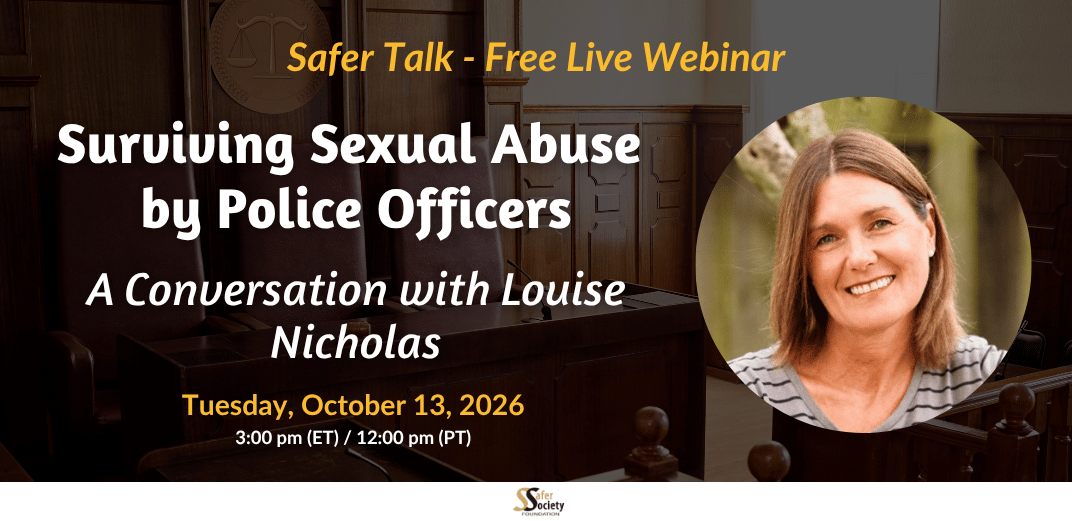
  • Surviving Sexual Abuse by Police Officers: A Conversation with Louise Nicholas

    Join New Zealand author and survivor advocate Louise Nicholas for a powerful webinar exploring the needs and rights of people who have experienced sexual violence, particularly as they navigate the legal system. Drawing on her own years-long pursuit of justice following sexual assault by serving police officers, Ms. Nicholas will speak about the challenges survivors may face in court and the importance of survivor-centered services, support, and advocacy. An internationally recognized lecturer and co-author, she works alongside survivors, families, communities, and service providers to elevate survivor perspectives and encourage others to speak out against abuse and injustice.

    Free
  • Our Safe Haven: Rural Providers Working Across the Sexual Harm Continuum

    Living and working in rural areas pose unique challenges for providers working with individuals across the sexual harm continuum. For survivors and those who have caused harm, rural communities have fewer services, resources, and supports available. Both clients and providers alike can experience feelings of isolation. Clinicians, case managers, educators, and doctors also have to navigate unique challenges related to ethical boundaries, including dual relationships and confidentiality in small towns where everyone seems to know each other. Studies have shown that rural healthcare workers experience higher rates of burnout, in part due to the higher number of ethical dilemmas.

    Join us for a series of professional dialogues designed for rural providers who work with individuals across the sexual harm continuum. Moderated by Angelique Caley and David Prescott, these discussions provide a supportive space for rural providers to come together, share insights, offer creative ideas, and develop strategies to address the unique needs of their rural communities, their clients, and to maintain their own self-care.

    $8.00
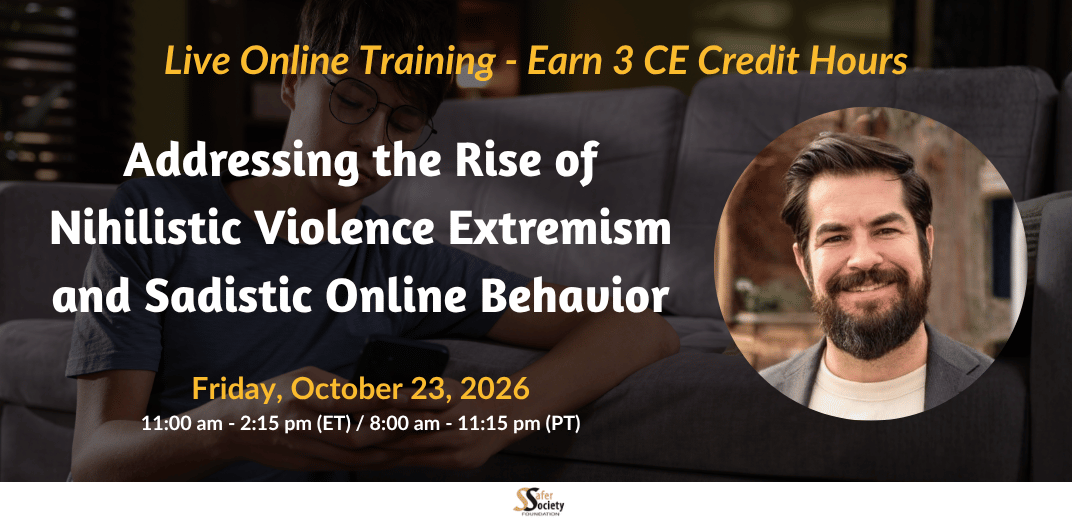
  • Addressing the Rise of Nihilistic Violence Extremism and Sadistic Online Behavior

    Online communities associated with nihilistic violent extremism (NVE), often referred to as the "Com" community, are increasingly targeting adolescents through manipulation, exploitation, sextortion, and encouragement of self-injurious behaviors. As more clinicians and forensic professionals encounter youth affected by these online networks, understanding these emerging threats is becoming increasingly important. In this training, Dr. Alex Rodrigues explores the structure and tactics of the Com community, emerging risk factors, prevention strategies, and approaches to conducting comprehensive evaluations. The training also examines related NVE movements, including 764, No Lives Matter, mass attacks, white supremacy, and occult-related content.

    $105.00
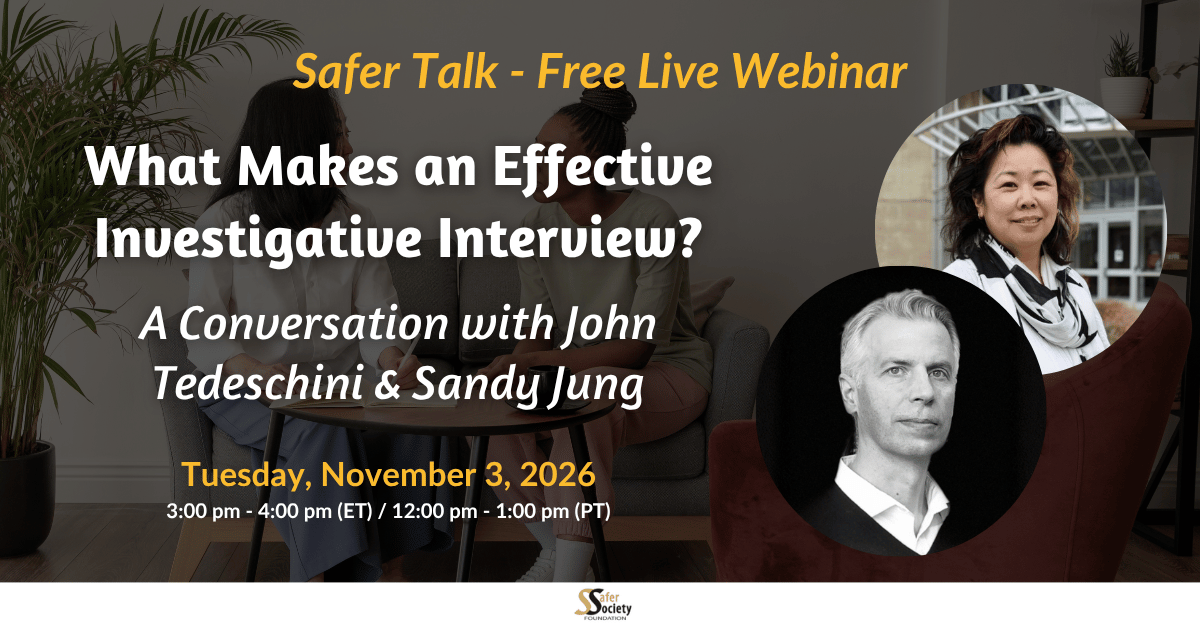
  • What Makes an Effective Investigative Interview? A Conversation with John Tedeschini & Sandy Jung

    In this webinar, John Tedeschini and Sandy Jung, authors of Foundations of Investigative Interviewing: A Practitioner’s Guide, translate evidence-based research into practical, accessible guidance for both new and experienced practitioners, covering planning and preparation, core interviewing skills and approaches, characteristics of productive questioning, “golden rules” that support accurate and ethical information gathering, and key factors in conducting virtual interviews. Through discussion of case examples and common interviewing challenges, the training will focus on how to build rapport, manage difficult conversations, and apply structured interviewing techniques to gather high-quality information in situations where there is potential for interpersonal harm.

    Free
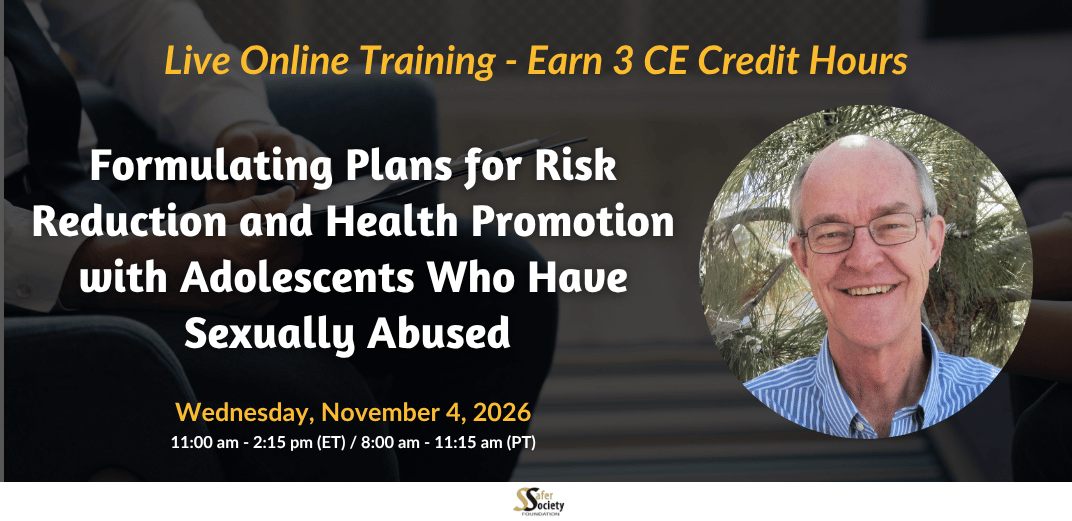
  • Formulating Plans for Risk Reduction and Health Promotion with Adolescents Who Have Sexually Abused

    This training offers an evidence-informed, holistic framework for the assessment, treatment, and supervision of adolescents who have sexually abused. Developed by Tom Leversee, it helps professionals move beyond relapse prevention toward integrated planning for risk reduction, health promotion, and long-term growth. Through practical strategies, case examples, and relevant research, participants will explore trauma-informed, strengths-based, culturally humble approaches to supporting youth.

    $105.00
  • Understanding and Managing Stalking Behavior: Assessment, Risk, and Treatment Interventions

    This training offers an evidence-based overview of stalking as a persistent pattern of surveillance, intrusion, and control—not simply isolated harassment or intimidation. Drs. Spence and Imhof review key stalking typologies, including rejected, resentful, intimacy-seeking, incompetent, and predatory trajectories, along with the psychological drivers associated with each. hrough case examples, participants will explore stalking’s connection to Intimate Partner Violence (IPV), behaviors that require enhanced victim support, structured risk assessment and management, and cognitive-behavioral interventions that support both victim safety and rehabilitation.

    $105.00
  • Our Safe Haven: Helping Clients with Paraphilias and Paraphilic Disorders

    Join us for a series of professional dialogues designed to address these pressing issues. Moderated by Nikole Nassen and David Prescott, these discussions provide a supportive space for professionals to share insights, develop strategies, and strengthen their ability to navigate the complexities of working with clients with paraphilias and paraphilic disorders. Each session will begin with a focused exploration of a specific topic, evolving naturally into an engaging, attendee-driven conversation shaped by shared experiences and professional insights.

    $8.00
  • Advances in the Structured Assessment of Protective Factors Against Sexual Offending (SAPROF-SO): Current Research and Practice Considerations

    Explore the latest research and practice developments in the SAPROF-SO, a specialized measure of protective factors relevant to sexual offending. Building on foundational SAPROF-SO knowledge, this session examines how protective factors can inform risk assessment, treatment planning, and risk management. Drs. Willis, Thornton, and Kelley will highlight recent findings on the SAPROF-SO’s reliability, construct validity, and predictive value—including its contribution alongside commonly used static actuarial and dynamic sexual-offense risk measures. The session also introduces practical developments, including use of the SAPROF-SO Calculator, applications for identifying treatment goals, and the new SAPROF-SO Risk Management Framework, with special attention to adversarial settings.

    Please note: This session reviews updates to the SAPROF-SO and is not intended to train or certify participants in its administration, scoring, or implementation.

    $70.00
  • Screen to Session: Addressing Gaming and Anime Subcultures with Individuals Who Have Sexually Offended

    Dr. Tracy Alvord and her colleagues, Elizabeth Bigham, Michael “Christian” Alvord, and Markus Wiegel, developed this training to examine the risks associated with, and responses to, online gaming in the context of sexual harm. Presenters review current research on sexual offending in gaming-related environments, including grooming techniques, platform affordances, and patterns of exploitation. They also discuss law-enforcement strategies for identifying and investigating sexual exploitation in gaming-related environments, including ways to recognize individuals who target minors (often referred to as “bad players”) in these spaces.

    The training addresses clinical implications, including assessment considerations, treatment targets, and interventions for individuals who have committed sexual offenses and engage in gaming. Emphasis is placed on collaboration between treatment providers and community supervision officers to support effective risk management. Demonstrations of gaming platforms, sexually explicit video game—including anime- and hentai-related genres—and related social media environments are incorporated to strengthen participants’ understanding of these contexts.

    $105.00