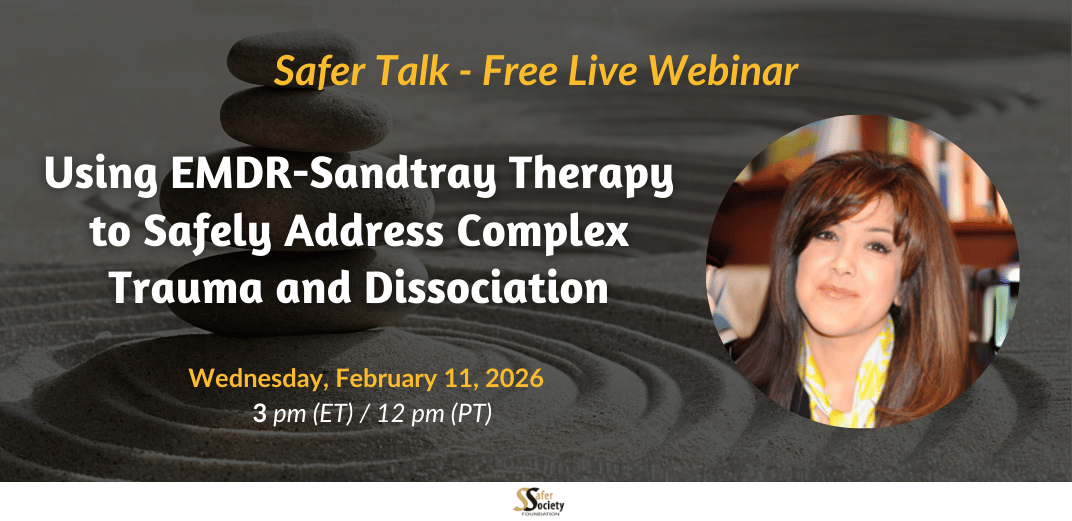
• Using EMDR-Sandtray Therapy to Safely Address Complex Trauma and Dissociation

    In this engaging webinar, Ana Gómez, author of EMDR-Sandtray-Based Therapy, explores the integration of Eye Movement Desensitization and Reprocessing (EMDR) with sandtray therapy to support healing from complex trauma and dissociation across the lifespan. Participants will discover how creativity, symbols, and embodied expression in the sandtray can bridge the implicit and explicit experience, allowing deeply held memories and sensations to surface within a safe, relational space. Through demonstration and discussion, Ms. Gómez illustrates how attuned presence and collaborative meaning making foster integration, connection, and lasting therapeutic change.

    Free

  • Emerging Adults Who Have Sexually Abused: A Discussion on Understanding, Assessment, and Treatment

    Despite decades of progress in the evaluation and treatment of adults and adolescents who have sexually abused, “emerging adults” (roughly ages 18–25) often don’t fit neatly into either group. In this webinar, Dr. Waltrip and Dr. Leslie explore the developmental, legal, and clinical factors that make this population unique. Drawing on their extensive experience, they will discuss how to recognize the characteristics of emerging adults, differentiate their needs from those of adolescents and adults, and apply effective assessment tools and treatment approaches tailored to each client.

    Free
  • Conversations that Support Change and Growth: An Interview with Stephen Rollnick, PhD

    Join us for an inspiring conversation with Dr. Stephen Rollnick, co-founder of Motivational Interviewing (MI) and co-author of its foundational texts. In this interview, Dr. Rollnick reflects on a career dedicated to understanding how compassionate, collaborative conversations can inspire meaningful change. Drawing from his work across healthcare, sports, and behavioral health—including groundbreaking research with individuals convicted of sexual offenses—he explores how professionals can foster self-awareness, safety, and openness in both individual and group settings. Attendees will gain fresh insight into how MI’s core principles continue to evolve and inform efforts in prevention, treatment, and personal growth.

    Free
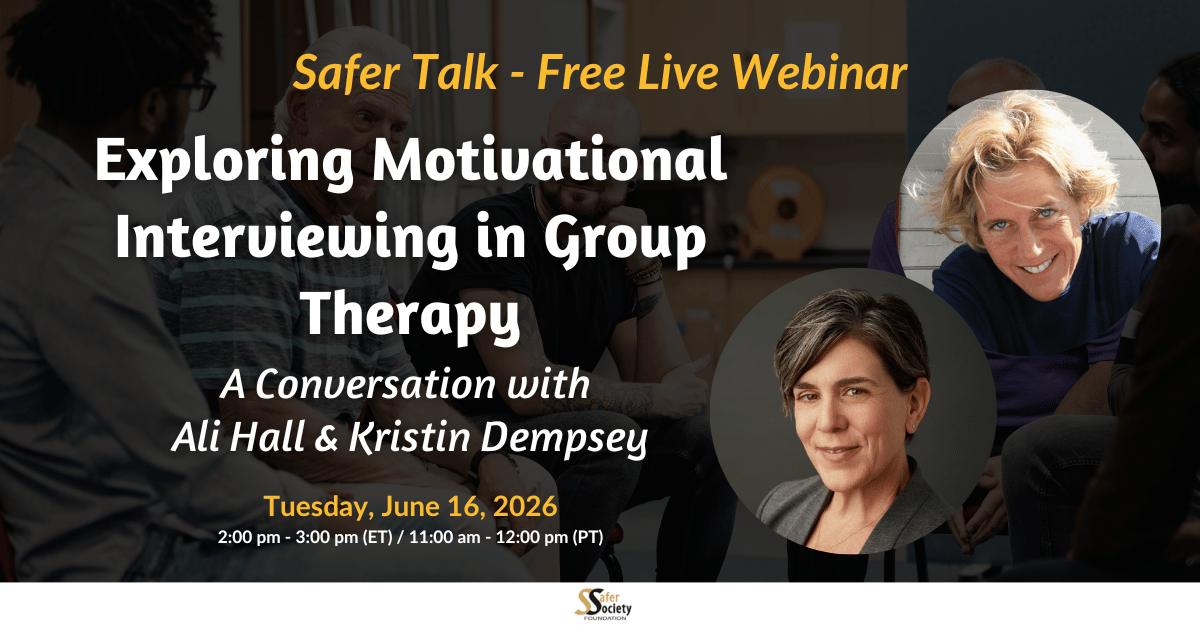
  • Exploring Motivational Interviewing in Group Therapy: A Conversation with Ali Hall & Kristin Dempsey

    Group therapy plays a central role in the treatment of justice-involved clients and related programs. Similarly, Motivational Interviewing (MI) is a treatment of choice for numerous conditions and is widely used in forensic settings. However, relatively little has been written about the most effective ways to integrate MI into group therapy.

    Building on their training on this topic, Ali Hall and Kristin Dempsey return for a conversational session introducing their work in this area. In this webinar, they explore how MI principles can enhance group therapy practice.

    Free
  • Applying Motivational Interviewing in Criminal Justice Settings and Beyond

    Motivational Interviewing (MI) has become a widely used, collaborative approach in criminal justice and related settings, helping clients safely explore their own motivations and build healthier, more self-directed lives. In this webinar, Dr. Stinson and Mr. Clark draw on their newly released second edition of Motivational Interviewing in Criminal Justice to highlight what practitioners need to know to apply MI effectively with mandated clients in traditional justice settings, child welfare, and both inpatient and outpatient programs. They will cover core elements of MI practice, ethical considerations in criminal justice treatment, effective ways to learn and master MI skills, and current research on MI outcomes, offering concrete strategies for engaging even the most resistant clients and providing a clear roadmap for initiating productive change conversations in nearly any setting.

    Free