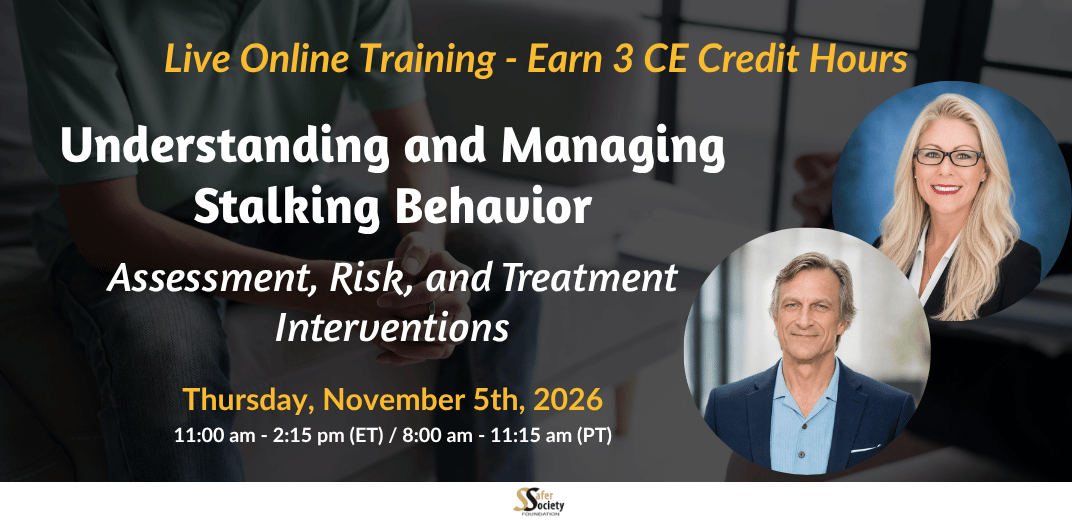
• Understanding and Managing Stalking Behavior: Assessment, Risk, and Treatment Interventions

    This training offers an evidence-based overview of stalking as a persistent pattern of surveillance, intrusion, and control—not simply isolated harassment or intimidation. Drs. Spence and Imhof review key stalking typologies, including rejected, resentful, intimacy-seeking, incompetent, and predatory trajectories, along with the psychological drivers associated with each. hrough case examples, participants will explore stalking’s connection to Intimate Partner Violence (IPV), behaviors that require enhanced victim support, structured risk assessment and management, and cognitive-behavioral interventions that support both victim safety and rehabilitation.

    $105.00
  • Advances in the Structured Assessment of Protective Factors Against Sexual Offending (SAPROF-SO): Current Research and Practice Considerations

    Explore the latest research and practice developments in the SAPROF-SO, a specialized measure of protective factors relevant to sexual offending. Building on foundational SAPROF-SO knowledge, this session examines how protective factors can inform risk assessment, treatment planning, and risk management. Drs. Willis, Thornton, and Kelley will highlight recent findings on the SAPROF-SO’s reliability, construct validity, and predictive value—including its contribution alongside commonly used static actuarial and dynamic sexual-offense risk measures. The session also introduces practical developments, including use of the SAPROF-SO Calculator, applications for identifying treatment goals, and the new SAPROF-SO Risk Management Framework, with special attention to adversarial settings.

    Please note: This session reviews updates to the SAPROF-SO and is not intended to train or certify participants in its administration, scoring, or implementation.

    $70.00
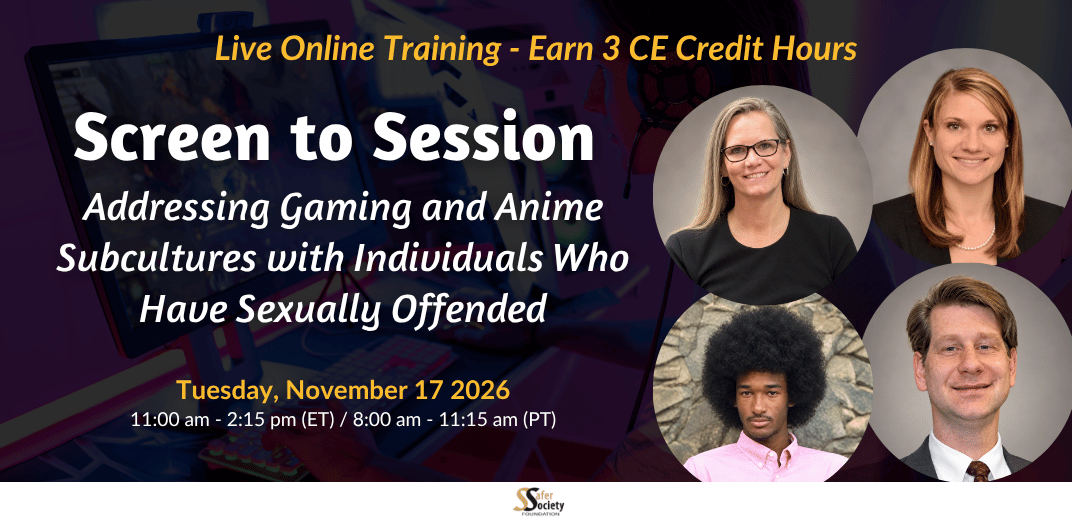
  • Screen to Session: Addressing Gaming and Anime Subcultures with Individuals Who Have Sexually Offended

    Dr. Tracy Alvord and her colleagues, Elizabeth Bigham, Michael “Christian” Alvord, and Markus Wiegel, developed this training to examine the risks associated with, and responses to, online gaming in the context of sexual harm. Presenters review current research on sexual offending in gaming-related environments, including grooming techniques, platform affordances, and patterns of exploitation. They also discuss law-enforcement strategies for identifying and investigating sexual exploitation in gaming-related environments, including ways to recognize individuals who target minors (often referred to as “bad players”) in these spaces.

    The training addresses clinical implications, including assessment considerations, treatment targets, and interventions for individuals who have committed sexual offenses and engage in gaming. Emphasis is placed on collaboration between treatment providers and community supervision officers to support effective risk management. Demonstrations of gaming platforms, sexually explicit video game—including anime- and hentai-related genres—and related social media environments are incorporated to strengthen participants’ understanding of these contexts.

    $105.00
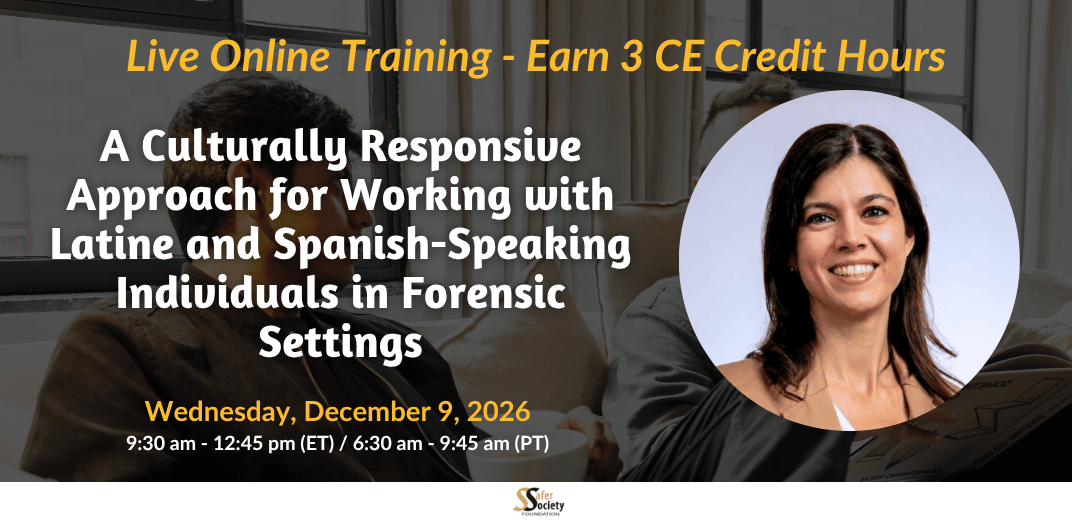
  • A Culturally Responsive Approach for Working with Latine and Spanish-Speaking Individuals in Forensic Settings

    How can forensic practitioners conduct culturally responsive evaluations when the research offers limited guidance for working with Latine and Spanish-speaking individuals? In this training, Dr. Aparcero-Suero bridges the gap between research and practice. Participants will examine how sociocultural factors shape behavior, communication, and symptom expression—and how these differences can be misinterpreted in legal and mental health settings. The training offers practical guidance on working with interpreters, selecting and interpreting assessment instruments, and mitigating bias without stereotyping. It also considers sex offender risk assessment, treatment responsivity, and the research still needed to advance culturally responsive care.

    $105.00
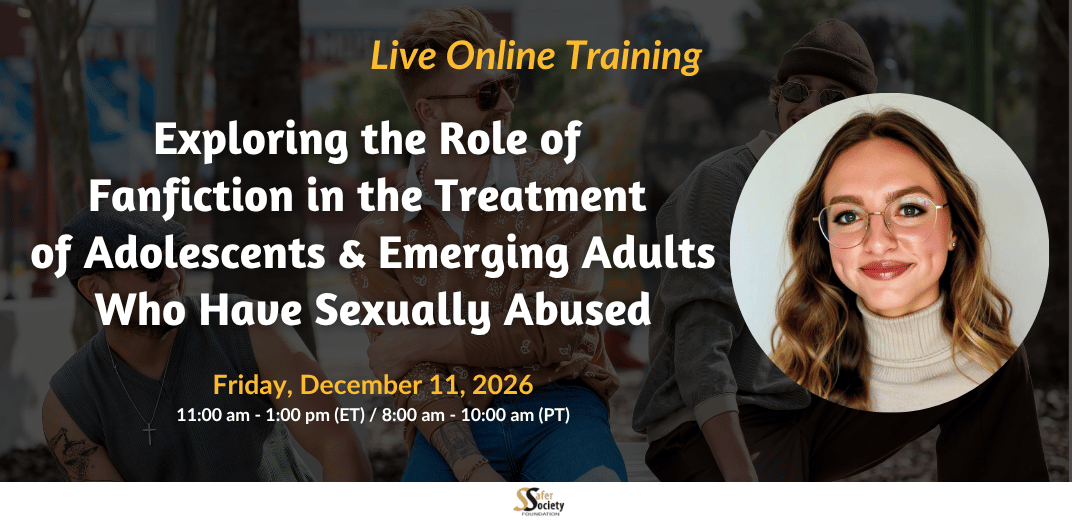
  • Exploring the Role of Fanfiction in the Treatment of Adolescents and Emerging Adults Who Have Sexually Abused

    In this training, Ms. Hilliard reviews how fanfiction may relate to sexual scripts, understanding of consent, and impulsivity. She explains how professionals can pair cultural literacy about fan communities with evidence-informed practice. The training equips attendees to distinguish normative creative engagement from maladaptive or risk-laden patterns, tailor interventions, and engage clients in developmentally and ethically sound ways.

    $50.00
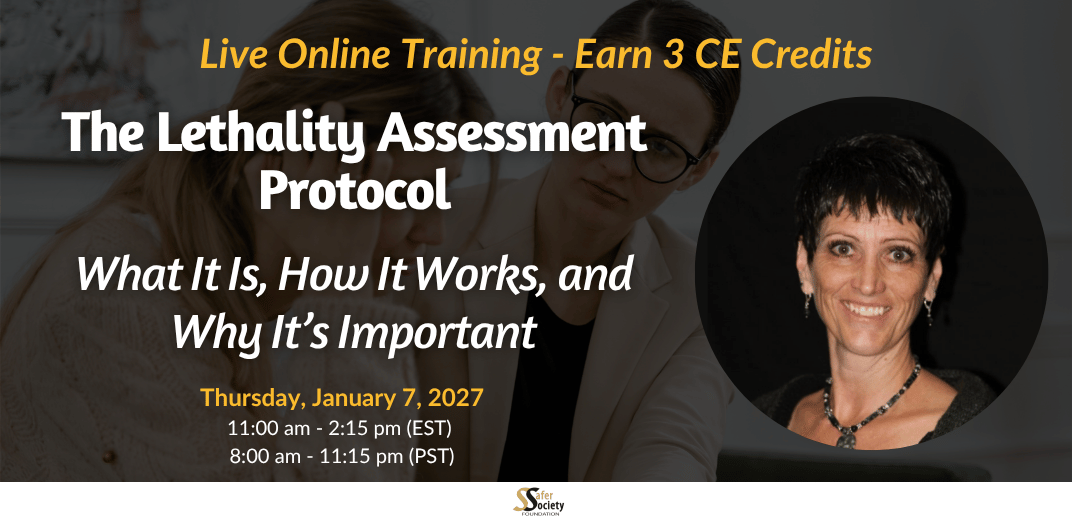
  • The Lethality Assessment Protocol: What It Is, How It Works, and Why It’s Important

    The Lethality Assessment Protocol (LAP) helps prevent intimate partner homicides and serious injuries by connecting victims to life-saving, community-based services. In this training, Sandie Campanella, a former police detective and District Attorney investigator, helps professionals understand and apply the LAP, particularly during periods of separation when the risk of lethal violence is greatest. Participants will learn how the LAP informs investigations, court decisions, and treatment; connects individuals at high risk to advocates for immediate resources and safety planning; and supports accountability for individuals who have caused harm.

    $105.00
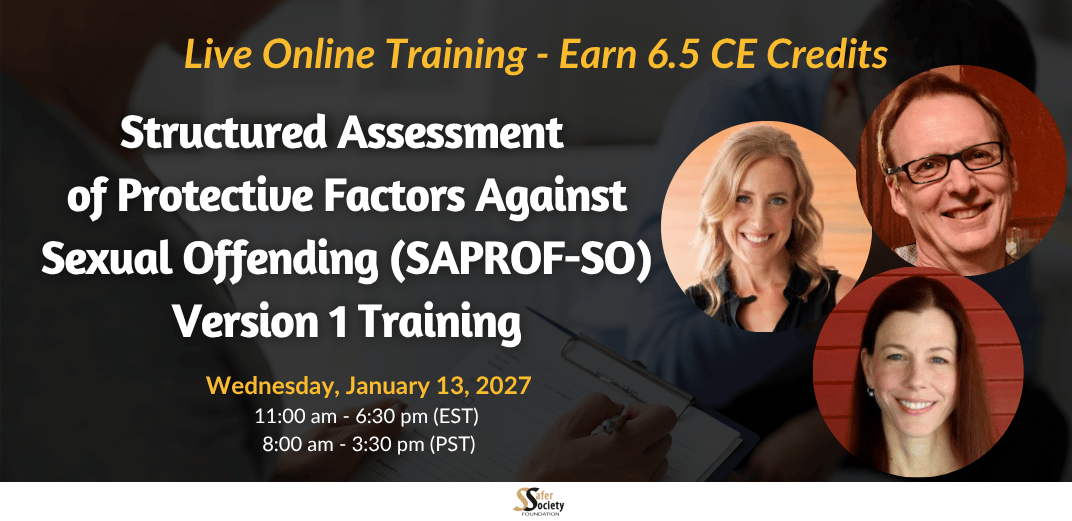
  • Structured Assessment of Protective Factors Against Sexual Offending (SAPROF-SO) Version 1 Training

    The SAPROF-SO is a tool for assessing protective factors for individuals with a history of sexual offending, integrating with strengths-based therapeutic approaches. This tool comprises 14 items across three key subscales: Resilience, Adaptive Sexuality, and Prosocial Connection & Reward, with an optional fourth subscale, Professional Risk Management. Renowned for its strong reliability and predictive validity for reduced sexual recidivism (e.g., Nolan et al., 2023; Willis et al., 2020), the SAPROF-SO is instrumental in guiding therapy planning and risk management strategies (Kelley et al., 2022). This workshop, presented by Gwenda Willis, David Thornton, and Sharon Kelley, offers a training opportunity for clinicians interested in learning how to score and interpret the SAPROF-SO.

    $228.00