• Translating Risk, Need, and Responsivity (RNR) Principles into Supervisory and Clinical Practice (OT296)

    Effectively managing and rehabilitating individuals who have committed serious offenses requires a framework that is both grounded in research and adaptable to diverse professional settings. The Risk-Need-Responsivity (RNR) model has become one of the most influential evidence-based approaches in the field of corrections, providing clear principles to guide assessment, intervention, and supervision.

    Sandy Jung—an accomplished researcher, clinician, and experienced trainer—developed this training to provide professionals with practical methods for using RNR principles in their work with adult individuals convicted of sex offenses. Drawing on her extensive expertise, she offers strategies, tools, and case examples to support effective implementation.
    $140.00
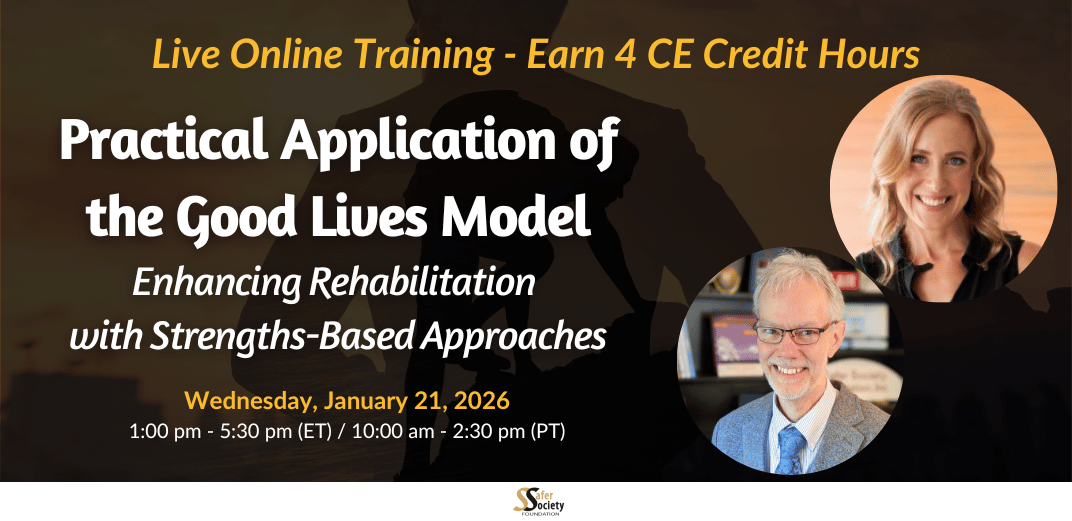
  • Practical Application of the Good Lives Model: Enhancing Rehabilitation with Strengths-Based Approaches

    Developed and presented by Gwenda Willis and David Prescott, this four-hour online training equips professionals with practical methods for integrating the GLM into treatment programs for individuals who have sexually offended. Drawing on their extensive international experience, including work with programs in New Zealand, Australia, Singapore, Norway, North America, Germany, Italy, and Namibia, they provide clear strategies for embedding the model into program structure, content, and delivery. The training outlines how to conduct GLM-based assessments, design intervention plans, adapt RNR/CBT modules, and address dynamic risk factors such as sexual and general self-regulation using a GLM-informed approach.

    $140.00
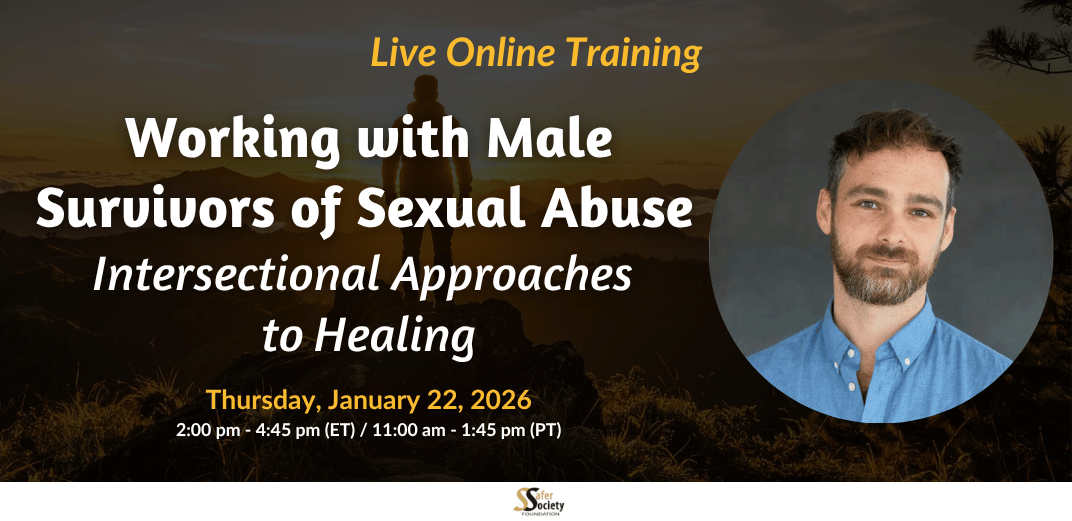
  • Working with Male Survivors of Sexual Abuse: Intersectional Approaches to Healing

    Few experiences fill a person with a greater sense of shame, stigma, and misunderstanding than sexual abuse. Men who have been harmed sexually can become marginalized and isolated, with limited resources available to them or those who support them. This training explores the impact of this harm on men through an intersectional lens, exploring how their unique identities, circumstances, and society's views can either support their recovery or compound their trauma. This training helps participants refine their understanding of the after-effects of abuse on males, which too often persist long after the abuse occurred.

    $60.00
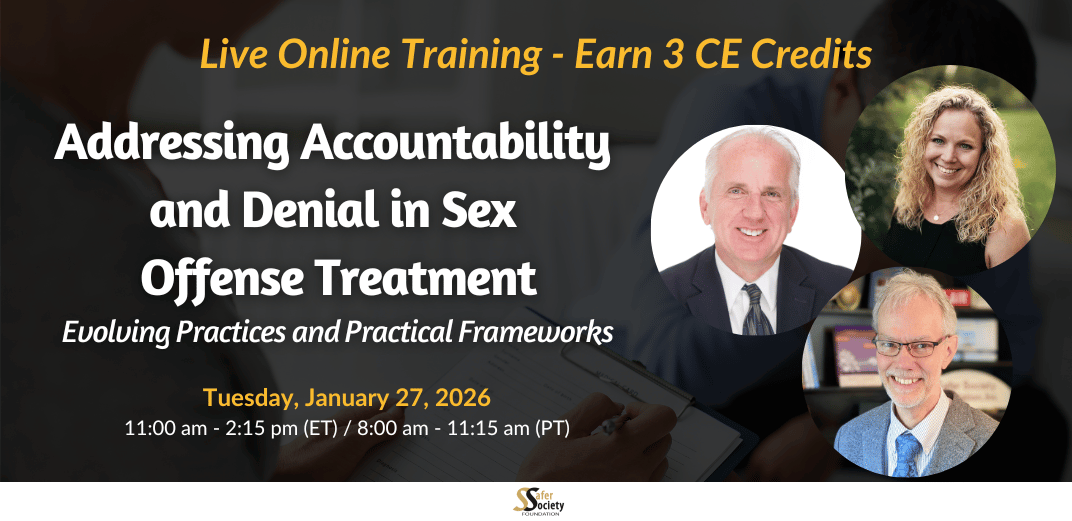
  • Addressing Accountability and Denial in Sex Offense Treatment: Evolving Practices and Practical Frameworks

    Working with clients who deny their past behaviors has long presented dilemmas for practitioners. Requiring full disclosure of past offenses has been a source of recent debate in sex offense treatment, particularly since the late 1990s. Historically, accountability for sexual offending was required as a pre-condition for treatment participation and completion, as well as for successful release from supervision. More recently, however, perspectives have shifted. Research indicating that denial is not a risk factor for future sexual offending, along with concerns for the therapeutic alliance and questions regarding potential violation of the right against self-incrimination, has led clinicians to begin modifying their approach to addressing denial. As a result, many programs no longer require those who offend to be accountable as a precondition of treatment entry or completion.

    $105.00
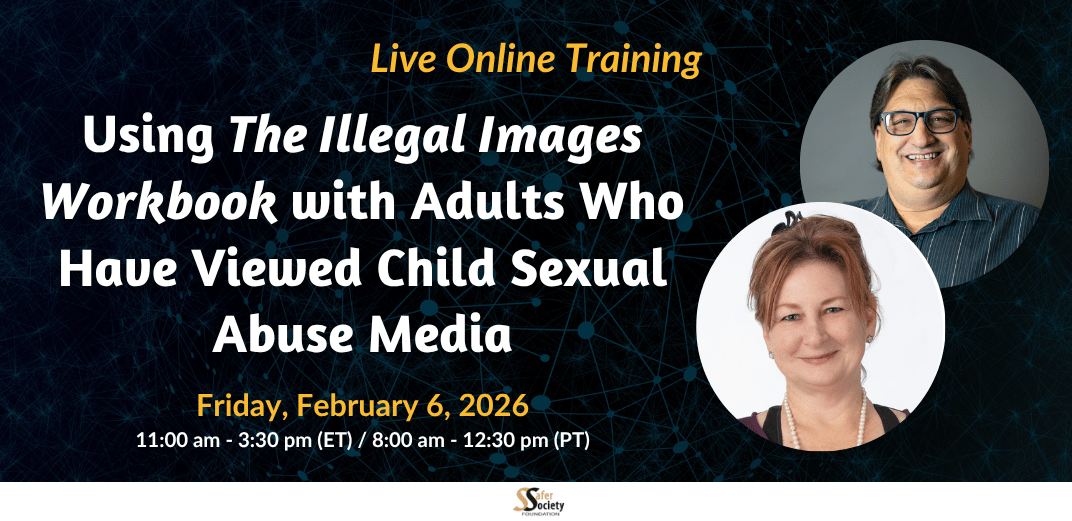
  • Using The Illegal Images Workbook with Adults Who Have Viewed Child Sexual Abuse Media

    The Illegal Images Workbook: Understanding and Changing Harmful Online Sexual Behavior provides professionals with a structured, strengths-based approach for adults involved in viewing or possessing child sexual abuse material (CSAM). Created by Dr. David Delmonico and Elizabeth Griffin, it guides therapeutic work across six growth areas: emotion management, intimacy, deviant sexuality, sexual behavior control, technology use, and victim awareness. This four-hour workshop introduces the workbook’s clinical applications, showing how to integrate its exercises into treatment and supervision while addressing challenges like shame, minimization, and technology limits in line with client risk and responsivity.

    $96.00
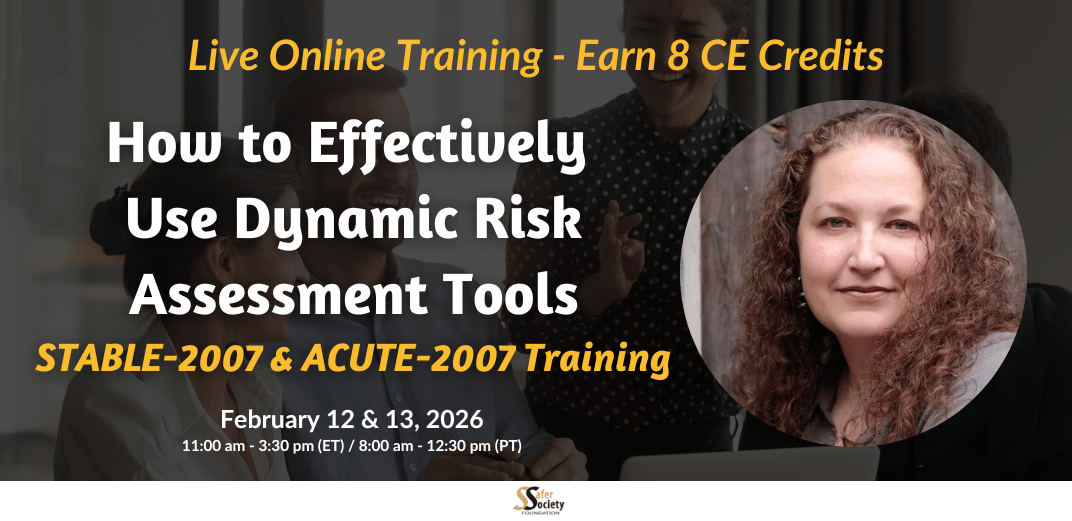
  • How to Effectively Use Dynamic Risk Assessment Tools: STABLE-2007 & ACUTE-2007 Training (Day 01)

    During this eight-hour training, Katie Gotch, LPC, CCSOT, ATSA-F, provides an overview of the development and research of the STABLE-2007 and ACUTE-2007 instruments. She explains how to score each of the measures’ items, as well as their appropriate interpretation and use within varying settings. This includes recent guidance on the use of these tools with individuals convicted of child sexual abuse material-related offenses (CSAM). To enhance learning, case studies are incorporated to provide hands-on practice and to address common scoring and administration errors.

    $280.00
  • How to Effectively Use Dynamic Risk Assessment Tools: STABLE-2007 & ACUTE-2007 Training (Day 02)

    During this eight-hour training, Katie Gotch, LPC, CCSOT, ATSA-F, provides an overview of the development and research of the STABLE-2007 and ACUTE-2007 instruments. She explains how to score each of the measures’ items, as well as their appropriate interpretation and use within varying settings. This includes recent guidance on the use of these tools with individuals convicted of child sexual abuse material-related offenses (CSAM). To enhance learning, case studies are incorporated to provide hands-on practice and to address common scoring and administration errors.

    $280.00
  • Returning to the Heart of the Work: Sustaining Your Motivational Interviewing Spirit and Values

    If you’ve ever felt like your MI spirit was running on empty, you’re not alone. Even the most experienced practitioners hit those days when partnership feels impossible, acceptance seems out of reach, and compassion for others gets buried under their own struggles. As this training illustrates, the MI spirit isn’t a destination we arrive at once and then we’re home free. It’s a road you travel despite the potholes along the way..

    Sarah Cameron and Annabys Jordan created this training to offer something many practitioners desperately need: a judgment-free way to reflect on their work and monitor their professional growth.

    $50.00
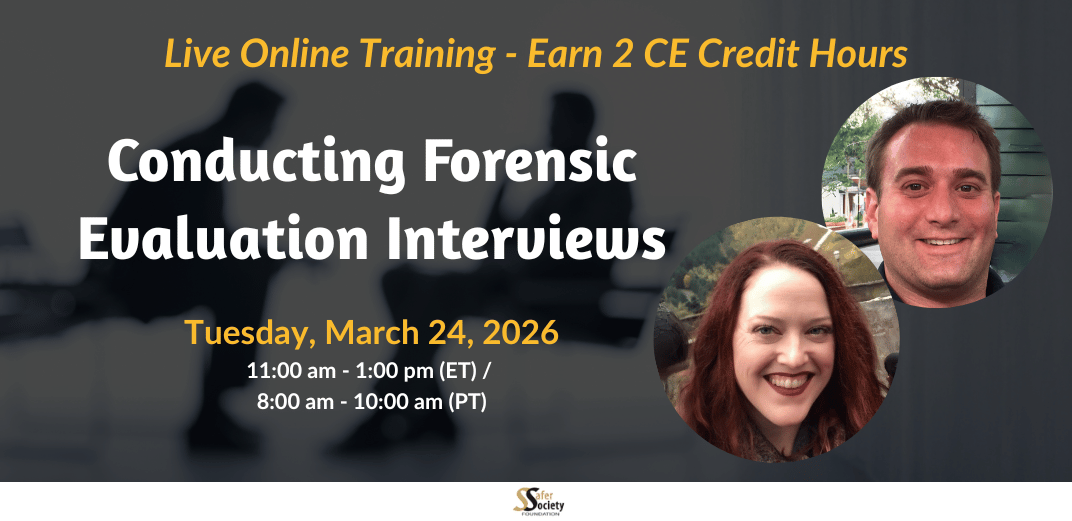
  • Conducting Forensic Evaluation Interviews

    Forensic evaluations call for a distinct blend of clinical skill and legal insight. In this dynamic training, experienced evaluators Amy Griffith, PhD, and Seth Wescott, LMLP, ASTA-F, share practical strategies for navigating the complex world of forensic interviewing. Participants will gain a deeper understanding of how referral questions shape each evaluation, what sets forensic interviews apart from clinical ones, and how to maintain fairness and objectivity within a legal framework. Designed for professionals looking to strengthen their forensic assessment skills, this session offers real-world insights that can elevate your practice.

    $70.00
  • Managing Unhealthy Sexual Arousal: A Sex-Positive Approach to Treatment

    Dr. Jackson and Dr. Ballinger developed this training to support professionals in adopting sex-positive, non-judgmental approaches to help clients in managing unhealthy patterns of sexual arousal patterns. Many individuals who have sexually abused have had limited sex education and few opportunities to understand the role of sexuality in their lives. Against this backdrop, it is more constructive for clients to view healthy sexuality as a goal to pursue and achieve, rather than regarding sexual arousal as something to avoid for the rest of their lives.

    $70.00
  • Addressing the Impact of Language, Biases, and Labels on Youth

    The language professionals use—and the biases they hold, whether conscious or not—can profoundly shape how young people see themselves, engage in treatment, and envision their futures. This training with Anette Birgersson and Christin Santiago examines the impact of labeling, including language related to sexual orientation, and how it can undermine self-esteem, mental health, and prosocial development. Participants will learn practical strategies to recognize and reshape problematic language and biases, engage and affirm youth from the first session, support their sense of agency and resilience, and foster healthier, more empowering identities, especially for those from diverse backgrounds.

    $72.00