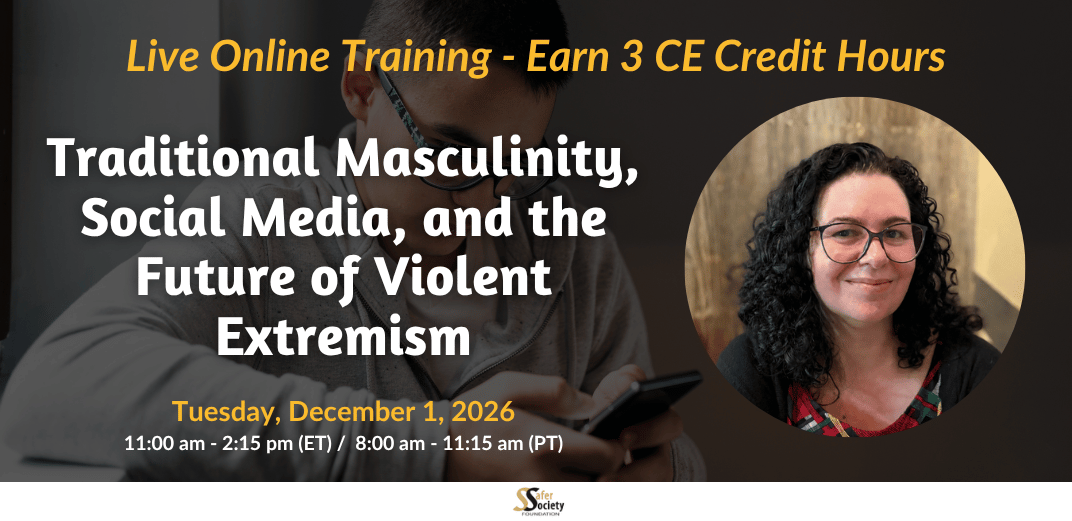
Traditional Masculinity, Social Media, and the Future of Violent Extremism
This training will be converted into an on-demand format within two weeks following the live event. The on-demand version will be available for separate purchase, providing access to the training content for those who were unable to attend the live event or prefer a self-paced learning experience.
Ideas about traditional masculinity are becoming more prominent in groups promoting violent extremism. While race remains central to violent extremism, forms of masculinity that center on control, dominance, and discipline have become equally influential. Gender and race work side by side to reinforce rigid hierarchies and offer a sense of order, identity, and purpose.
Judith Eichenbaum developed this training in response to the changing clinical picture that practitioners face when working with adolescent and adult men who are in treatment for harmful behaviors. She explains how many of the online spaces are key to developments in violent extremist trajectories. She outlines the ways in which extremist groups use memes, aesthetics, and emotionally charged content to promote a stylized version of masculinity as tough, loyal, in control, and supposedly under threat. Emotional connection, belonging, and shared frustration develop first. That emotional groundwork makes more extreme content easier to accept over time. Increasingly entrenched ideology often develops later.
Ms. Eichenbaum further explains how recruitment is also changing. It’s no longer just about persuasion. Instead, it’s relational and takes time. Adolescents and young adults facing instability, isolation, or chaos are targeted early, often without realizing what they’re being drawn into. The process often resembles grooming, with trust built first and ideological obligations coming later.
This shift has serious implications for how radicalization processes are understood and addressed by professionals. When recruitment is driven by emotion, identity, and belonging (and not simply belief systems), then prevention efforts need to respond to how masculinity is shaped and weaponized online. It’s not just about countering ideas, but challenging the emotional and cultural pull that makes those ideas appealing in the first place.
Ms. Eichenbaum explores how understanding traditional masculinity’s role in extremist spaces is key to seeing where violent extremism is heading—and why it remains so effective in pulling people in.
Interactive Follow-Up Meeting
Attendees are invited to join an open discussion 15 minutes following the end of the training, where you can engage with fellow attendees by turning on your camera and microphone. This is an opportunity to share your experiences and contribute to a meaningful exchange of ideas. Time will be allocated to address questions or insights from the training. Please note that attendance is optional and will not affect your eligibility for a training certificate.
1) Describe hegemonic masculinity is and its role in extremist movements past, present, and future.
2) Outline ways that social media has changed recruitment tactics to be more subtle and its role in amplifying extremist viewpoints.
3) Explain barriers to disengaging from violent extremism.
4) Use micro, mezzo, and macro level considerations in prevention and treatment efforts.
Audience
This training is of interest to mental health and criminal justice professionals working with older adolescent and adult males. This includes psychologists, social workers, counselors, and probation and parole officers.
Content Level
Disclosure
Cancellations
Continuing Education Approval
American Psychological Association (APA)
Safer Society Foundation, Inc. is approved by the American Psychological Association (APA) to sponsor continuing education for psychologists. Safer Society Foundation, Inc. maintains responsibility for this program and its content.
Association of Social Work Boards (ASWB)
Safer Society Foundation, Inc., provider #233, is approved to offer social work continuing education by the Association of Social Work Boards (ASWB) Approved Continuing Education (ACE) program. Regulatory boards are the final authority on courses accepted for continuing education credit. ACE provider approval period: 6/6/2026-6/6/2029. Social workers completing this course receive 3 clinical continuing education credits.
Who's Presenting
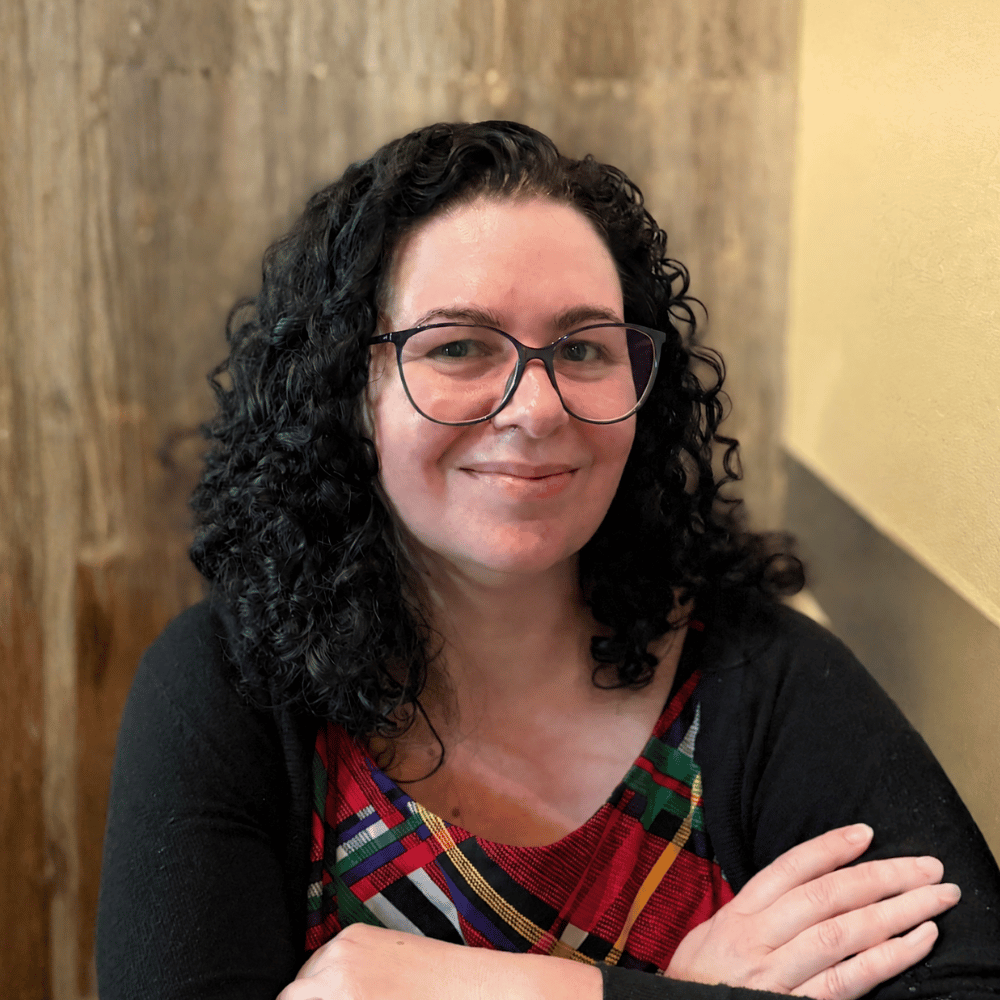
Judith Eichenbaum, MSW, MPH
Judith Eichenbaum received her MSW and MPH in International Health and Development from Tulane University in New Orleans. Her career has spanned a wide range of areas where mental health and the law intersect – including working as a capital defense investigator and mitigation specialist, helping individuals with histories of violent offenses and serious mental illness to re-enter society after lengthy prison sentences, supporting asylum seekers and survivors of torture, and evaluating and treating individuals charged with and/or convicted of sexual offenses. She has most recently been devoting time to understanding and addressing violent extremism.