
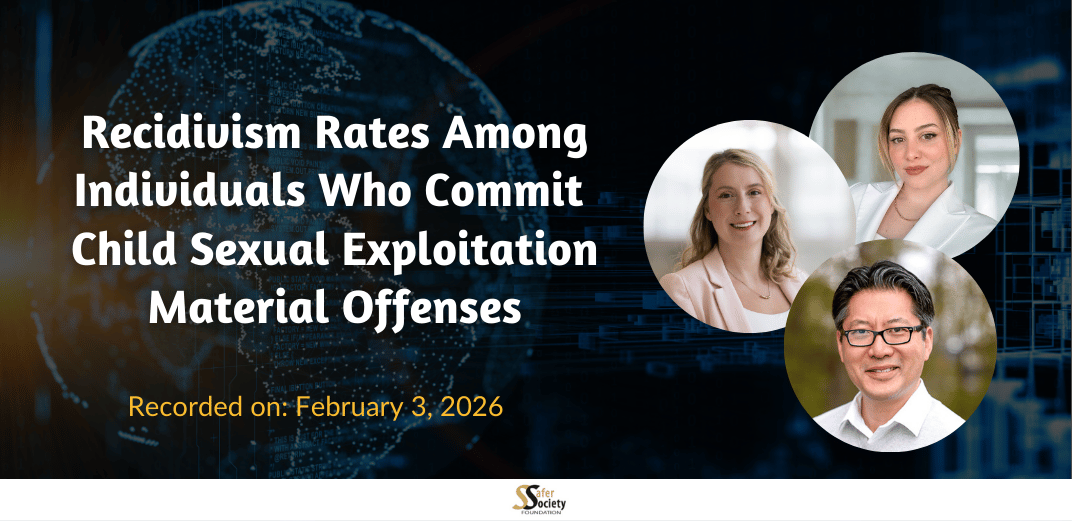
Recidivism Rates Among Individuals Who Commit Child Sexual Exploitation Material Offenses
Please note: This on-demand webinar is not eligible for continuing education (CE) credit due to its informal, conversational format. Certificates of completion are also not available for on-demand viewing.
This webinar is primarily for professionals, researchers, and practitioners who are involved in sexual violence prevention, public health, or community and campus safety initiatives. This includes psychologists, social workers, counselors, educators, campus administrators, and criminal justice personnel. The discussion is also directly relevant to all individuals working with individuals who have committed CSEM offenses, as well as those responsible for developing or implementing risk reduction and assessment programs within criminal justice or treatment settings.
The creation, sharing, and viewing of Child Sexual Exploitation Material (CSEM; legally referred to as child pornography in the United States and other countries) have all increased yearly since the dawn of the internet. Accurately characterizing the recidivism base rates of those who commit CSEM offenses is therefore vital for informing effective policies, assessments, and treatment practices.
In this webinar, Serra Baskurt, Kelly Babchishin, PhD, and Michael Seto, PhD, present the findings of their new meta-analysis (also co-authored by Gabriella Hilkes) on CSEM recidivism and describe the implications. The results highlight the need for greater public awareness of the issues involved. For example, the presenters found that self-reported data indicated CSEM recidivism rates were about nine times higher than official records. While it has long been noted that CSEM offenses are less frequently detected by the criminal justice system than contact sexual offenses, the extent of persistent CSEM use revealed in this new meta-analysis needs to be recognized and acknowledged by all professionals, as well as family members and caregivers of children at risk for being abused. As the presenters report, there are rarely any direct victims (or witnesses) coming forward to report offenses by an identifiable suspect.
Further, the presenters discuss how the gap between self-reported and official recidivism rates aligns with earlier studies finding that self-reported histories of contact sexual offending were substantially higher than what was reflected in official records. Specifically, while about half of the individuals with CSEM offenses self-reported a contact sexual offense, only one in every eight had an official record of such an offense. Taking these findings into account, the presenters argue for tiered policies that allocate resources according to the principles of risk, need, and responsivity.
Who's Presenting

Serra Baskurt
Serra Baskurt completed her MA in forensic psychology in Summer 2024. Serra’s thesis examined the recidivism rates among individuals who commit child sexual exploitation material (CSEM) offending through meta-analysis. Previously, Serra completed her BA (Hons) degree in Forensic Psychology at Ontario Tech University, where she researched the impact of empathy primary on rape supportive attitudes for those with psychopathic traits. She is now working with the Canada Border Services Agency.

Kelly M. Babchishin, PhD
Kelly M. Babchishin is an Assistant Professor of forensic psychology within the Department of Psychology at Carleton University (Ottawa, Canada). After completing her Ph.D., Kelly completed a Banting postdoctoral fellowship at the Institute of Mental Health Research (Ottawa) and the Karolinska Institute Department of Medical Epidemiology and Biostatistics (Stockholm; 2013-2017). Before joining Carleton, she served as a research advisor at Public Safety Canada and the Parole Board of Canada, advancing evidence-based policy for justice-involved individuals. Her research focuses on preventing sexually harmful behaviour. More information can be found on her lab website.
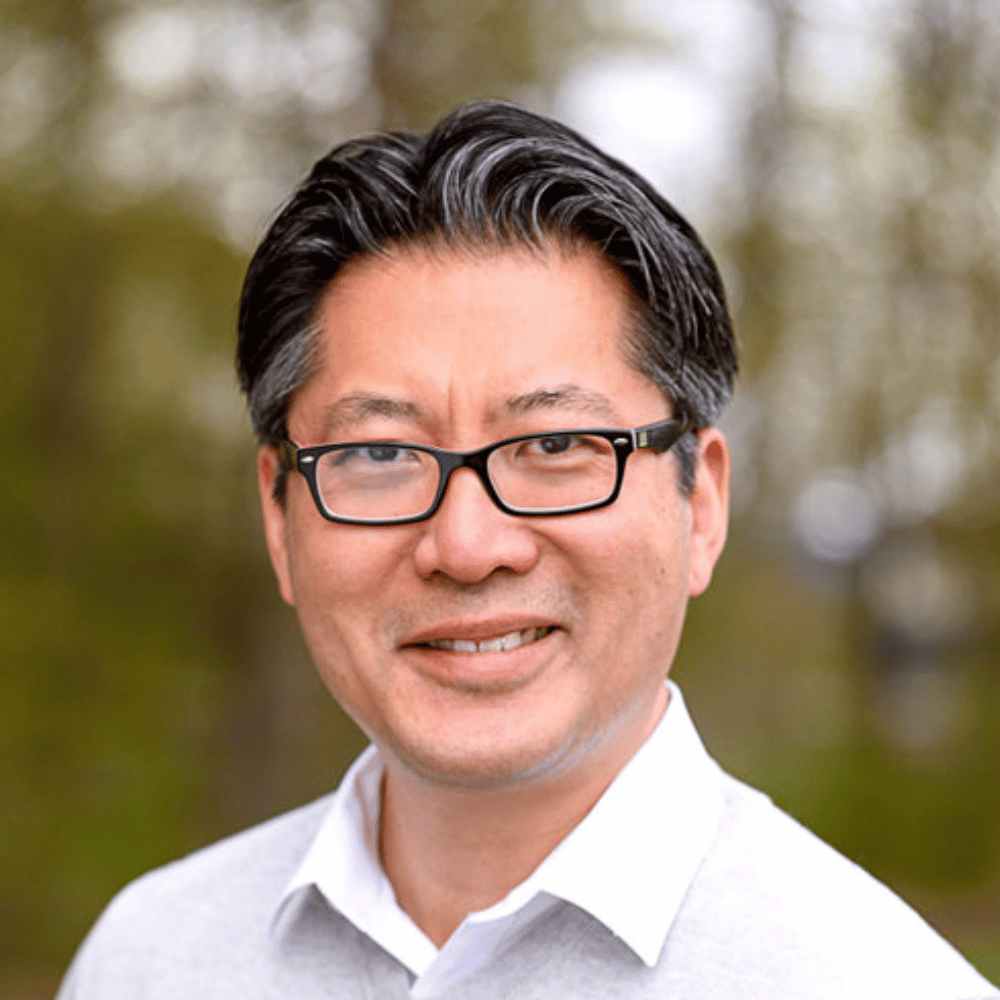
Michael Seto, PhD
Michael Seto is a registered clinical and forensic psychologist in Ontario, Canada, and is the Director of Forensic Rehabilitation Research for the Royal Ottawa Health Care Group. He is an Associate Professor in the Department of Psychiatry at the University of Toronto and also holds cross-appointments to Ryerson University, Carleton University, and the University of Ottawa. Dr. Seto has published extensively on pedophilia, child pornography, and sexual offending, and regularly presents at scientific meetings and professional workshops on these topics. Dr. Seto is an Associate Editor of “Sexual Abuse: A Journal of Research and Treatment”, the official journal of the Association for the Treatment of Sexual Abusers, and the “Archives of Sexual Behavior”, the official journal of the International Academy of Sex Research. He also serves on the editorial board for the journal Law and Human Behavior, the official journal of the American Psychology-Law Society.