Addressing Adolescent Exposure to Pornography

During this training, David Prescott and Seth Wescott explore the realities of pornography use by adolescents and discuss the clinical implications. They describe the proliferation of explicit content and how, in many cases, it has become more concerning.

The presenters offer strategies and ideas for working with young people who struggle with pornography exposure to parents and caregivers, clinical practitioners, school counselors, and other professionals. By fostering a deeper understanding of the role of pornography in the lives of adolescents, this training empowers attendees to navigate this challenging area and better support their clients

Providing Treatment to Minor-Attracted People

This training explores how stigma, social norms, moral panic, and sexual attraction act as barriers to those seeking help in preventing themselves from committing their first offense. Dr. Spooner provides a comprehensive understanding of minor-attracted people, as well as the inaccurate narratives about MAPs that result in strained relationships between providers and clients. Lastly, participants are encouraged to identify and reflect on their personal biases, explore effective approaches to meeting the needs of MAPs, and consider alternative approaches to current practices.

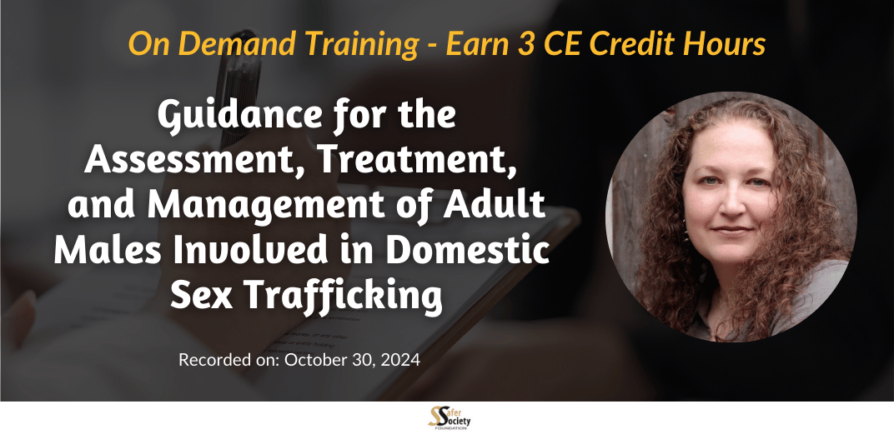
Guidance for the Assessment, Treatment, and Management of Adult Males Involved in Domestic Sex Trafficking

Across her 24-year career, presenter Katie Gotch has researched, assessed, and treated numerous men convicted of crimes related to sex trafficking. Katie developed this training to provide information on domestic and international human trafficking, with a focus on the perpetration of sex trafficking, followed by an overview of the current research related to perpetrators of domestic sex trafficking in the United States. The session also provides practical guidance and strategies for the assessment, treatment, management, and supervision of those who perpetrate domestic sex trafficking.

Raising the Price of Our Books

On January 1, 2025, we will be raising the price of our books.

Increasing prices is something we are always reluctant to do, and when we decide that it is necessary, you can be sure it is due to our own rising costs—paper, printing, warehousing. We are capping the increase at $1 per copy for most of our titles.

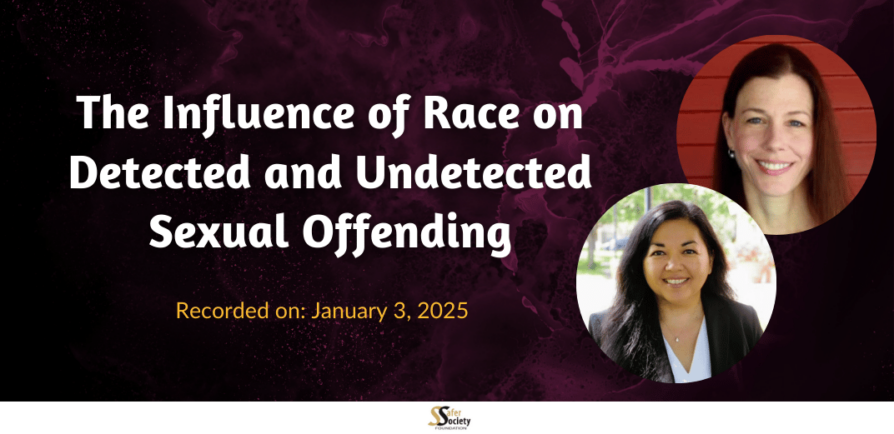
The Influence of Race on Detected and Undetected Sexual Offending

How much do we know about undetected sexual offending? This question remains a critical concern for practitioners, courts, and policymakers alike. In this webinar, Dr. Kelley and Dr. Zaw discuss their recent study on the influence of race on detected and undetected sexual offenses among individuals deemed to be at high risk of re-offense. Their research compares White and Black adult males, revealing significant findings pertinent to understanding the actual prevalence of sexual offenses. This study is relevant to those seeking to understand the true rate of sexual offending and its implications for justice and policy development.

Dr. Kelley and Dr. Zaw’s study is the second of a series aimed at understanding how to best account for undetected sexual offending—those that could have led to a criminal charge or conviction if detected—in risk assessments. Their earlier research findings led them to ask what could affect the detection rate, with racial differences being a focus. While existing studies and publications highlight disparities in victim reporting rates, policing practices, and judicial system responses for White versus Black men, questions remain about the differences in crimes, motivations, detection rates, and potential biases throughout the process.

Dr. Kelley and Dr. Zaw’s findings are as complex as they are helpful. Their discussion focuses on areas that include antisocial processes and offense-related sexual interests. After presenting their study and findings, they explore the implications for risk assessments and evaluators, offering valuable perspectives for professionals in the field.

Working with Non-Traditional Sexual Interests in Sexual Offense Treatment

Nikole Nassen, Ph.D., a distinguished clinical psychologist and the director of the Sex Offender Treatment Program at Naval Consolidated Brig Miramar, brings her wealth of experience in working with individuals who have expressed non-traditional sexual interests to the forefront. During this training, Dr. Nassen first presents data on BDSM (Bondage and Discipline, Dominance and Submission, and Sadism and Masochism) and other practices in the kink community, unveiling surprising insights from research studies. Dr. Nassen then examines “kink culture” and illustrates how many of its strongest values are antithetical to abuse. Enhanced comprehension of non-traditional sexual preferences among professionals can significantly enhance the effectiveness of treatment interventions.