
Intimate Partner Violence: Identifying and Monitoring Coercive Controlling Behaviors
Please note: This on-demand webinar is not eligible for continuing education (CE) credit due to its informal, conversational format. Certificates of completion are also not available for on-demand viewing.
This webinar is for professionals such as evaluators, treatment providers, and supervising agents who need to monitor and assess coercive controlling behaviors in abusive partner relationships. It is also relevant for individuals working with those who may be in an abusive relationship and need to identify coercively controlling behaviors and offer intervention ideas.
Intimate partner violence is already a complicated form of interpersonal violence. Problems range from the cycle of abuse to the confusing loyalty exhibited by abused partners. These problems are further complicated by the fact that controlling behaviors of the perpetrating partner often go undetected by others and may be normalized by the abused partner.
What we know is that coercive control is more common in abusive partner relationships than realized. Coercive control is often characterized by the perpetrator’s intention to gain control; the victim not wanting to be controlled; and the presence of threats or implied threats that lace the interactions in the abusive relationship. Because these behaviors often go undetected, this presentation provides a concise overview of the behaviors entailed in coercive control, including what evaluators, treatment providers, and supervising agents should be monitoring and assessing.
It is critical for professionals to be able to identify coercively controlling behaviors, in order to effectively evaluate, supervise, and treat abusive perpetrators. It will also be of interest to those working with individuals who may have cause to wonder whether their client, friend, or colleague is in an abusive relationship and offer ideas for intervention.
Who's Presenting
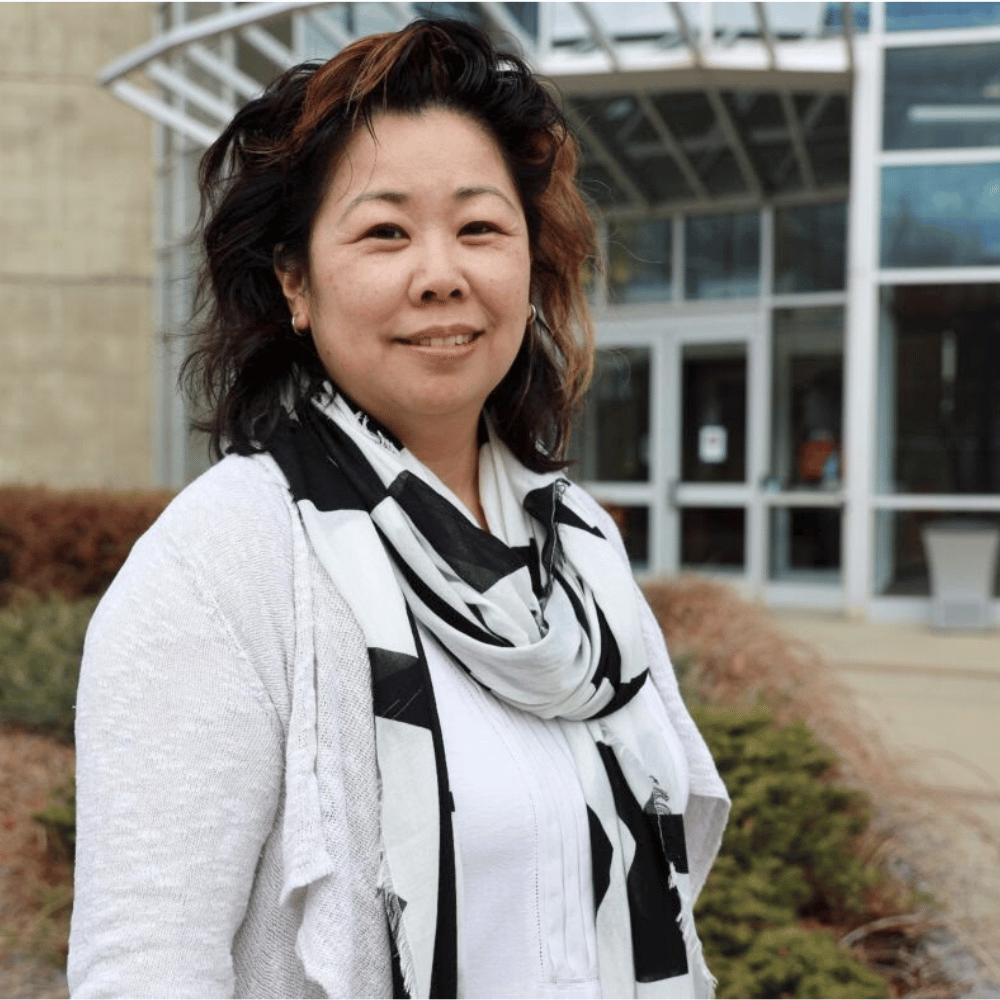
Sandy Jung, PhD, RPsych
Sandy Jung, Ph.D., is a full Professor in the Department of Psychology at MacEwan University in Edmonton, Canada. Prior to her current academic position, she was a forensic psychologist at a forensic mental health facility where she provided assessment, treatment, and risk management of violent and sexual offenders. Sandy maintains an active research program in her Psychology Crime Lab (PCL@M) that focuses on assessing risk for sexual, intimate partner, and gender-based violence. Her research is funded by both internal and major external grants. She has published extensively, often co-authoring peer-reviewed articles with her students, as well as collaborators in law enforcement, forensic mental health, and academia. She has been recognized for her teaching (Distinguished Teaching Award in 2017), research (Distinguished Research Award in 2018, CAFA Distinguished Academic Award in 2021, Board of Governors Research Chair in 2018, and Chancellor’s Research Chair in 2026), and both research and service (Association for the Treatment & Prevention of Sexual Abuse Fellow in 2016 and Canadian Psychological Association Fellow in 2021). She serves on editorial boards for several journals (Psychology of Violence, Sexual Offending: Theory, Research, and Prevention, and Canadian Psychology).