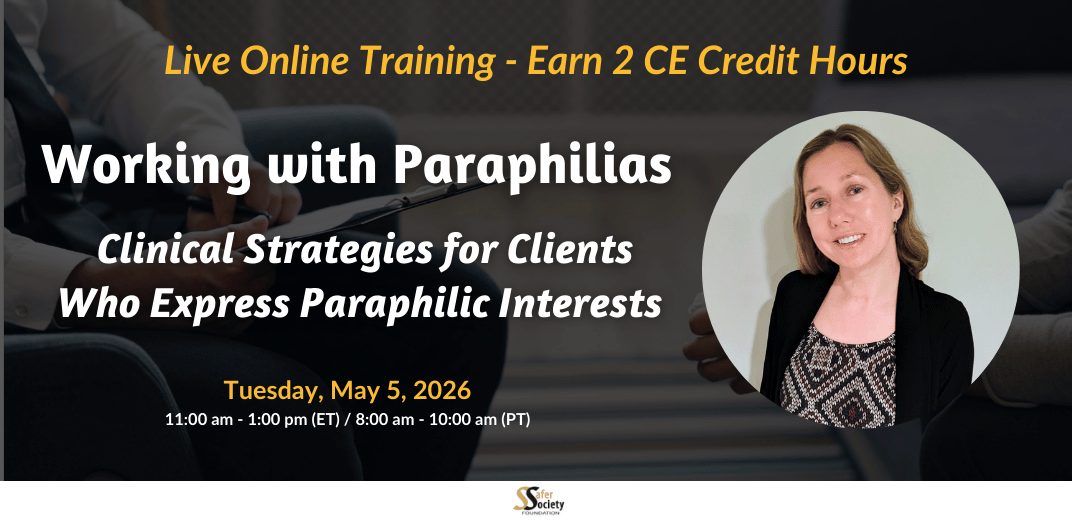
Working with Paraphilias: Clinical Strategies for Clients Who Express Paraphilic Interests
A paraphilia is any intense or persistent sexual interest—sometimes one that is preferred—directed toward anything other than normophilic behaviors with a legally consenting human partner. While definitions of what makes normal versus atypical interests can be controversial, a paraphilic disorder involves behavior that includes people who do not or cannot consent, causes marked distress, or creates a significant risk of injury or death. Properly differentiating between paraphilias and paraphilic disorders is critically important to assessment and treatment. Misunderstanding clients’ sexual interests can result in either underestimating risks or imposing unnecessary and counterproductive restrictions on their liberties.
In this training, Dr. Nikole Nassen builds on this distinction by exploring how clinicians can best understand and treat paraphilias. The training includes:

- Differentiating anomalous target preferences and anomalous activity preferences
- Differentiating atypical from problematic sexual interests
- Understanding when paraphilic interests become risk-relevant
- Getting started in treatment
- Helping clients to manage paraphilic interests and behaviors
- The role of trauma
- Safety planning
- The role of pharmacology
Throughout the training, case examples and sex-positive approaches are used to assist clinicians in applying the materials in treatment.
Interactive Follow-Up Meeting
Attendees are invited to join an open discussion 15 minutes following the end of the training, where you can engage with fellow attendees by turning on your camera and microphone. This is an opportunity to share your experiences and contribute to a meaningful exchange of ideas. Time will be allocated to address questions or insights from the training. Please note that attendance is optional and will not affect your eligibility for a training certificate.
1) Explain how clinicians conceptualize paraphilias and distinguish paraphilic interests from paraphilic disorders
2) Demonstrate strategies for helping clients identify, make sense of, and talk about their paraphilias
3) Apply techniques for managing paraphilic interests and behaviors
Audience
This training is for professionals working with clients who have committed sex crimes, aiming to navigate the complexities of their clients’ sexual interests while working to prevent future sexual abuse. This includes social workers, psychologists, clinical counselors, therapists, and interested paraprofessionals.
Content Level
Disclosure
Cancellations
Continuing Education Approval
American Psychological Association (APA)
Safer Society Foundation, Inc. is approved by the American Psychological Association (APA) to sponsor continuing education for psychologists. Safer Society Foundation, Inc. maintains responsibility for this program and its content.
Association of Social Work Boards (ASWB)
Safer Society Foundation, Inc., provider #233, is approved to offer social work continuing education by the Association of Social Work Boards (ASWB) Approved Continuing Education (ACE) program. Regulatory boards are the final authority on courses accepted for continuing education credit. ACE provider approval period: 06/06/2025—06/06/2026. Social workers completing this course receive 2 clinical continuing education credits.
Who's Presenting
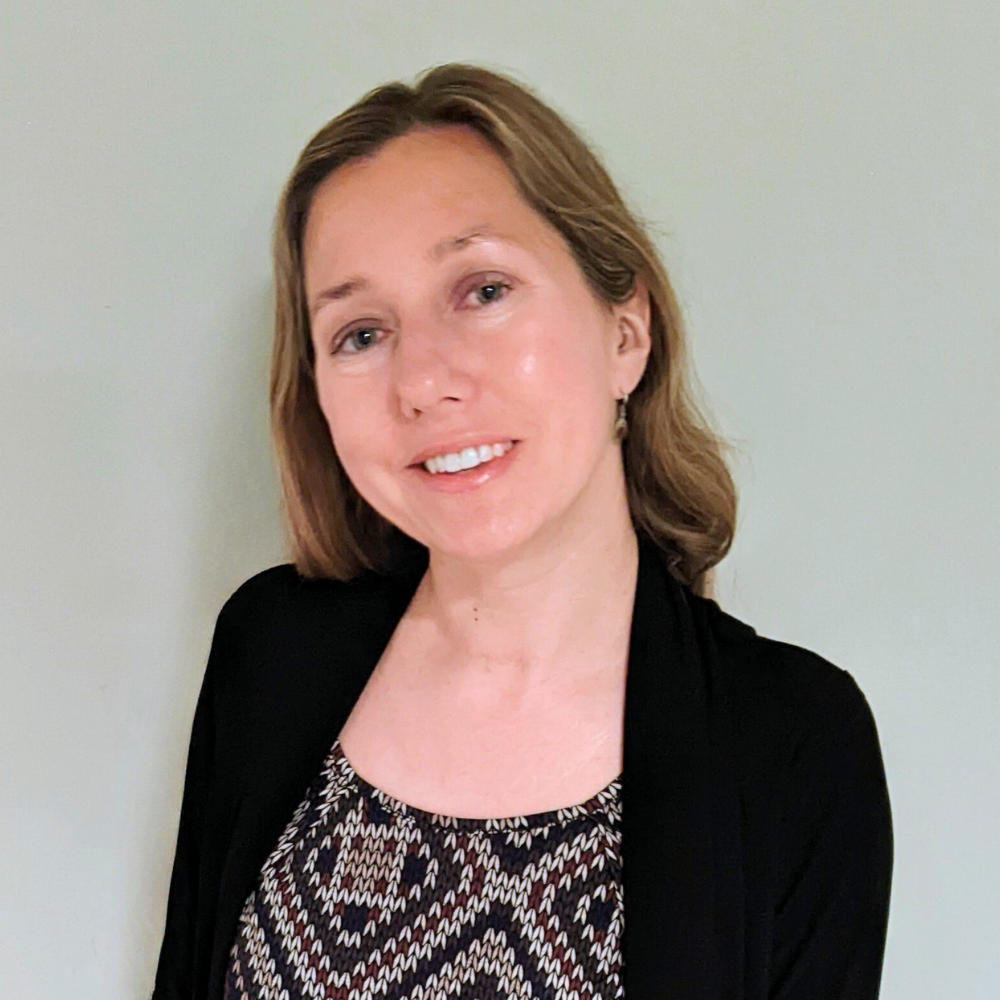
Nikole Nassen, PhD
Nikole Nassen, Ph.D., is a clinical psychologist and the director of the Sex Offender Treatment Program at Naval Consolidated Brig Miramar. She has been involved in program development and implementation for Naval Corrections’ Violent Offender and Sex Offender Treatment Programs and has worked with individuals who have expressed non-traditional sexual interests in the context of these programs. Dr. Nassen is a Clinical Member of the Association for Treatment and Prevention of Sexual Abuse (ATSA) and is a member of ATSA’s Adult Community of Practice. She is also the Training Coordinator for the California Association for Treatment and Prevention of Sexual Abuse (CalATSA) and a Safer Society Collaborator. Dr. Nassen received her doctorate degree in Clinical Psychology from Alliant International University in 2008. She has assessed and treated individuals who have committed violent and sexual offenses, as well as individuals with mental health concerns, in community and in correctional settings. She has also completed clinical and forensic evaluations of adults and adolescents for the Delinquency and Dependency Courts in San Diego.