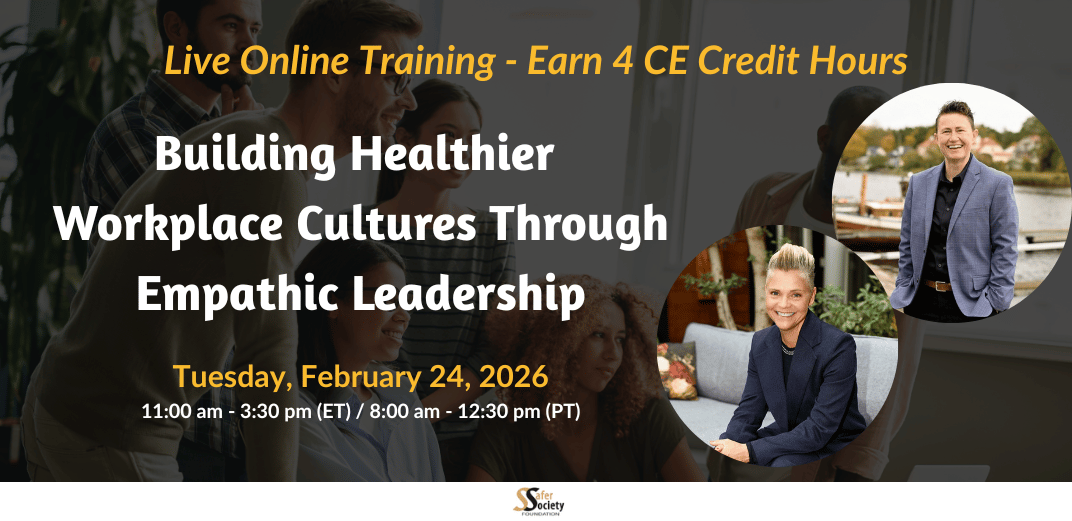
Building Healthier Workplace Cultures Through Empathic Leadership
Empathic workplace leadership is fundamental to effective treatment and supervision, especially when the work can cause trauma in the professionals doing that work. When staff work in high-pressure environments, a leadership approach grounded in empathy can inspire professionals to be their best. However, the results of a recent Safer Society survey on workplace stressors and motivators highlight a critical issue: professionals working to prevent abuse often view management as a greater source of stress than of support.
 Presenters Anette Birgersson and Christin Santiago—professionals with extensive experience in all aspects of leadership—developed this training to address this challenge directly. Their work underscores that empathic, trauma-informed leadership is essential not only for supporting professionals but also for enhancing staff retention, building trust and resilience throughout an organization, and delivering consistent, effective services to clients.
This training guides professionals in creating an environment that emphasizes recognition and validation among colleagues. Birgersson and Santiago offer skills for enhancing team dynamics and fostering clear, respectful communication. Key areas of focus include:
- Hallmarks of compassionate, trauma-informed approaches
- Teamwork skills that encourage curiosity, openness, and respect for different perspectives
- Strategies for developing a deeper understanding of others’ reactions and behavior, cooperation, and assertiveness
- Empathic listening tools that help address staff concerns in real time
- Approaches for diffusing tensions, reducing staff burnout, and building workplace morale
- Techniques for using validation to strengthen professional relationships and boost staff engagement
Birgersson and Santiago offer a practical training model for leaders that blends role-playing, reflective practice, and real-world scenarios that allow participants to put empathic principles into practice. This, in turn, enhances communication, trust, and connection within their teams, laying the groundwork for healthier, more sustainable workplace cultures.
Interactive Follow-Up Meeting
Attendees are invited to join an open discussion 15 minutes following the end of the training, where you can engage with fellow attendees by turning on your camera and microphone. This is an opportunity to share your experiences and contribute to a meaningful exchange of ideas. Time will be allocated to address questions or insights from the training. Please note that attendance is optional and will not affect your eligibility for a training certificate.
1) Define empathic leadership and describe its significance in fostering positive workplace environments, specifically in relation to team dynamics and communication.
2) Apply trauma-informed principles to everyday supervisory and team interactions
3) Demonstrate practical skills in validating team members’ emotions and experiences.
4) Apply key teamwork skills such as cooperation, assertiveness, and effective communication that contribute to overall team functionality, fostering an environment of collaboration.
5) Describe strategies for effectively resolving conflicts within their teams by promoting open dialogue
Audience
This training is primarily for administrators, managers, and supervisors who oversee team dynamics and staff wellbeing. Professionals delivering treatment and supervision in high-pressure environments and anyone seeking to shape workplace culture or positively influence others will highly benefit from the insights from this training.
Content Level
Disclosure
Cancellations
Continuing Education Approval
American Psychological Association (APA)
Safer Society Foundation, Inc. is approved by the American Psychological Association (APA) to sponsor continuing education for psychologists. Safer Society Foundation, Inc. maintains responsibility for this program and its content.
Association of Social Work Boards (ASWB)
Safer Society Foundation, Inc., provider #233, is approved to offer social work continuing education by the Association of Social Work Boards (ASWB) Approved Continuing Education (ACE) program. Regulatory boards are the final authority on courses accepted for continuing education credit. ACE provider approval period: 06/06/2025—06/06/2026. Social workers completing this course receive 4 general continuing education credits.
Who's Presenting

Anette Birgersson
Anette Birgersson, is a licensed psychotherapist with over 20 years of experience working with children and adolescents with trauma, neuropsychiatric diagnoses, and harmful sexual behaviors. Anette is trained in Cognitive Behavioral Therapy, Dialectical Behavior Therapy, Trauma-Focused Cognitive Behavioral Therapy (TF-CBT), Prolonged Exposure, Eye Movement Desensitization and Reprocessing, and Emotional Regulation Group Therapy. She is also a certified TF-CBT trainer. Anette is well-known in her home country of Sweden for developing culturally appropriate programming for treating youth who have sexually abused and young children. After almost two decades of work in this area, Anette opened her own company, Skills Clinic, which has led to her conducting training and supervision all over Europe, Scandinavia, Australia, and the United States. Anette is a NAPN Advisory Board member and sits on several committees for the Association for the Treatment of Sexual Abusers (ATSA: USA).
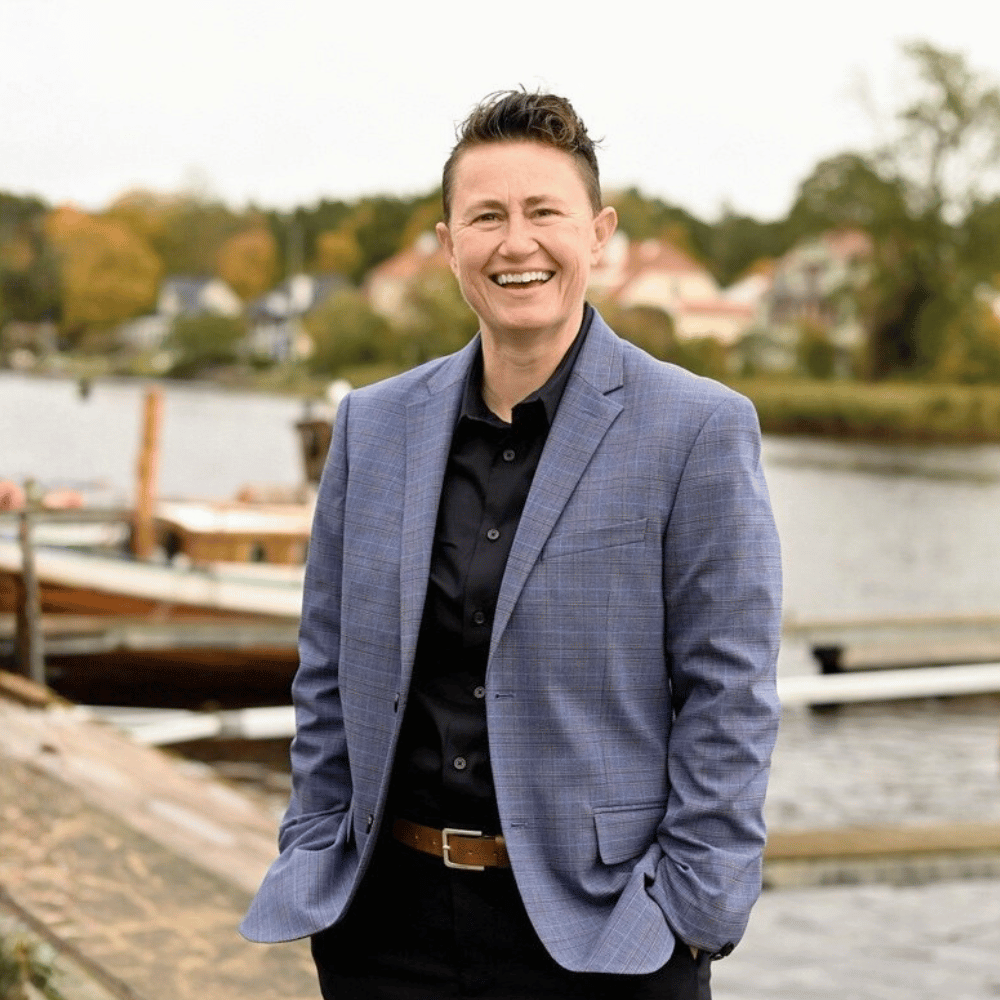
Christin Santiago, CTRS
Christin Santiago is a Recreational Therapist working with youth who have experienced trauma, neuropsychiatric issues and harmful sexual behaviors. Currently the Executive Director of the Skills Clinic in Sweden and the USA, Christin has developed many innovative therapeutic activities and programs that assist youth to develop internal emotional and trauma-management skills through activity and movement.
Internationally renowned, Christin has trained and supervised across America, Europe, Scandinavia, Australia and the UK. She has played a major coaching role in the Special Olympics, being chosen as the 2016 Coach of the Year for Special Olympics of Massachusetts. In 2018, Christin was selected as Head Athletics Coach to participate in the National USA Special Olympics Games in Seattle, Washington. In 2019, she was inducted into the Special Olympics Hall of Fame.
Christin has been an Advisory Board Member of the National Adolescent Perpetration Network (NAPN) for many years.