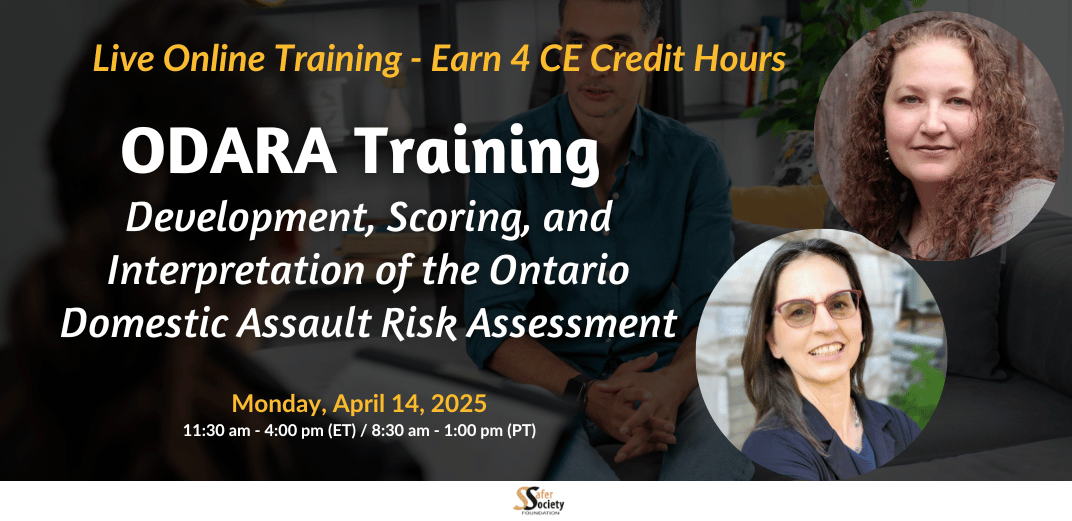
• ODARA Training: Development, Scoring, and Interpretation of the Ontario Domestic Assault Risk Assessment

    The Ontario Domestic Assault Risk Assessment (ODARA) is an actuarial risk assessment tool used to assess the likelihood of adults with histories of assaulting an intimate partner re-offending in the future. It is designed to be used by police, victim services, health care, and correctional agencies as well as professionals such as psychologists and other professionals who conduct risk assessments and provide treatment planning for domestic violence programs. In this training, Dr. Hilton and Ms. Gotch (as trainer in training) review the development, scoring, and interpretation of the ODARA. This includes an overview of validation and calibration studies by Dr. Hilton and by independent researchers. The trainers discuss the applicability of the ODARA for assessment of risk for future intimate partner violence (IPV) recidivism in men and women with a history of physical IPV offending. They go on to cover risk communication methods and use of the ODARA in criminal justice and victim service settings.
    $140.00
  • The Current Dilemmas of Adolescence, Social Media, and Pornography

    The challenges facing parents, caregivers, and adolescents in today’s digital landscape have arguably never been more complicated. All too often, adolescents find themselves navigating the harsh realities of readily available media without adequate guidance. Meanwhile, parents and caregivers are constrained by time and resources to help them and struggle to keep pace with these rapidly evolving technological issues. In this webinar, Seth Wescott and David Prescott review recent research and discuss the changing face of clinical practice in the current era. They offer ideas for understanding these issues and provide strategies for supporting adolescents and their families as they navigate this digital landscape.

    Free
  • Our Safe Haven: Encountering Cases of Sibling Sexual Abuse

    Working with family and other caregivers after sexual abuse has occurred entails navigating significant challenges. Professionals in this field, despite being invaluable, often go without due recognition. Sexual abuse by siblings, commonly seen in our field, underscores the need for comprehensive guidance for facilitating resolution and supporting families in their journey toward reconciliation and recovery—a resource that is often in short supply.

    To the dedicated professionals supporting individuals who perpetrate abuse and encounter cases of sibling sexual abuse, we see you. We recognize the challenges you navigate with limited resources.

    Join us for an upcoming Our Safe Haven session, where Linda Valenta joins David Prescott from Australia to discuss the challenges inherent in this line of work. Engage in open discussions, offer support, and be supported!

    $8
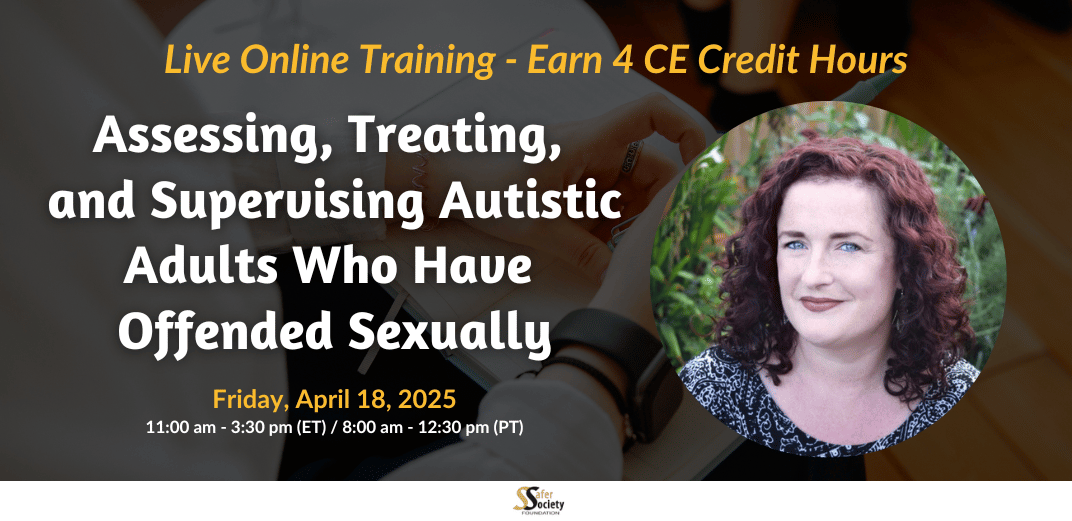
  • Assessing, Treating, and Supervising Autistic Adults Who Have Offended Sexually

    With the increasing occurrence of adult autism diagnoses, there is a growing need for evaluators, treatment providers, and parole and probation officers with the skills to work with this population. Presenter Tiffany Looney MS, LPC, CCSOT developed this training to address the gaps in our understanding of autism spectrum disorder and their implications for clinical and supervisory practices.

    In this training, participants develop an understanding of the neurobiological differences of the autistic brain, the social model of disability, and what it means to be neurodiversity-affirming. Ms. Looney discusses reasons why autistic persons sexually offend, how their reasons may differ from those of their non-autistic peers, and how this impacts our understanding of risk, treatment needs, and effective supervision of these clients. She further describes key areas of autistic functioning, differentiating between autistic meltdown, shutdown, and burnout, as well as other effects of autism on mental and physical health, executive and adaptive functioning, and sensory processing.

    $140.00
  • Addressing Denial and Promoting Accountability in Sexual Offending Treatment

    The roles of denial and accountability in the treatment of sexual offending have generated decades of controversy. A classic meta-analysis and several recent studies have consistently shown that denial is not a risk factor for recidivism. In spite of those findings, methods for treating people in categorical denial have been established and the importance of accountability as a critical aspect of rehabilitation has been emphasized by numerous authors (including Judith Herman). Indeed, research has indicated that clients in sexual offending treatment cite overcoming denial and developing empathy for those harmed as among the most impactful components of their treatment. Questions therefore arise regarding the core objectives that such treatment programs should prioritize.

    This presentation examines the approach of the Colorado Sex Offender Management Board (SOMB), a statutory body established in 1992 to develop guidelines for the evaluation, treatment, and behavioral monitoring of those who sexually offend. The SOMB’s mandate encompasses two primary objectives:
    - Promoting evidence-based rehabilitation of those who commit sexual offenses
    - Ensuring the safety of people who have been victimized

    Free
  • Day 1: Static-99R Training: Best Practices for Accurate Risk Assessment

    In this training, Certified Trainer Katie Gotch provides a thorough overview of the Static-99R, including its development, scoring system, and application in various settings. Participants learn how to score each of the ten items, with scores ranging from -3 to 12, and understand how these scores categorize individuals into five distinct risk levels: very low, below average, average, above average, and well above average risk.

    The training also covers the predictive validity of the Static-99R and its appropriate use in forensic settings. Case studies are utilized to enhance understanding and facilitate skill development throughout the training.

    $265.00
  • Day 2: Static-99R Training: Best Practices for Accurate Risk Assessment

    In this training, Certified Trainer Katie Gotch provides a thorough overview of the Static-99R, including its development, scoring system, and application in various settings. Participants learn how to score each of the ten items, with scores ranging from -3 to 12, and understand how these scores categorize individuals into five distinct risk levels: very low, below average, average, above average, and well above average risk.

    The training also covers the predictive validity of the Static-99R and its appropriate use in forensic settings. Case studies are utilized to enhance understanding and facilitate skill development throughout the training.

    $265.00
  • Our Safe Haven: Navigating the Complexities of Inclusive Language in Professional Practice

    Person-first and identity-first language play a crucial role in shaping perceptions and treatment of individuals. While mental health professionals strive to demonstrate respect and courtesy to their clients, implementing these language practices is far more nuanced and complex than it might initially appear. Despite these obstacles, adopting first-person language remains essential for creating a respectful and supportive environment for patients. Professionals can improve their use of inclusive language through continued education, self-reflection, and consistent practice.

    These Our Safe Haven sessions, co-moderated by Molly Shepard and David Prescott, focus on the implementation and importance of inclusive language. The sessions provide a space for professionals to explore current communication trends in mental health and criminal justice fields.

    $8.00
  • Our Safe Haven: Supporting Youths Through the Complexities of Sexually Explicit Media

    The rise of sexually explicit media (SEM) across digital platforms—spanning from traditional adult websites to social media and mainstream online spaces—has created significant challenges for parents, educators, and mental health professionals. Guiding youths through their media consumption in this rapidly evolving digital landscape requires innovative strategies and collaborative efforts.

    Join us for a series of professional dialogues designed to address these pressing issues. Moderated by Seth Wescott and David Prescott, these discussions provide a supportive space for professionals to share insights, develop strategies, and enhance their ability to navigate the complexities of SEM’s impact on youths. Each session will begin with a focused exploration of a specific topic, evolving naturally into an engaging, attendee-driven conversation shaped by shared experiences and professional insights.

    $8.00
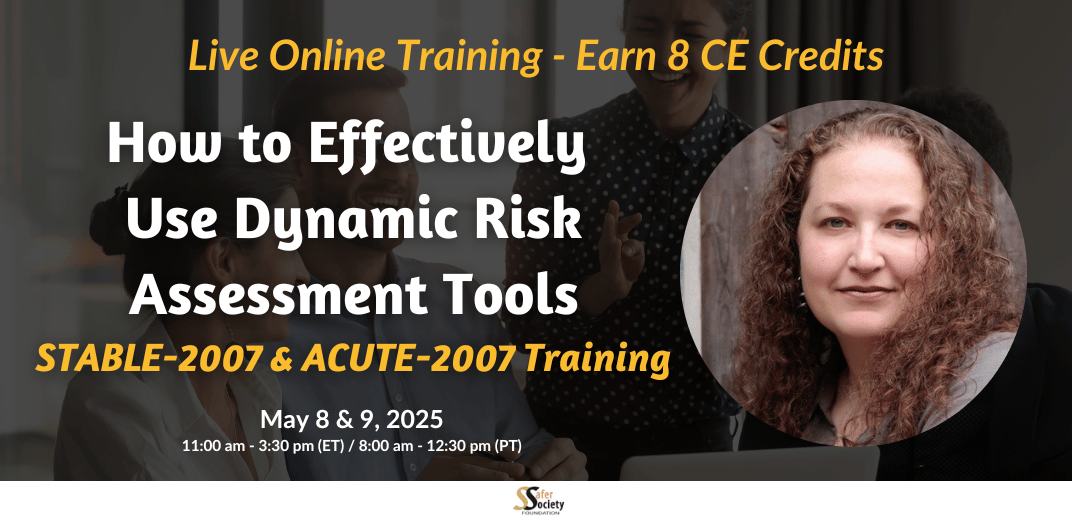
  • Day 1: How to Effectively Use Dynamic Risk Assessment Tools: STABLE-2007 & ACUTE-2007 Training

    During this eight-hour training, Katie Gotch, LPC, CCSOT, ATSA-F, provides an overview of the development and research of the STABLE-2007 and ACUTE-2007 instruments. She explains how to score each of the measures’ items, as well as their appropriate interpretation and use within varying settings. This includes recent guidance on the use of these tools with individuals convicted of child sexual abuse material-related offenses (CSAM). To enhance learning, case studies are incorporated to provide hands-on practice and to address common scoring and administration errors.

    $265.00
  • Day 2: How to Effectively Use Dynamic Risk Assessment Tools: STABLE-2007 & ACUTE-2007 Training

    During this eight-hour training, Katie Gotch, LPC, CCSOT, ATSA-F, provides an overview of the development and research of the STABLE-2007 and ACUTE-2007 instruments. She explains how to score each of the measures’ items, as well as their appropriate interpretation and use within varying settings. This includes recent guidance on the use of these tools with individuals convicted of child sexual abuse material-related offenses (CSAM). To enhance learning, case studies are incorporated to provide hands-on practice and to address common scoring and administration errors.

    $265.00
  • Our Safe Haven: Navigating LGBTQ+ Mental Health Challenges

    We invite you to join us for a series of professional dialogues moderated by Jimmy Widdifield, Jr., and David Prescott. These sessions are designed to foster meaningful conversations, provide a supportive space for professionals to share experiences, and equip attendees with strategies to navigate the complexities of supporting the LGBTQ+ community. Each session begins with a focused exploration of a specific topic and evolves naturally into an engaging, attendee-driven conversation shaped by shared experiences and insights.

    $8.00
  • How to Use “Ask-Offer-Ask” as a Brief Motivational Interviewing Intervention

    Difficult conversations — with clients as well as with other professionals — is one of the challenges we contend with in the treatment field. Fortunately, there is an established practice we can use to turn these conversations into effective methods for motivating change. This training introduces Ask-Offer-Ask (AOA), a structured way to have successful conversations in moments of uncertainty, tension, and decision-making.

    $105.00
  • Our Safe Haven: Supporting Youths Through the Complexities of Sexually Explicit Media

    The rise of sexually explicit media (SEM) across digital platforms—spanning from traditional adult websites to social media and mainstream online spaces—has created significant challenges for parents, educators, and mental health professionals. Guiding youths through their media consumption in this rapidly evolving digital landscape requires innovative strategies and collaborative efforts.

    Join us for a series of professional dialogues designed to address these pressing issues. Moderated by Seth Wescott and David Prescott, these discussions provide a supportive space for professionals to share insights, develop strategies, and enhance their ability to navigate the complexities of SEM’s impact on youths. Each session will begin with a focused exploration of a specific topic, evolving naturally into an engaging, attendee-driven conversation shaped by shared experiences and professional insights.

    $8.00
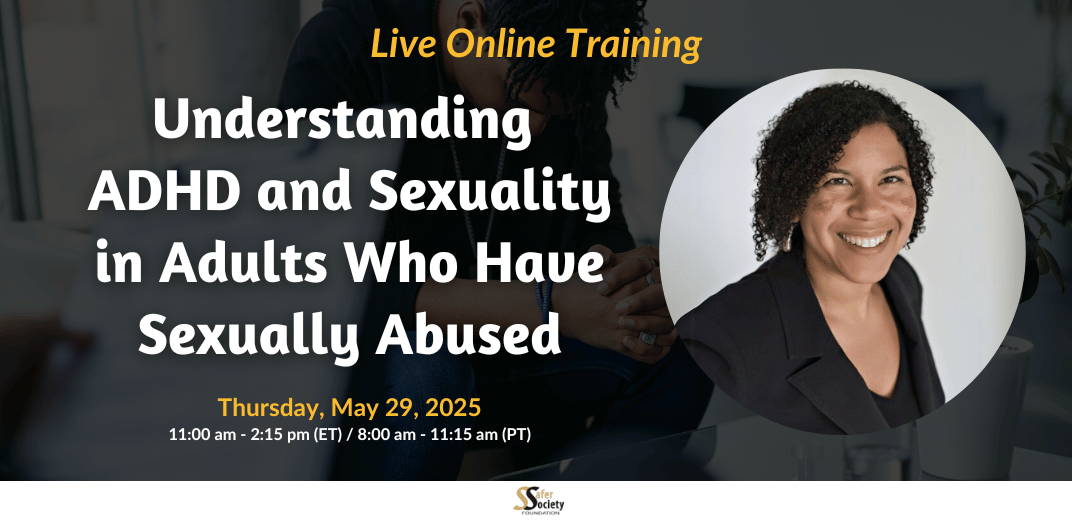
  • Understanding ADHD and Sexuality in Adults Who Have Sexually Abused

    Individuals within the criminal justice system exhibit rates of Attention Deficit Hyperactivity Disorder (ADHD) up to five times higher than those in the general population. During this training, Dr. Piché reviews the often-startling research into ADHD, specifically focusing on people who have sexually abused and are otherwise involved in the legal system. She offers solutions to the diagnostic challenges clinicians face when attempting to understand their clients. Dr. Piché also reviews common problems that occur at the crossroads of ADHD and sexuality.

    $72.00
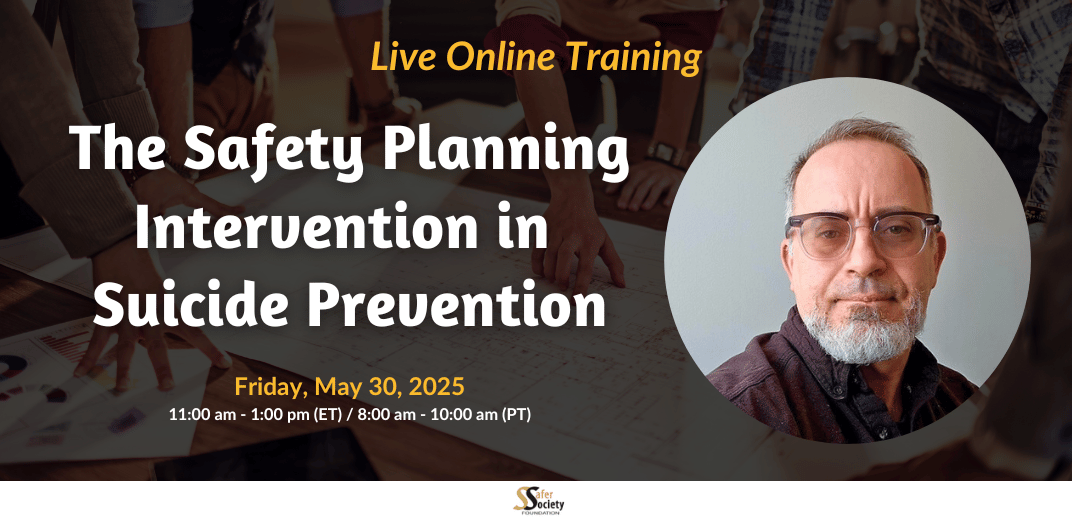
  • The Safety Planning Intervention in Suicide Prevention

    Developing comprehensive safety plans for people at risk of suicide is a vital clinical skill. However, the skill is rarely a focus of professional development efforts. This training addresses this gap by introducing the Safety Planning Intervention (SPI) (Stanley & Brown, 2012). The SPI is a brief, collaborative intervention that employs the identification of personalized strategies to aid in the prevention of escalation of suicidal crisis. With discussions and demonstrations enhancing his lecture, presenter Mark Margolis instructs attendees on the effective use of SPI as a suicide prevention intervention with at-risk clients.

    $50.00
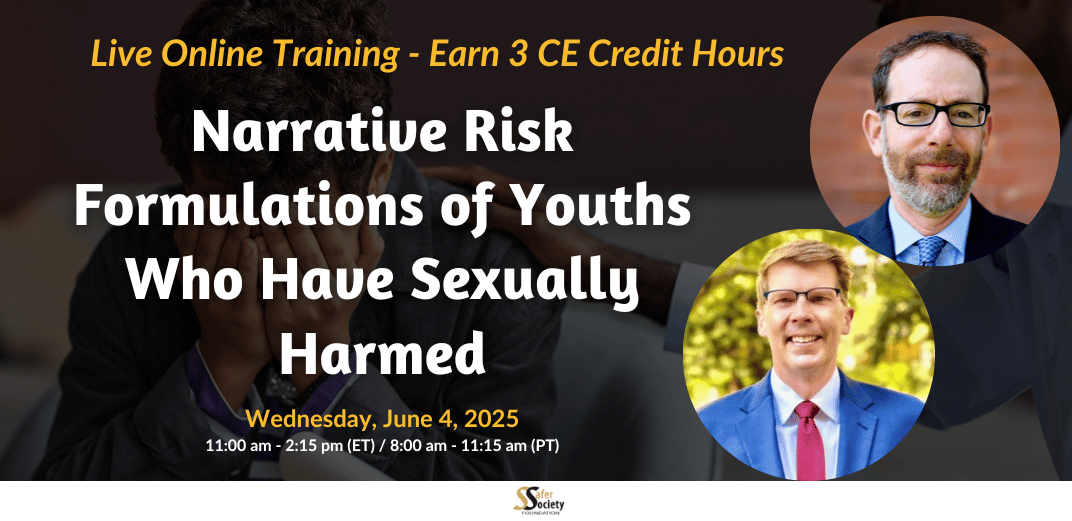
  • Narrative Risk Formulations of Youths Who Have Sexually Harmed

    In this training, Drs. Kruh and Cruise explain how the risk assessments of the past have evolved into comprehensive, structured methods for understanding and explaining a youth’s potential for harmful behavior. Narrative risk formulations are a key component of assessment and management in mental health and criminal justice settings.
    $105.00
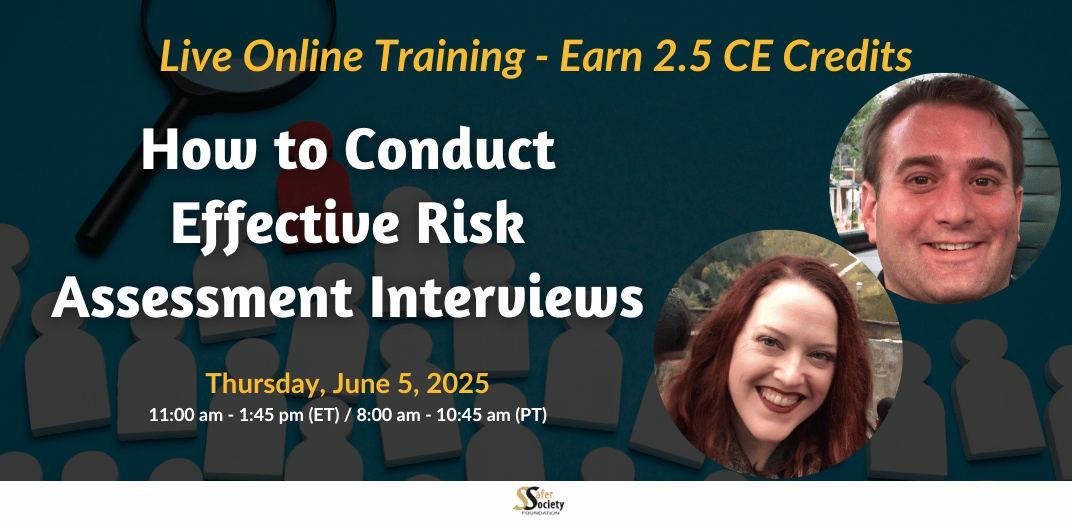
  • How to Conduct Effective Risk Assessment Interviews

    Conducting interviews for the purpose of risk assessment can be akin to learning a new language. Newer members of the profession can often feel uncomfortable and even clumsy when conducting risk assessment interviews. Becoming more effective at this type of interviewing requires practice and repetition. Determining what information is relevant and utilizing the right process to obtain it can make the difference between an effective and ineffective assessment, particularly when examining dynamic risk.

    In this training, Dr. Griffith and Mr. Wescott explore the elements of effective clinical interviews and the characteristics of the interviewer.

    $87.00
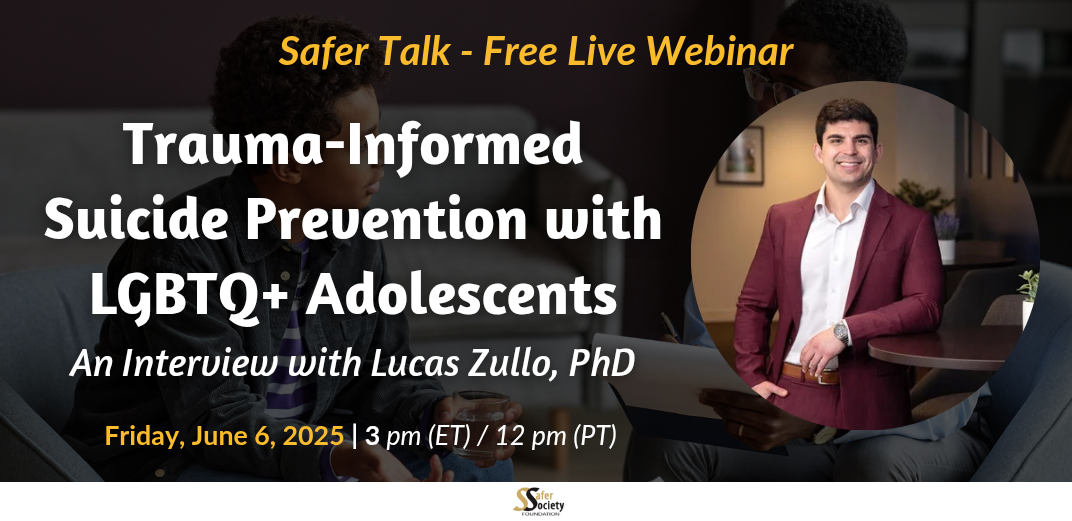
  • Trauma-Informed Suicide Prevention with LGBTQ+ Adolescents: An Interview with Lucas Zullo, PhD

    Suicide rates among adolescents have risen across the past two decades, particularly among LGBTQ+ youths. These alarming statistics underscore the importance of suicide prevention as a fundamental component of professional development in youth-serving fields. In this webinar interview, Dr. Lucas Zullo, an expert in family-focused evidence-based suicide prevention, discusses his work on trauma-informed approaches that aim to promote safety and prevent any unintended re-traumatization.

    Free
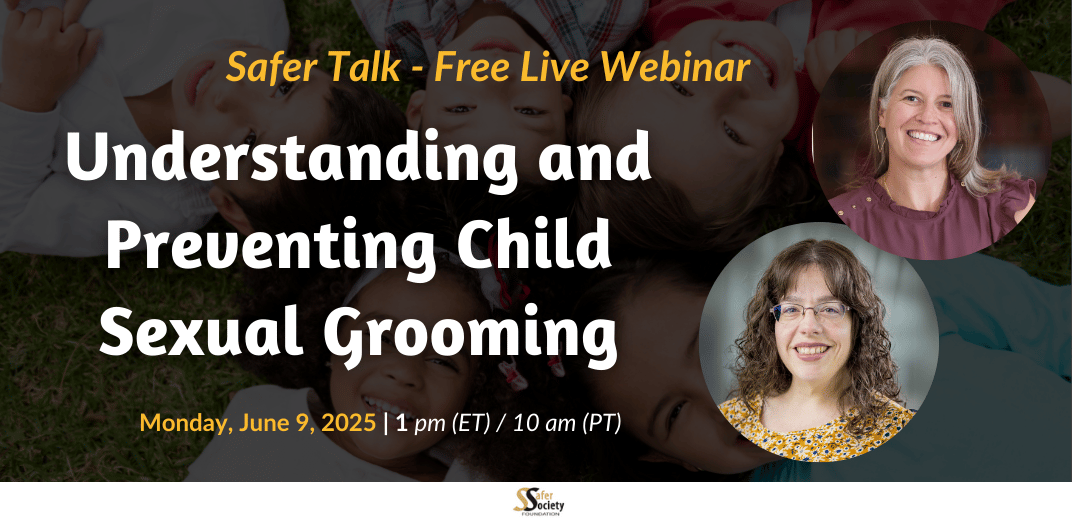
  • Understanding and Preventing Child Sexual Grooming

    The sexual grooming of children has emerged as a focal point of renewed public interest and prevention research. Child sexual grooming is a deliberate and deceptive process that paves the way to child sexual abuse. It involves behaviors that provide predators with access to children while reducing the likelihood that the abuse will be detected. Grooming tactics target not only the child but their caregivers and other influential adults as well.

    This webinar features Drs. Doyle Pruitt and Molly Wolf, who discuss what professionals need to know about child sexual grooming

    Free
  • Our Safe Haven: Supporting Youths Through the Complexities of Sexually Explicit Media

    The rise of sexually explicit media (SEM) across digital platforms—spanning from traditional adult websites to social media and mainstream online spaces—has created significant challenges for parents, educators, and mental health professionals. Guiding youths through their media consumption in this rapidly evolving digital landscape requires innovative strategies and collaborative efforts.

    Join us for a series of professional dialogues designed to address these pressing issues. Moderated by Seth Wescott and David Prescott, these discussions provide a supportive space for professionals to share insights, develop strategies, and enhance their ability to navigate the complexities of SEM’s impact on youths. Each session will begin with a focused exploration of a specific topic, evolving naturally into an engaging, attendee-driven conversation shaped by shared experiences and professional insights.

    $8.00
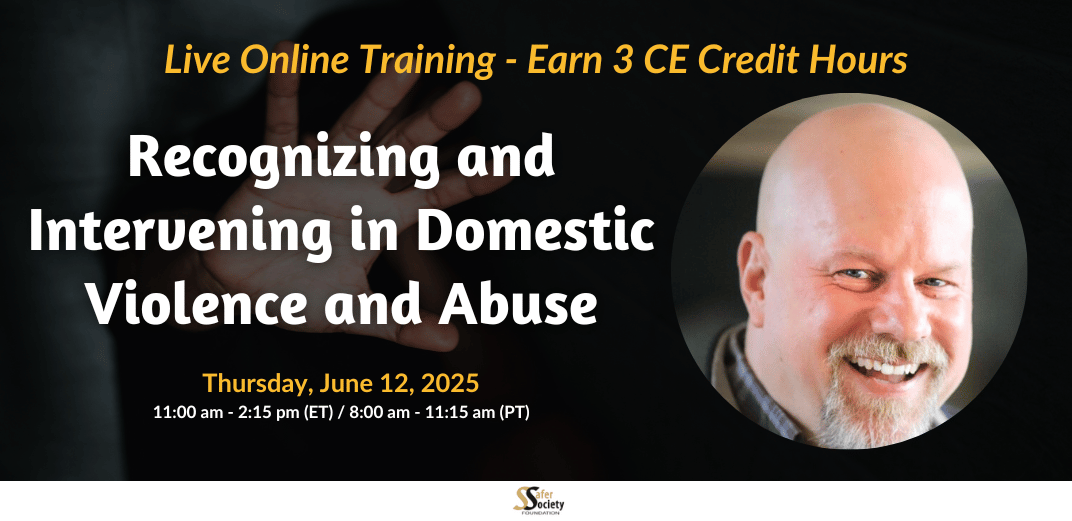
  • Recognizing and Intervening in Domestic Violence and Abuse

    Dr. Chris Huffine, the Executive Director of Allies in Change, developed this training to provide an overview of intimate partner abuse. During this training, he explores the nuances of domestic violence, including an overview of the nature of domestic violence, an analysis of underlying causes of domestic violence, differentiation between common hurtful behaviors and abuse, and more.

    Throughout the training, Dr. Huffine defines terms and provides accessible ways of understanding important concepts, such as the belief systems underlying domestic violence and the complex reasons why partners often remain in abusive relationships. Dr. Huffine then outlines effective approaches to addressing domestic violence while highlighting interventions that have proven ineffective. This training ensures participants gain a well-rounded understanding of this critical issue.

    $105.00
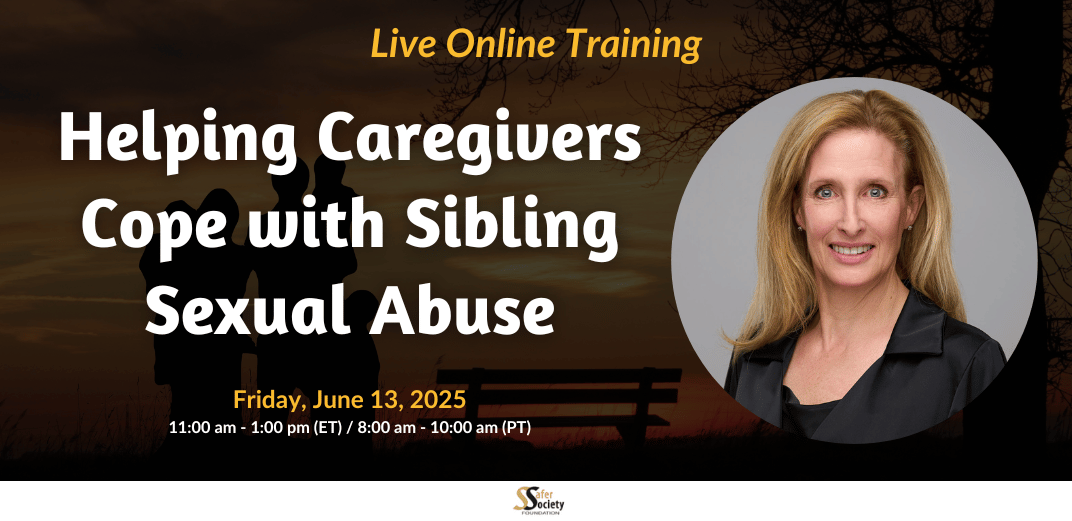
  • Helping Caregivers Cope with Sibling Sexual Abuse

    When sexual abuse among siblings occurs, parents and other caregivers often become flooded with emotions such as anger, shame, sadness, fear, confusion, disbelief, regret, helplessness, and self-blame. These feelings make it difficult for parents to determine how best to support both of their children. While research and conferences have begun addressing the treatment of families impacted by sibling abuse, there remains a significant lack of resources specifically tailored to guiding parents as they navigate their way through these complex situations.

    $50.00
  • Our Safe Haven: Navigating LGBTQ+ Mental Health Challenges

    We invite you to join us for a series of professional dialogues moderated by Jimmy Widdifield, Jr., and David Prescott. These sessions are designed to foster meaningful conversations, provide a supportive space for professionals to share experiences, and equip attendees with strategies to navigate the complexities of supporting the LGBTQ+ community. Each session begins with a focused exploration of a specific topic and evolves naturally into an engaging, attendee-driven conversation shaped by shared experiences and insights.

    $8.00
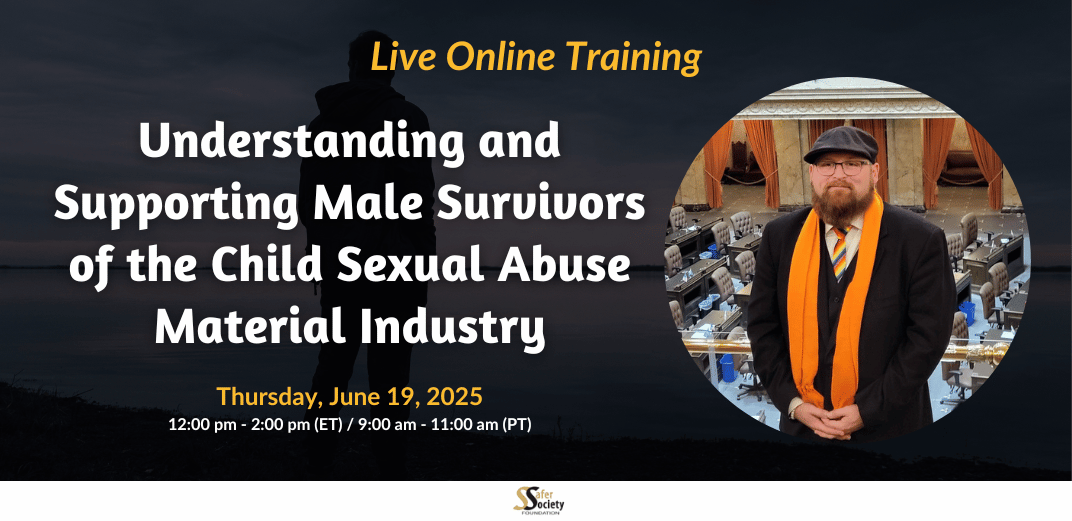
  • Understanding and Supporting Male Survivors of the Child Sexual Abuse Material Industry

    Up to 50 % of sex-trafficked youths are male, yet they often remain overlooked in human trafficking cases. This under-recognition leads to inadequate support and identification, resulting in many male survivors not receiving the help they need. In this training, Nathan LaChine addresses this critical issue by focusing on what professionals need to know about working with males who have been trafficked in a key type of commercial sexual exploitation of children (CSEC): the child sexual abuse material (CSAM) industry, formerly known as child pornography.

    $50.00
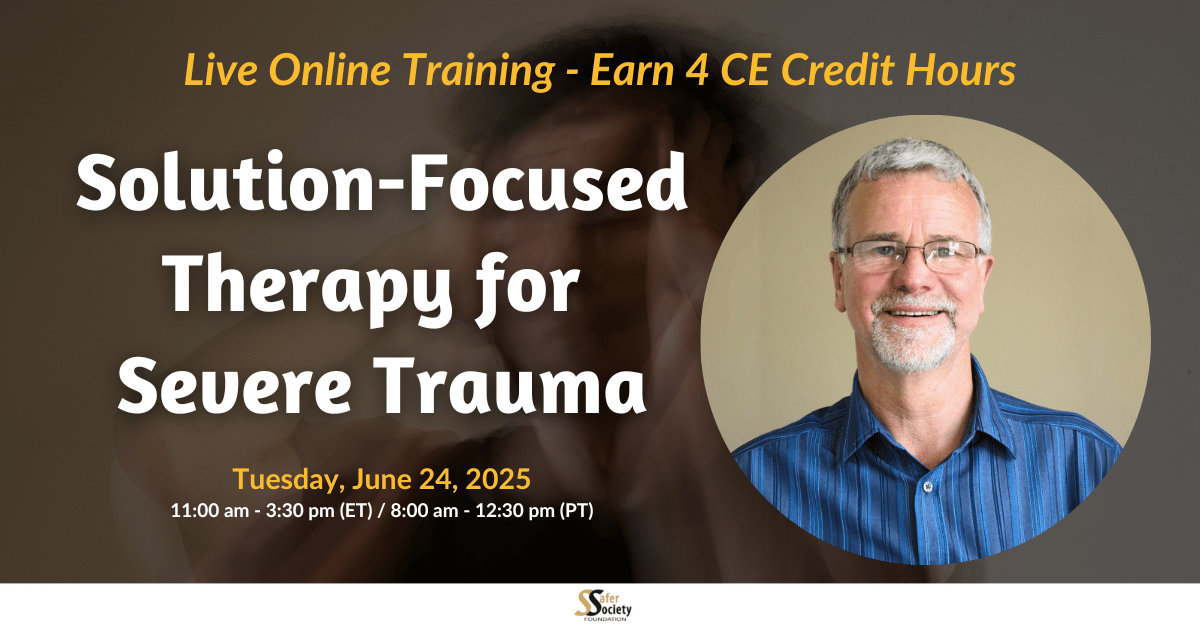
  • Solution-Focused Therapy for Severe Trauma

    In this training, John Henden outlines various SFT techniques designed to address the six common areas of trauma aftereffects. The techniques have proven effective and transferable across many severe trauma and stress areas, including sexual violence; sudden death, mass shootings, terrorist incidents, military combat, and road accidents. During the presentation, Henden discusses specific tools and techniques that can be introduced to clients as part of the therapeutic process.

    $140.00
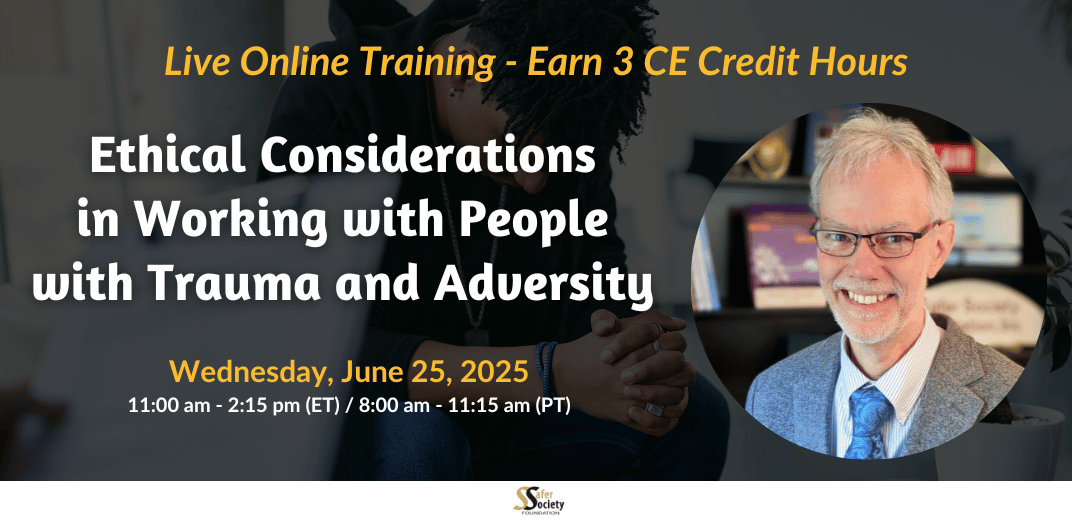
  • Ethical Considerations in Working with People with Trauma and Adversity

    A surge in research in the past two decades has revealed that the effects of early life adversity and other forms of trauma across all age groups, including those involved in the criminal justice system, is a complex landscape in need of better understanding by treatment providers. A growing body of evidence highlights a potential disconnect between therapists' intentions to provide trauma-informed care and clients' experiences in treatment. Concepts such as "post-conviction traumatic stress," introduced by Danielle Harris and Jill Levenson, underscores the challenges faced by both practitioners and clients.

    $105.00
  • How to Develop Effective Internet Safety Plans with Adult Clients Who Have Sexually Abused

    Safety planning for internet use is now a central component of the community supervision of many justice-involved clients. It is also an emerging facet of collaboration between professionals of different disciplines and their clients. Traditionally, clients with histories of sexual offenses were not allowed to have any internet access at all. However, since the internet has evolved as an accessible provider of resources that are available nowhere else, professionals and clients alike need to be more sophisticated about their use of the internet.

    In this training, the presenters provide concrete ideas for how to construct effective safety plans for internet use. This includes:
    - Having a conversation with clients about the safety planning process
    - Using internet safety planning as a therapeutic process rather than as part of a “to-do list” in treatment
    - Clarifying what is needed in a safety plan, including what aspects of the internet pose risks for different clients, and how these risks relate to other risk factors in the client’s life
    - Identifying the essential components of an internet safety plan
    - Considering cultural factors in safety planning
    - Helping clients navigate the sexually suggestive environments of media platforms and understand their subconscious influence

    $70.00
  • Our Safe Haven: Supporting Youths Through the Complexities of Sexually Explicit Media

    The rise of sexually explicit media (SEM) across digital platforms—spanning from traditional adult websites to social media and mainstream online spaces—has created significant challenges for parents, educators, and mental health professionals. Guiding youths through their media consumption in this rapidly evolving digital landscape requires innovative strategies and collaborative efforts.

    Join us for a series of professional dialogues designed to address these pressing issues. Moderated by Seth Wescott and David Prescott, these discussions provide a supportive space for professionals to share insights, develop strategies, and enhance their ability to navigate the complexities of SEM’s impact on youths. Each session will begin with a focused exploration of a specific topic, evolving naturally into an engaging, attendee-driven conversation shaped by shared experiences and professional insights.

    $8.00
  • Viewing Sexual Violence Prevention from a Culturally Informed Perspective

    Our field’s understanding of strategies to mitigate violence has evolved significantly, expanding beyond a sole focus on risk in assessment and treatment. Yet, there remains much to learn about working with clients from cultures and backgrounds different from our own. To truly prevent violence and abuse, it is essential that professionals in our field openly discuss both our current knowledge of cultural sensitivity and the gaps that remain with one another and our communities beyond. Embracing cultural humility and committing to lifelong professional growth are key to this process.

    In this free training, Dr. Alexander—an expert in culturally informed practices and policies—shares valuable lessons learned and explores future directions in the treatment and prevention of violence, particularly with respect to culturally informed assessment and treatment

    Free
  • Treatment for Overwhelmed Families Affected by Sexual Abuse

    In this training, Amanda Pryor explores methods and techniques for engaging families experiencing these challenges, while also addressing the professionals’ own feelings of being overwhelmed. This includes how to carefully redefine one’s approach when previous providers have not been helpful, such as by shifting from interventions that may unintentionally target parents to more inclusive family support methods.

    $105.00
  • Our Safe Haven: Navigating LGBTQ+ Mental Health Challenges

    We invite you to join us for a series of professional dialogues moderated by Jimmy Widdifield, Jr., and David Prescott. These sessions are designed to foster meaningful conversations, provide a supportive space for professionals to share experiences, and equip attendees with strategies to navigate the complexities of supporting the LGBTQ+ community. Each session begins with a focused exploration of a specific topic and evolves naturally into an engaging, attendee-driven conversation shaped by shared experiences and insights.

    $8.00
  • Talking About Sex in Sexual Offense Treatment: Practical Approaches for Professionals

    Traditional approaches to sexual offense treatment focus on suppressing or controlling sexual urges, but research and clinical experience now emphasize the importance of promoting healthy sexuality as part of rehabilitation. For individuals with histories of sexual offending, addressing issues such as sexual dysfunction, negative self-image, intimacy problems, and deviant sexual scripts in treatment, can decrease the risk of reoffending.

    Unfortunately, many professionals experience discomfort and other challenges when discussing sexual topics with clients, leading to avoidance or negative messaging about sex and sexuality. Consequently, clients may not receive the support they need to explore their sexual interests, develop healthy sexual expression, and achieve treatment goals related to consensual and non-harmful sexuality.

    This presentation, developed by Nikole Nassen, PhD, focuses on how professionals can address sexual topics with adults in sexual offense treatment.

    $50.00
  • Supervising Professionals Who Work with Domestic Violence: Ethical Considerations

    In this session, Ms. Garder explores common ethical dilemmas and provides guidance for delivering effective services to those working with domestic violence survivors and those who have caused harm. She also offers skills and tools for supervising clinicians, particularly clinicians with limited experience in domestic violence. Through case examples, interactive discussion, and actionable frameworks, attendees gain insight into the challenges of balancing their desire for client safety against the reality that predicting and stopping violence is outside the clinician’s complete control.

    $105.00
  • Applying the CARE Method to Treat Those Who Have Committed Domestic Violence

    In this training, Ms. Buckley introduces the CARE method and discusses its development. She emphasizes the importance of a person-centered approach to engagement, particularly in the treatment of justice-involved clients. These individuals often have histories of trauma, exhibit rigid cognitive styles, possess limited coping skills, and may struggle to trust professionals. Ms. Buckley explores these client characteristics and provides insight into how involvement with the criminal justice system can influence those characteristics.

    The training then covers the CARE method in detail, addressing topics such as identifying triggers, building emotional intelligence, understanding intergenerational trauma, enhancing communication skills, and recognizing cognitive distortions. Ms. Buckley highlights the importance of relational dynamics, including healthy conflict resolution and the impact of substance abuse on relationships, and she suggests strategies for addressing warning signs of relational decline.

    $96.00
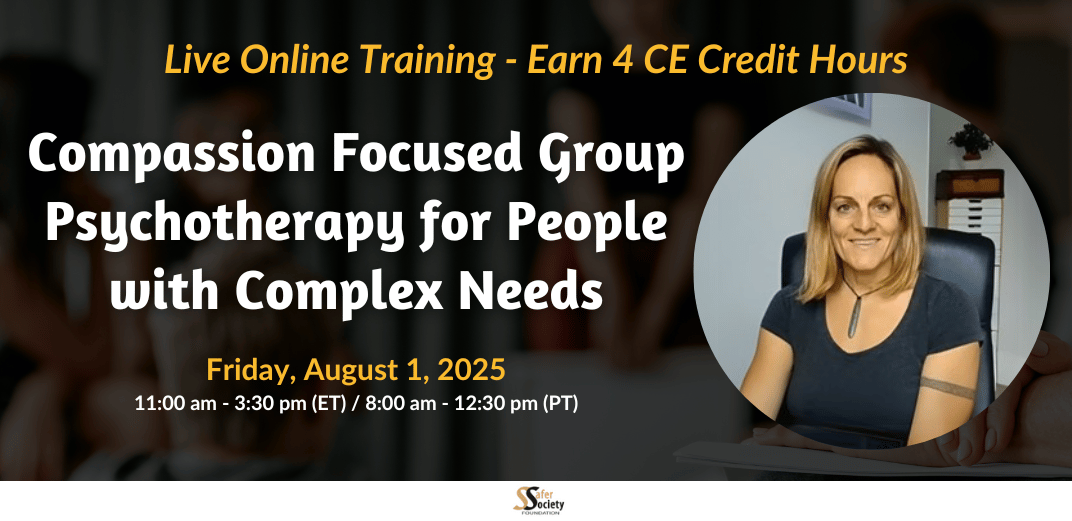
  • Compassion Focused Group Psychotherapy for People with Complex Needs

    Compassion Focused Group Psychotherapy (CFGP) provides a supportive environment where clients with complex challenges can learn and practice compassion skills together, creating the conditions necessary for exploratory group psychotherapy that is especially beneficial for those who find it difficult to trust or connect with others. It has been adapted by Dr. Kate Lucre, today’s presenter, from Compassion Focused Therapy (CFT) for use in a group setting. The product of Paul Gilbert, CFT integrates cognitive behavioral therapy with evolutionary psychology, social psychology, neuroscience, and Buddhist psychology.

    In this training, Dr. Lucre introduces participants to practical techniques for engaging clients in the group process and facilitating therapeutic insights.

    $140.00
  • Day 1: Static-99R Training: Best Practices for Accurate Risk Assessment

    In this training, Certified Trainer Katie Gotch provides a thorough overview of the Static-99R, including its development, scoring system, and application in various settings. Participants learn how to score each of the ten items, with scores ranging from -3 to 12, and understand how these scores categorize individuals into five distinct risk levels: very low, below average, average, above average, and well above average risk.

    The training also covers the predictive validity of the Static-99R and its appropriate use in forensic settings. Case studies are utilized to enhance understanding and facilitate skill development throughout the training.
    $265.00
  • Day 2: Static-99R Training: Best Practices for Accurate Risk Assessment

    In this training, Certified Trainer Katie Gotch provides a thorough overview of the Static-99R, including its development, scoring system, and application in various settings. Participants learn how to score each of the ten items, with scores ranging from -3 to 12, and understand how these scores categorize individuals into five distinct risk levels: very low, below average, average, above average, and well above average risk.

    The training also covers the predictive validity of the Static-99R and its appropriate use in forensic settings. Case studies are utilized to enhance understanding and facilitate skill development throughout the training.
    $265.00
  • Ethics in Clinical Supervision

    Clinical supervision plays a vital role in supporting new clinicians and maintaining high standards of client care. It helps to ensure the development of professional skills, encourages self-reflection, and promotes self-awareness among supervisees. Dr. Michelle Yep Martin developed this training to address the challenges and risks inherent in clinical supervision of counselors, social workers, and psychologists. The training explores the roles of the supervisor and supervisee, as well as the feedback loop between them. It reviews the codes of ethics of these three professions and describes common ethical issues in supervisory practice, including maintaining confidentiality and professionalism in the supervisory relationship.

    Dr. Michelle Yep Martin has long supervised clinicians for licensure and approved provider statuses. Her approach to this material is accessible to beginning as well as more experienced supervisors.

    $140.00
  • Our Safe Haven: Supporting Youths Through the Complexities of Sexually Explicit Media

    The rise of sexually explicit media (SEM) across digital platforms—spanning from traditional adult websites to social media and mainstream online spaces—has created significant challenges for parents, educators, and mental health professionals. Guiding youths through their media consumption in this rapidly evolving digital landscape requires innovative strategies and collaborative efforts.

    Join us for a series of professional dialogues designed to address these pressing issues. Moderated by Seth Wescott and David Prescott, these discussions provide a supportive space for professionals to share insights, develop strategies, and enhance their ability to navigate the complexities of SEM’s impact on youths. Each session will begin with a focused exploration of a specific topic, evolving naturally into an engaging, attendee-driven conversation shaped by shared experiences and professional insights.

    $8.00
  • Assessing and Treating Women Who Perpetrate Sexually Motivated Offenses

    The fields of assessing and treating women who have committed sexually motivated offenses continue to grow and evolve. The extant research literature provides an empirical basis for assessing women from a gendered perspective. This perspective is a person-centered, strength-based approach that takes into consideration how gender affects patterns of offending for women. When viewed from this perspective, women who perpetrate sexually motivated offenses require risk assessment and treatment approaches that differ from approaches used with their male counterparts. This workshop provides empirically supported guidance related to assessing and treating women who have committed sexually motivated offenses.

    Dawn Pflugradt, PsyD, LP, LCSW and Bradley P. Allen, PhD, JD—two of the leading experts in this field— developed this training to highlight key research findings and provide current insights and best practices based on their decades of experience working with women who have sexually abused.

    $105.00
  • Our Safe Haven: Supporting Youths Through the Complexities of Sexually Explicit Media

    The rise of sexually explicit media (SEM) across digital platforms—spanning from traditional adult websites to social media and mainstream online spaces—has created significant challenges for parents, educators, and mental health professionals. Guiding youths through their media consumption in this rapidly evolving digital landscape requires innovative strategies and collaborative efforts.

    Join us for a series of professional dialogues designed to address these pressing issues. Moderated by Seth Wescott and David Prescott, these discussions provide a supportive space for professionals to share insights, develop strategies, and enhance their ability to navigate the complexities of SEM’s impact on youths. Each session will begin with a focused exploration of a specific topic, evolving naturally into an engaging, attendee-driven conversation shaped by shared experiences and professional insights.

    $8.00
  • Our Safe Haven: Navigating Sexuality Education Competency

    In this Our Safe Haven, we invite you to join practitioner Robin Cooper and David Prescott to explore CSE as its own kind of cultural competence, particularly for professionals working with clients who have experienced or committed acts of violence and sexual abuse. The session will begin with a focused review of a comprehensive sexuality education, evolving naturally into an engaging, attendee-driven conversation shaped by shared experiences and professional insights.

    $8.00
  • Day 1: How to Effectively Use Dynamic Risk Assessment Tools: STABLE-2007 & ACUTE-2007 Training

    During this eight-hour training, Katie Gotch, LPC, CCSOT, ATSA-F, provides an overview of the development and research of the STABLE-2007 and ACUTE-2007 instruments. She explains how to score each of the measures’ items, as well as their appropriate interpretation and use within varying settings. This includes recent guidance on the use of these tools with individuals convicted of child sexual abuse material-related offenses (CSAM). To enhance learning, case studies are incorporated to provide hands-on practice and to address common scoring and administration errors.
    $265.00
  • Day 2: How to Effectively Use Dynamic Risk Assessment Tools: STABLE-2007 & ACUTE-2007 Training

    During this eight-hour training, Katie Gotch, LPC, CCSOT, ATSA-F, provides an overview of the development and research of the STABLE-2007 and ACUTE-2007 instruments. She explains how to score each of the measures’ items, as well as their appropriate interpretation and use within varying settings. This includes recent guidance on the use of these tools with individuals convicted of child sexual abuse material-related offenses (CSAM). To enhance learning, case studies are incorporated to provide hands-on practice and to address common scoring and administration errors.
    $265.00
  • Our Safe Haven: Supporting Youths Through the Complexities of Sexually Explicit Media

    The rise of sexually explicit media (SEM) across digital platforms—spanning from traditional adult websites to social media and mainstream online spaces—has created significant challenges for parents, educators, and mental health professionals. Guiding youths through their media consumption in this rapidly evolving digital landscape requires innovative strategies and collaborative efforts.

    Join us for a series of professional dialogues designed to address these pressing issues. Moderated by Seth Wescott and David Prescott, these discussions provide a supportive space for professionals to share insights, develop strategies, and enhance their ability to navigate the complexities of SEM’s impact on youths. Each session will begin with a focused exploration of a specific topic, evolving naturally into an engaging, attendee-driven conversation shaped by shared experiences and professional insights.

    $8.00
  • Helping Justice-Involved Clients Build Relationship Skills

    Reentering society after incarceration is a complex process, particularly for justice-involved individuals with histories of sexual offending, intimate partner violence, or other behaviors that place them at risk of perpetrating harm. Professionals in the field play a crucial role in supporting these individuals as they work to rebuild trust, connection, and healthy relationships. Grounded in relational, trauma-informed, and accountability-centered frameworks, this training offers participants a compassionate approach to working with justice-involved clients and the crucial skills that help prevent further harmful behavior.

    Through a blend of psychoeducation, interactive discussion, and hands-on skill-building, participants learn how to accompany clients in an exploration of boundary setting, consent, attachment dynamics, shame resilience, and the impact of social stigma on relational development. Special attention is given to navigating dating, disclosure, and emotional vulnerability in ways that prioritize both client safety and community responsibility.

    $72.00
  • Our Safe Haven: Supporting Youths Through the Complexities of Sexually Explicit Media

    The rise of sexually explicit media (SEM) across digital platforms—spanning from traditional adult websites to social media and mainstream online spaces—has created significant challenges for parents, educators, and mental health professionals. Guiding youths through their media consumption in this rapidly evolving digital landscape requires innovative strategies and collaborative efforts.

    Join us for a series of professional dialogues designed to address these pressing issues. Moderated by Seth Wescott and David Prescott, these discussions provide a supportive space for professionals to share insights, develop strategies, and enhance their ability to navigate the complexities of SEM’s impact on youths. Each session will begin with a focused exploration of a specific topic, evolving naturally into an engaging, attendee-driven conversation shaped by shared experiences and professional insights.

    $8.00
  • Clinical Strategies for Changing Harmful Online Sexual Behavior

    People who view child sexual abuse material (CSAM) enter treatment with distinct clinical challenges, including intense shame, secrecy, and ambivalence about their actions. In this webinar, David Delmonico and Elizabeth Griffin introduce a structured, therapeutic approach to addressing these behaviors with clarity, compassion, and accountability. They further discuss its application in their newly released The Illegal Images Workbook.

    Free
  • Ethical Decision-Making in Treating Adolescents with Harmful Sexual Behaviors

    In this training, Ms. Pryor explores the ethical tensions that arise between treatment providers and the criminal justice system—each with their own goals and approaches. She discusses strategies for aligning therapeutic interventions with both legal requirements and ethical standards, and reviews relevant ethical codes to support effective and principled clinical decision-making.

    $105.00
  • Our Safe Haven: Advancing Allyship and Support Services for People with Marginalized Sexual Orientation and/or Gender Identity (MOGI)

    ndividuals with marginalized sexual orientations and/or sexual identities (MOGI) encounter numerous interrelated challenges, including stigma, discrimination, and violence in social, educational, and professional environments; heightened risk of mental health issues due to social isolation and abuse; barriers to accessing vital health and support services; and rejection from families or communities, often resulting in homelessness and further marginalization. These challenges are compounded by cultural misunderstandings, intersecting forms of exclusion, and gaps in societal and institutional support. Addressing them requires a collective effort to advance inclusion, equity, and community acceptance for people of all MOGI, ensuring their dignity and rights are respected and upheld.

    In response to these realities, we invite those supporting MOGI-diverse individuals and members of their communities to join us for this series of professional dialogues moderated by Jimmy Widdifield, Jr., and David Prescott. Created to foster meaningful and respectful conversations, these sessions provide a space for professionals to openly explore the challenges faced by individuals with diverse MOGIE. Through shared experiences, expert insights, and practical guidance, attendees will gain strategies to strengthen advocacy, promote inclusive practices, and build effective allyship—helping to foster environments where all people can live authentically and thrive.

    $8.00
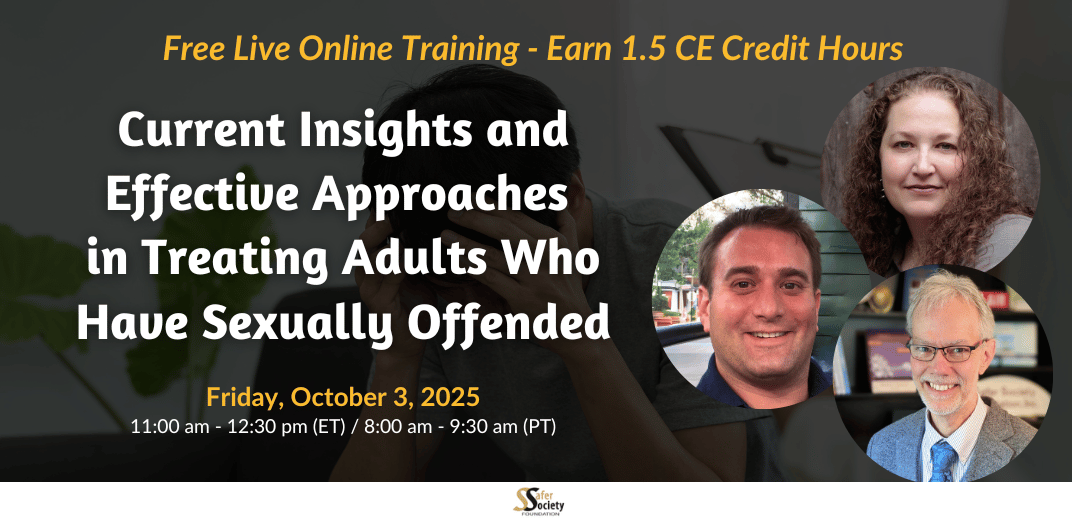
  • Current Insights and Effective Approaches in Treating Adults Who Have Sexually Offended

    Staying current with best practices is essential for professionals working with adults involved in sexual offending. This free training provides an overview of advances in the field over the past half century, offering participants practical knowledge needed to prevent further offending and support clients in building lives where abuse is unnecessary and undesirable. The presenters—Katie Gotch, Seth Wescott, and David Prescott—draw on current research, practical experience, and the collective expertise of leaders in the field. Participants have the opportunity to reflect on evolving standards and consider how these changes can inform their daily practice.

    This training is suitable for both new professionals entering the field and experienced professionals interested in the latest developments and practices. Participants gain a clearer understanding of how to apply evidence-based strategies in their work and contribute to safer, healthier communities.

    Free
  • Our Safe Haven: Navigating Sexuality Beliefs When Working with Individuals Who Have Engaged in Nonconsensual Sexual Behaviors

    In this Our Safe Haven, we invite you to join Robin Cooper and David Prescott to explore how personal and professional beliefs about sexuality influence our work, client relationships, and the broader field. Each session begins with a focused review of how sexuality beliefs influence professional practice, evolving naturally into an engaging, attendee-driven conversation shaped by shared experiences and professional insights: Session 01: Let’s Talk Shame Around Sexuality and Sex - Examine the role shame plays in client experiences and professional practice. Discuss ways to address shame while fostering healthy, supportive narratives in treatment.

    $8.00
  • Dr. Karl Hanson on Advancing Sexual Abuse Assessment Practices

    In this webinar, Dr. Hanson invites us to rethink how we conceptualize risk and offers insights into the future of evidence-based assessment. He provides practical advice for early-career researchers and shares his vision for advancing approaches to the prevention of sexual abuse. Join us for this opportunity to engage with one of the field’s leading experts whose work continues to inform policy and practice in sexual abuse risk assessment and intervention.

    Free
  • Structured Assessment of Protective Factors Against Sexual Offending (SAPROF-SO) Version 1 Training – October 2025

    The SAPROF-SO is a tool for assessing protective factors for individuals with a history of sexual offending, integrating with strengths-based therapeutic approaches. This tool comprises 14 items across three key subscales: Resilience, Adaptive Sexuality, and Prosocial Connection & Reward, with an optional fourth subscale, Professional Risk Management.

    Renowned for its strong reliability and predictive validity for reduced sexual recidivism (e.g., Nolan et al., 2023; Willis et al., 2020), the SAPROF-SO is instrumental in guiding therapy planning and risk management strategies (Kelley et al., 2022). This workshop, presented by Gwenda Willis, David Thornton, and Sharon Kelley, offers a training opportunity for clinicians interested in learning how to score and interpret the SAPROF-SO.

    $228.00
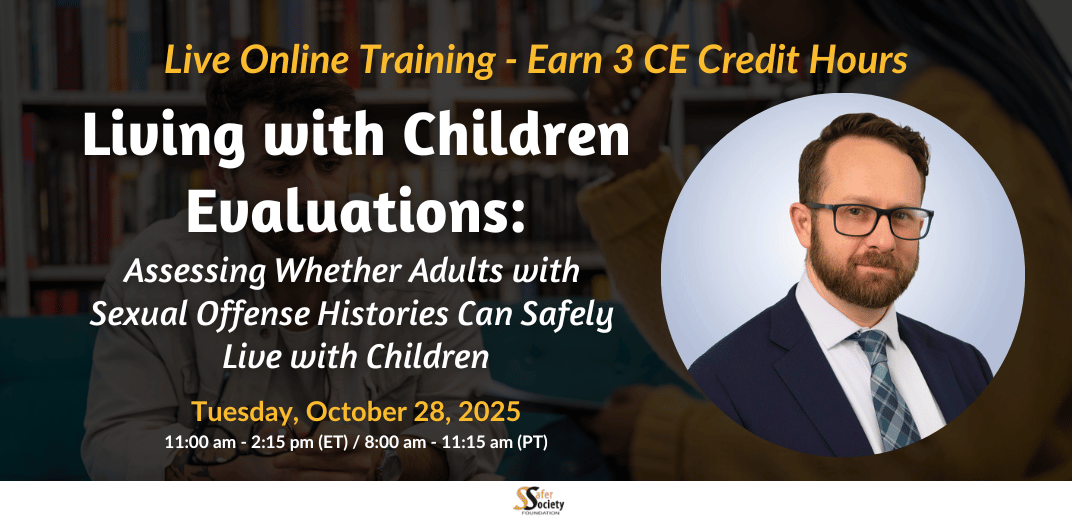
  • Living with Children Evaluations: Assessing Whether Adults with Sexual-Offense Histories Can Safely Live with Children

    As with many areas of forensic psychology and the law, living with children (LWC) evaluations pose unique challenges. Whatever their personal viewpoints regarding policy and legislation, evaluators must conform their work product to meet the requirements of the legal systems in which they operate. In conducting these assessments, evaluators must balance best practices in sexual offense risk assessments and modern research on this population with answering the specific questions required by the legal system.

    Typically, a forensic evaluator comments on the risk of sexual re-offense by an individual who committed a sexual offense in broad, hypothetical contexts. In LWC evaluations, however, the evaluator must consider the examinee’s risk to a specific child. The specificity of the potential victim adds unique elements, such as potential vulnerabilities for victimization and the non-offending caregiver’s attributes and abilities.

    In this training, Dr. Zachary Yeoman examines numerous aspects of LWC evaluations. He provides an overview of the legal contexts in which evaluators operate, helping them navigate areas where psychological science and the law may conflict.

    $105.00
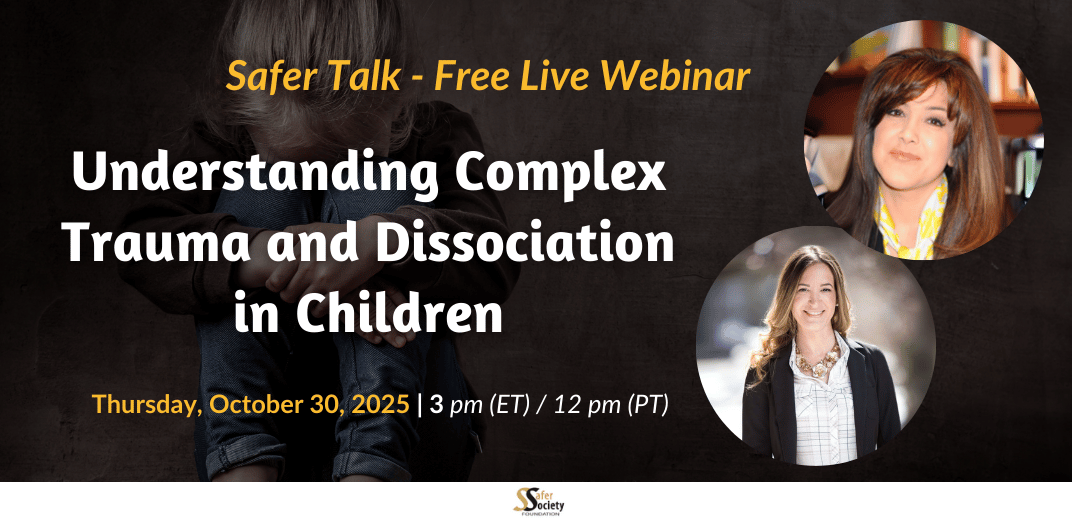
  • Understanding Complex Trauma and Dissociation in Children

    Complex trauma and dissociation are areas that have been rife with misunderstanding and misconception. Understanding these concepts is vital not only for clinicians but for all professionals working with children, as misdiagnosis or oversight can have lasting developmental consequences. In this webinar, Ana M. Gómez, an author, clinician, and international educator, and Jillian Hosey, a clinician in private practice and active leader within multiple organizations, share what they have learned from years of study and practice in the area of complex trauma and dissociation in children. Drawing on both their clinical expertise and their editorial work on the new Handbook of Complex Trauma and Dissociation in Children: Theory, Research, and Clinical Applications—the most comprehensive volume to date on this topic—Ms. Gómez and Ms. Hosey explore our current understanding of these concepts and clarify what each is and isn’t

    Free
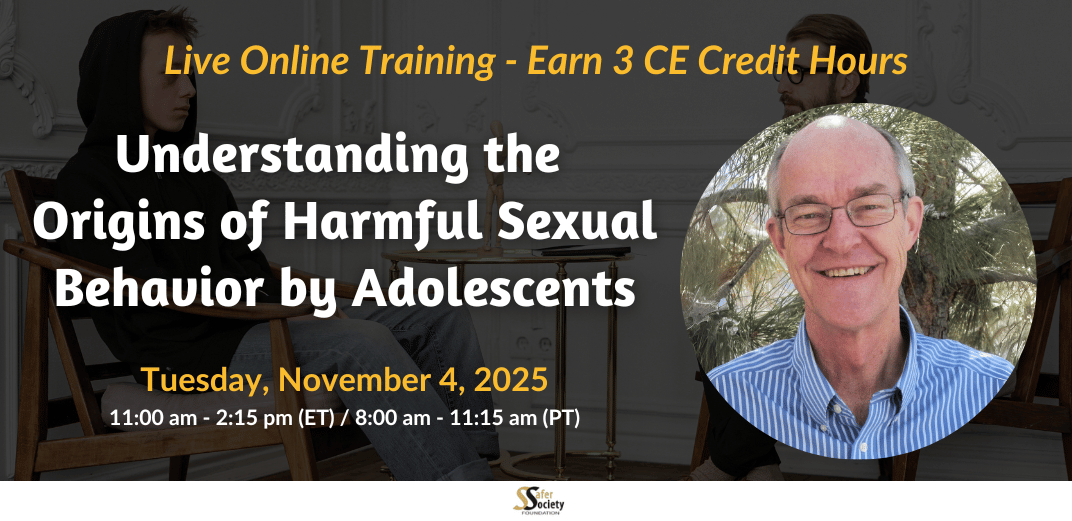
  • Understanding the Origins of Harmful Sexual Behavior by Adolescents

    Tom Leversee, LCSW—a professional with over 34 years of direct care, clinical practice, supervision, and management—developed this training to explore what is known about how adolescents come to sexually abuse. Mr. Leversee draws from his work with the U.S. Department of Justice’s SMART office, to provide an evidence-informed overview of the research into adolescent abuse, with an eye towards practical frameworks for prevention.

    $105.00
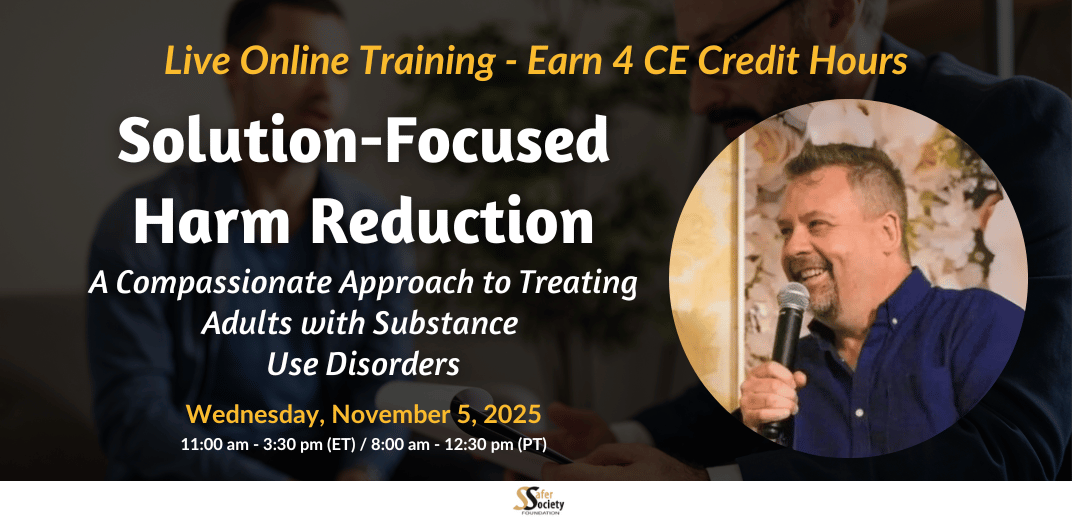
  • Solution-Focused Harm Reduction: A Compassionate Approach to Treating Adults with Substance Use Disorders

    Dr. Séan Foy developed this training to introduce participants to Solution-Focused Harm Reduction (SFHR) as a practical approach to working with people who use substances or display other high-risk behaviors. He explains the many synergies between solution-focused therapy and harm reduction, and describes how the two approaches are complementary and, when used in conjunction, create a novel way of approaching addiction work.

    $140.00
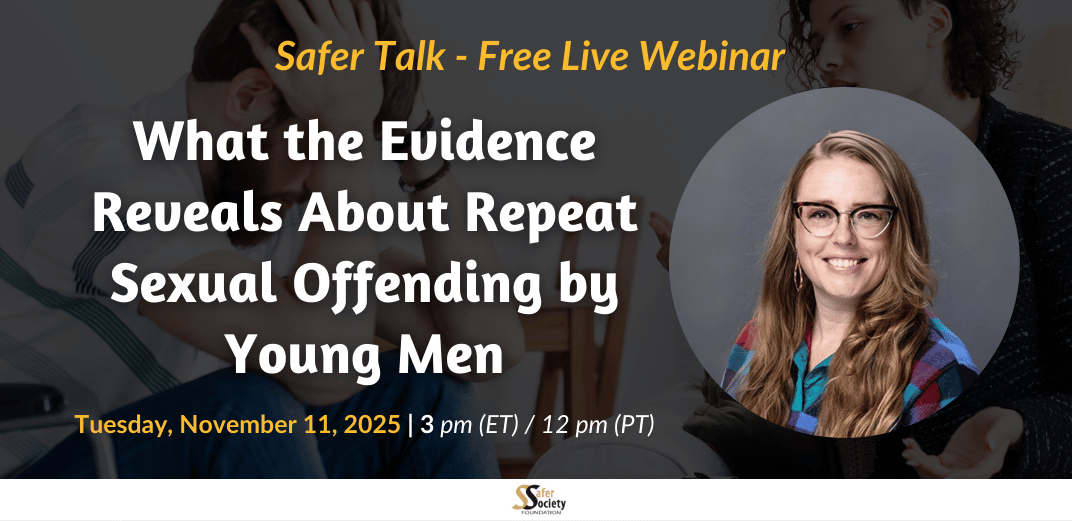
  • What the Evidence Reveals About Repeat Sexual Offending by Young Men

    RaeAnn Anderson, PhD, a human sexuality researcher and educator at the Sexual Violence Prevention Laboratory of the University of Missouri–Kansas City, makes a strong case that both research and practice are not making the most of our existing findings and that the true implications of what we have learned are profound. During this webinar, Dr. Anderson explores what we know about repeated sexual harm perpetration by young men across multiple settings, drawing from a variety of fields to highlight both the evidence and its consequences.

    Free
  • Assessing and Treating Emerging Adults Who Have Sexually Abused: Navigating the Boundary Between Adolescence and Adulthood

    Despite decades of progress in evaluating and treating both adults and adolescents who have sexually abused, working with “emerging adults” can often be less clear. These clients are typically young men between the ages of 18 and 25—in some cases, it includes individuals in their late twenties—who are developmentally between adolescence and adulthood. They often do not “quite fit” into either category. This lack of fit is especially apparent in their living situation or placement logistics and the assessment tools and treatment modalities commonly used with this population. In many cases, clients who are now considered by the courts to be legally adults were adolescents when their abusive actions took place.

    Dr. Waltrip and Dr. Leslie are both experts in evaluation and treatment, with experience across diverse practice settings in the United States. In this training, they focus on how professionals can best understand, assess, and treat emerging adults. This includes the similarities and differences they share with justice-involved adolescents and adults.

    $140.00
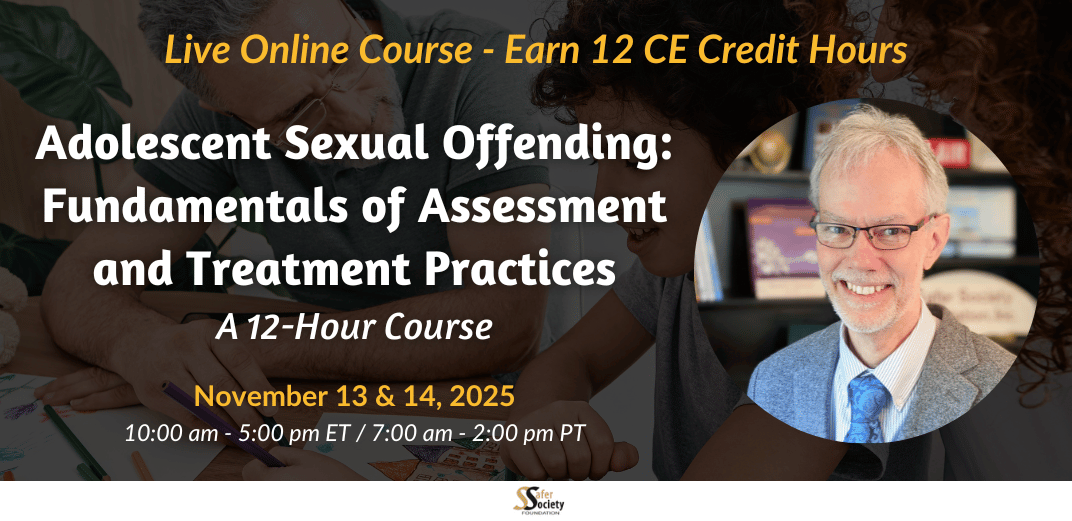
  • Adolescent Sexual Offending: Fundamentals of Assessment and Treatment Practices – A 12-Hour Course

    Effective assessment and treatment of adolescents with sexual behavior problems requires specialized knowledge, practical skills, and a commitment to best practices. Whether you are new to this area of work or an experienced professional seeking to refresh your expertise, this two-day course offers a comprehensive, research-informed overview for clinicians, social workers, juvenile justice professionals, and others working with youths in outpatient and residential settings.

    $420.00
  • Our Safe Haven: Navigating the Complexities of Group Therapy with Individuals Who Have Harmed Others

    In these Our Safe Haven sessions, we invite you to join Steven Sawyer and David Prescott to explore the complexities of group intervention, from addressing denial and minimization to managing difficult group dynamics and safeguarding the wellbeing of clinicians. Each session begins with a focused theme, evolving naturally into an engaging, attendee-driven conversation shaped by shared experiences and professional insights.
    $8.00